100 reasons we love the Middle East and North Africa (#71 to 80)

At a time of unrest and uncertainty across the region, we present 100 reasons we love the Middle East – an ode, of sorts, to the incredible people, places, hotels, food, fashion, crafts and creativity that shape this mesmerising, oft-misunderstood corner of the world. And a reminder, in unsettling times, of what endures.

71. Reem Shaath, founder of Whywander
“There’s no arguing the charm of Jeddah, a coastal city that blends old and new with a relaxed pace and abundant kindness. I like to start my day at one of the local speciality coffee shops – the new ‘in’ spot is Locals. No trip is complete without time spent in Al Balad, the beautifully maintained historic district, where coral-stone facades and carved wooden rawasheen screens cast lacework shadows on cobbled lanes that have borne centuries of footsteps. Time moves differently here. Merchants beckon from doorways, their stalls overflowing with hand-blended spices and little glass bottles of perfume. For a delicious meal in Al Balad, I love Al Basali, a local restaurant that serves fresh fish, grilled or fried, accompanied by sayadiah rice and traditional sides. Golden hour in Jeddah demands a walk on the Corniche, flanked by the Red Sea and people walking, running and cycling as the sun sets. For dinner, I head to Kuuru or Alieia, two local concepts that never disappoint.”
 Hussain AlMoosawi
72. UAE facades
The Gulf is best known for futuristic high-rises, but not every surface glitters. For nearly a decade, the UAE’s architectural heritage has been documented by Emirati photographer and designer Hussain AlMoosawi. Facade to Facade, his long-term photographic project, captures the UAE’s character and complexity in glimpses. The first photograph he took was Abu Dhabi’s Liwa Tower in 2017, a tapered tower block with a perforated orange sleeve. “The facade presents a strong sense of symmetry, but what drew me most was its ability to be contemporary while embedding an abstract reference to heritage,” he says. “The building subtly evokes the idea of an oasis through its tones and organic curvatures.” AlMoosawi’s project struck a chord, not only within the cloistered worlds of art and architecture, but also with residents who saw familiar and much-loved landmarks in a new light. The UAE “is a place where multiple influences coexist, often in unexpected ways”, he says. “What motivates me is the process of questioning and slowly understanding what initially feels like a puzzle.” Clare Dight

73. Styling it: Ilái Sarái
When Saina Babaee launched her ready-to-wear label Ilái Sarái in 2025, she called on Egyptian actress Amina Khalil to front her debut campaign, aptly titled The Becoming Series. An ode to heritage, movement and evolution, Ilái Sarái merges strong silhouettes with a touch of femininity, primarily in monochrome and desert-inspired hues. Babaee worked in the corporate world before shifting gears and curating gatherings inspired by Persian customs. This led to the launch of her own homeware and then fashion line (for her ready-to-wear label, she enlisted the Vaqar sisters, Shiva and Shirin, who had been previously shortlisted for the prestigious LVMH fashion prize). Persian references permeate the pieces, which pay homage to mystic poetry through thoughtfully crafted dresses and separates. The Conference of the Birds, by Sufi poet Farid ud-Din Attar, serves as literary muse. Draped dresses with daring cut-outs convey effortless elegance, while asymmetry and a hint of androgyny are woven throughout. Caped tops and layered shirts are reminiscent of wings and liberation, while a simple white dress has a black belt bound over the shoulders just under the collarbone, symbolising a sense of restraint. It’s this juxtaposition of hard and soft that the brand masters so effectively. Hafsa Lodi

Jabal Al Noor
Mahdi Khmili74. Cult cafeterias
A laminated menu is thrust through the car window. Outside, in a throng of SUVs, a dozen customers wait for their food. Other drivers take note. It’s accepted wisdom that you can correlate a cafeteria’s worth – and the quality of its shawarma – to the number of cars parked outside. Tiny roadside eateries such as this are found across the GCC, their colourfully kitsch menus almost identical in style and substance. Flaky, oily parathas stuffed with “zinker” fried chicken; hot shawarmas dripping with garlic sauce and wrapped in foil; and creamy faloodas, with their pastel-hued layers of syrup, vermicelli and ice cream. Meanwhile, technicoloured juices are named after apps, landmarks and even emotions – with “Awar qalb”, or Heartbreak, among the most popular. From the dusty lanes of rural Oman to the neon-lit streets of Bur Dubai, these streetside cafeterias offer cheap prices, lightning-quick service and a consistency that has seeped into daily routines. Their inception is tied to a wave of migration from the Asian subcontinent following the discovery of oil in the mid-twentieth century. These diaspora communities brought new flavours and cooking traditions, along with tiffin culture. Slowly, the originally desi kitchens began adapting to local tastes and eating habits – cue late opening hours and car service. Each roadside restaurant now has its own micro-identity, whether famed for creating the sweetest juice in town or for the coleslaw slathered on its veggie burger. In the UAE, Seashell and Jabal Al Noor are among the best known. In the amalgamation of two cultures, these unassuming kitchens strike an interesting dichotomy. On the one hand, the prices are low enough to be accessible to most (you can often find a meal for under Dhs20, or $5.45); on the other, being served without having to leave your car creates a sense of privacy and ease that’s disproportionate to the cost. It’s a combination that’s entirely befitting of the Gulf. Sophia Dyer

75. Dana Awartani, artist
Reviving what is lost can sometimes mean looking at tradition through a different lens. Fragments of pattern, colour and craft that might otherwise be lost to history can be preserved through care, archiving and the conscious act of repetition. This is the driving motivation behind the practice of Saudi-Palestinian artist Dana Awartani, who has been selected to represent the National Pavilion of Saudi Arabia at the 2026 Venice Biennale, with a site-specific installation that recreates floral and faunal motifs in hand-built tiles from clays sourced across Saudi Arabia. Awartani’s commitment to locally sourced materials and historically situated stories addresses the complexities of cultural heritage, craft and artisanship. One of her best-known works is When the Dust of Conflict Settles, an ongoing series that explores how constant conflict can affect cultural heritage. After studying the decorative stone carvings found on monuments across Syria facing destruction, Awartani wanted to give them a new life. She collaborated with Syrian stonemasons that fled their homes as a result of war, along with Middle Eastern and South Asian craftsmen in the diaspora, to revive the motifs of these monuments. For Awartani this work is vital to making sure centuries of knowledge and craft is not forgotten. Maan Jalal

Miramar Al Nayyar
Supplied76. Miramar Al Nayyar, artist
Self-taught Iraqi artist Miramar Al Nayyar has worked across disciplines, from murals and installations to dreamlike paintings – but at the centre of her practice is the concept of movement, whether in nature, Universal Memory, material abstraction or even language. In May 2024, she presented Moving through the ether, a solo exhibition at Dubai's Tabari Art Space, where large canvases depicted stunning organic and abstract patterns. The paintings were initially inspired by million-year-old sandstone Formations that Al Nayyar encountered in the south of Jordan, but she was also working from a place of grief after the death of her father. The Result is paintings that feel soft and surreal. In November 2025, in another Solo exhibition entitled hujra, al nayyar experimented with materiality – particularly on how inner thoughts take shape through matter – in Large, airy canvases that feel both familiar and brand new. MJ
77. New beauty standards

From left: Musk 12 perfume, $112, Kayali (kayali.com); colour fluid in shade Boy Tears, $24, Hindash (hindash.com); tinted natural red lip balm, $19, Green Bar (greenbarshop.com); Easy Lash Clean Lift mascara, $38, Simihaze Beauty (simihazebeauty.com); Arabian Sun bronzer, $37, Asteri (asteribeauty.com); Empowered eyeshadow palette, $81, Huda Beauty (hudabeauty.com); Glow Filler foundation, $46, Bex Beauty (bexbeauty.com)
When Dubai-based Huda Kattan started her eponymous Huda Beauty blog in 2010, it’s unlikely she foresaw it turning into a million- dollar beauty brand, but that’s what happened. She became the blueprint for countless makeup moguls in the Middle East, where it’s considered almost basic manners to leave the house looking (and smelling) your best. Recent years have yielded brands such as Bex Beauty, founded by Emirati singer Balqees, and Simihaze Beauty, created by twin sisters from Palestine. With products crafted specifically with hot climes in mind, here’s how to pull together a full face using brands with links to the region. SD
 Zayed National Museum, Abu DhabiCourtesy Zayed National Museum
78. Abu Dhabi's world-class museums
After almost two decades of construction on the western tip of one of Abu Dhabi’s many coastal islands, Saadiyat Cultural District has come into its own. Dramatic slanting towers inspired by a falcon’s feathery wingtips define Zayed National Museum, designed by Foster + Partners. Opened in December, the museum’s six galleries tell the story of the Emirates, reaching back more than 300,000 years, while honouring the late ruler of Abu Dhabi, Sheikh Zayed bin Sultan Al Nahyan. Its varied collection includes the oldest pearl ever discovered, unearthed at a Neolithic site on a desert island 100 kilometres west of Abu Dhabi, and cultural curiosities such as a 1950s polka-dot maenega, a baby’s necklace stuffed with soothing aromatic herbs, spices and seeds. Mecanoo’s adjacent Natural History Museum Abu Dhabi is designed to evoke rock formations, a theme well suited to the desert, mountain and coastal habitats explored within. NHMAD is the first major museum in the region dedicated to exploring the history of evolution. Walking through its galleries, visitors meet stalking sauropods, duelling tyrannosaurs, and all manner of life-like models and fossilised remains. Jaw-dropping displays include a specimen from the seven-billion-year-old Murchison meteorite and the suspended skeleton of a 25-metre-long blue whale. Meanwhile, at teamLab Phenomena Abu Dhabi next door, ticket holders wade through water, watching butterflies frolic against a mosaic of constantly changing colours and sounds in the world’s largest immersive museum by the Tokyo-based collective. Equally intriguing, Frank Gehry’s Guggenheim Abu Dhabi, an architectural jumble of boxes and cones on the waterfront, is tantalisingly close to completion this year. The first cultural institution to open here, in 2017, Louvre Abu Dhabi hovers by the sea beneath an extraordinary canopy of interlocking stars. Its thematic galleries tell the story of humanity’s creativity, highlighting cultural encounters and exchange. Its walls contain masterpieces great and small, from an enigmatic Ancient Greek sphinx to a ghostly daguerreotype of a veiled Muslim woman taken by archaeologist Joseph- Philibert Girault de Prangey, and coveted canvases by famous artists such as Yves Klein and Osman Hamdi Bey. But the spotlight, ultimately, is on intercultural connections – as befitting a country in which more than 200 nationalities have made themselves at home. Clare Dight
 Richard Sharrocks
79. Rabat for bookworms
Where are bibliophiles heading in 2026? Since 2021, UNESCO has designated one city each year as its World Book Capital – and the Moroccan city of Rabat is stepping up in 2026, with a roster of events to celebrate its literary prowess. The City is home to 54 publishing houses And a growing number of Bookshops, and hosts the third- Largest book and publishing fair in Africa. It’s also been credited with empowering local women and Youth by fighting illiteracy, especially among underserved communities. Connor Sturges

80. Styling it: Bouguessa
The visionary behind the dynamic two-tone suit – an oversized blazer and trousers split down the middle into two contrasting hues – Faiza Bouguessa has her finger firmly on the pulse of modern, modest fashion. Defined by softness, structure and a distinct sartorial edge, her pieces are the building blocks of a power wardrobe. Bouguessa’s eponymous brand was founded in 2014 in Dubai by the French-Algerian designer, whose top-notch quality and consistency have earned her a cult following. For spring/ summer 2026, sandy tones, ashy browns and olive greens take centre stage, alongside fiery burnt red and uplifting banana yellow. Beyond the coveted two-tone suits are minimalist abayas (Bouguessa’s way of merging elongated blazers with duster jackets), pencil skirts, wrap-front shirts, crisp blouses and A-line dresses that boldly bridge European aesthetics and regional tastes. Beyond the Middle East, Bouguessa has stockists in the UK and US, as well as a global client list that includes celebrities such as Beyoncé, Hailey Bieber and Priyanka Chopra. HL
These stories were originally featured in the May/June print issue of Condé Nast Traveller Middle East
Related Topics
Keywords
Related Stories
Afghanistan asks US to act responsibly on deporting Afghan immigrants back home
The Afghan Taliban government asked the United States to act responsibly when deporting Afghan immigrants back home, the Afghan foreign ministry said on Monday, adding that Kabul was prepared to engage constructively with Washington on the issue.

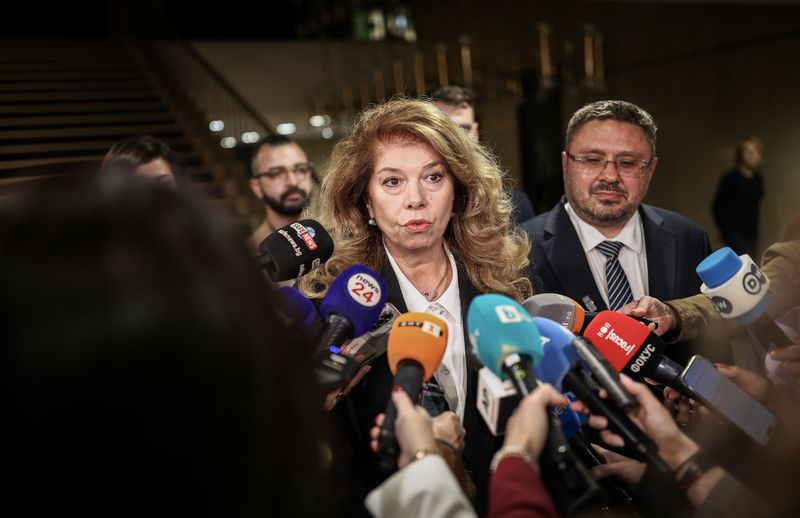
Bulgaria’s Iotova wins presidential runoff, near-final results show
Bulgaria's acting President Iliana Iotova won the presidential runoff election, near-final results from the Central Election Commission showed on Monday, becoming the country's first elected female head of state amid low voter turnout.
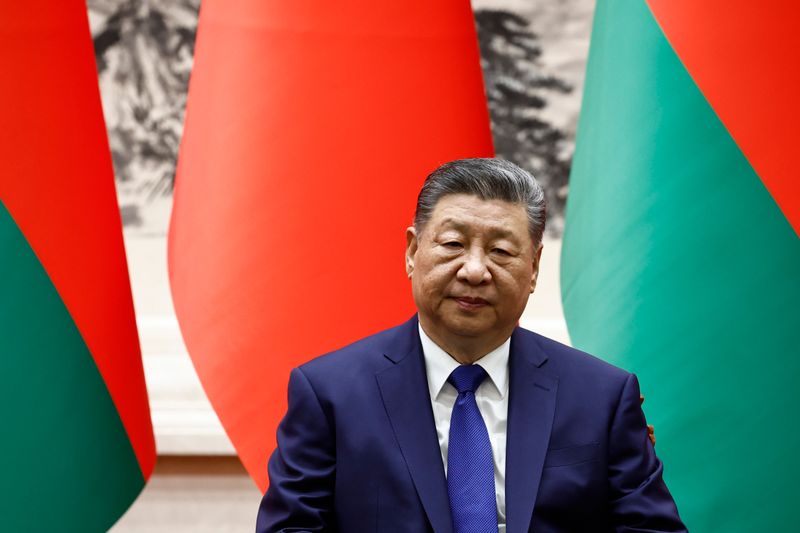
China’s Xi says Middle East should not become battleground for great power rivalry
The Middle East and Gulf region should not become a battleground for great-power rivalry and China is willing to work with Arab nations to achieve lasting peace, Chinese President Xi Jinping told Oman's sultan on Monday
PZ Cussons shareholders approve N9.926bn dividend payout
The dividend was approved at the company’s 78th Annual General Meeting (AGM) held at the Fraiser Suites in Abuja on Wednesday, 28 October 2026. The post PZ Cussons shareholders approve N9.926bn dividend payout appeared first on Premium Times Nigeria.

Top Stories
Afghanistan asks US to act responsibly on deporting Afghan immigrants back home
Bulgaria’s Iotova wins presidential runoff, near-final results show
China’s Xi says Middle East should not become battleground for great power rivalry
PZ Cussons shareholders approve N9.926bn dividend payout
Martin Meyer urges KZN special voters to turn out for local elections
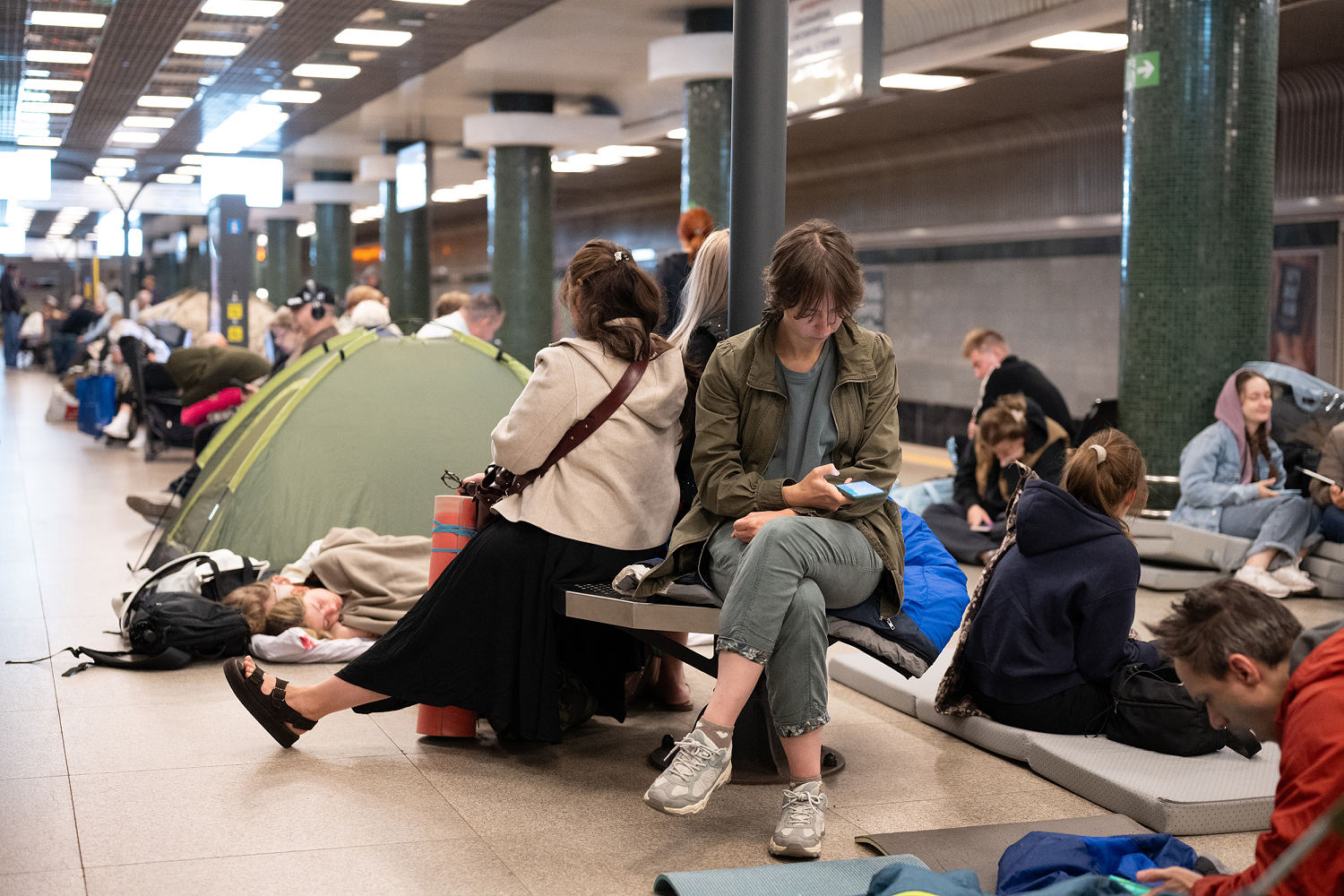
Fake alerts warn of nuclear danger as Ukraine and Russia report emergency app hacks
China-Africa green energy forum strengthens research ties in Jinan

Ryanair says it may freeze workers' pay and raise airfares


Latest
Afghanistan asks US to act responsibly on deporting Afghan immigrants back home
Bulgaria’s Iotova wins presidential runoff, near-final results show
China’s Xi says Middle East should not become battleground for great power rivalry
PZ Cussons shareholders approve N9.926bn dividend payout
Martin Meyer urges KZN special voters to turn out for local elections
Fake alerts warn of nuclear danger as Ukraine and Russia report emergency app hacks
China-Africa green energy forum strengthens research ties in Jinan
Ryanair says it may freeze workers' pay and raise airfares