2026 iPad mini review: Maximizing the mini
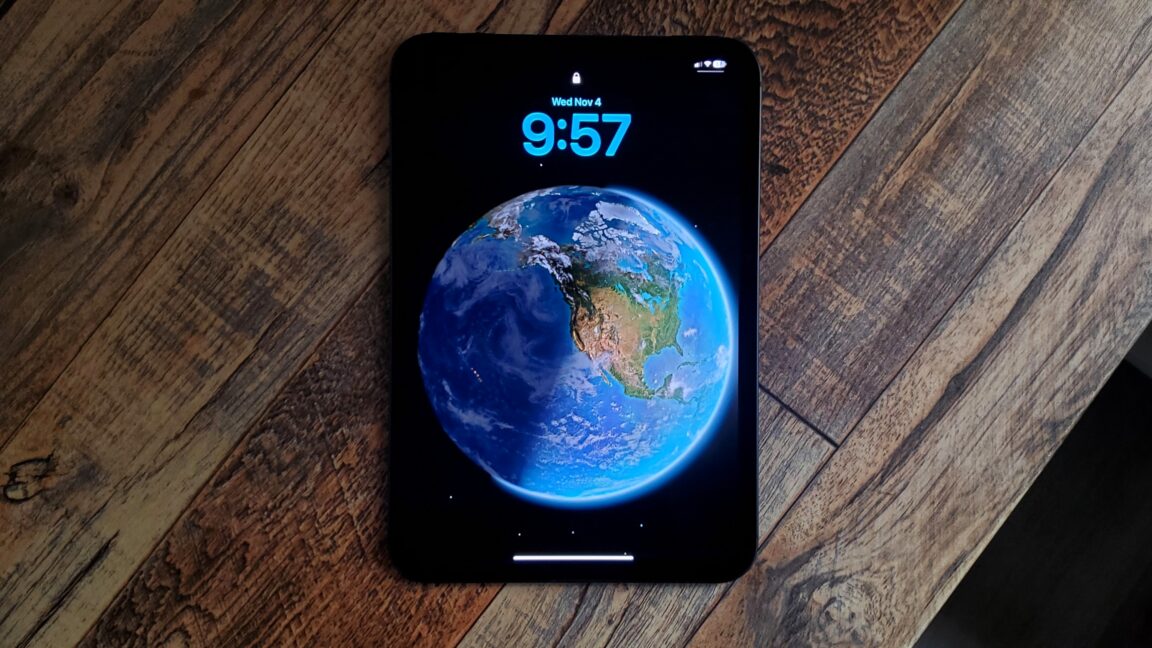
The iPad mini has long felt like a niche product. It has earned a reputation as a quality tablet for people who want something small, comfortable, and portable, but its small screen and comparatively limited processing power have restricted its appeal, making it best suited to watching media or playing games.
With the 2026 version, the iPad mini is more competitive than ever. Its chip is current, its speakers are better, and, most impressively, it trades its 8.3-inch IPS screen for an 8.5-inch OLED that can hold its own against other premium tablets. There isn’t much more you can ask of an iPad this small.
But at just $50 less than the larger, more powerful iPad Air (11-inch), the iPad mini still has a hard time making a case for itself.
Larger OLED screen
The most immediately noticeable change to the 2026 iPad mini is its display. At 0.2 inches larger than the 2024 iPad mini’s screen, the difference might not sound like much, but it has a meaningful impact on a tablet this small. Beyond providing a bigger view of photos, video content, and lengthy documents, the extra space makes it easier to work with multiple windows, giving you more room to view them and adjust their size and location.
One of our biggest complaints about the prior mini was its bezels, which felt large for a tablet of its size. This time, Apple managed to fit a larger screen in a slightly smaller tablet (7.69 × 5.22 × 0.21 inches and 0.56 pounds for the 2026 mini versus 7.69 × 5.3 × 0.25 inches and 0.65 pounds for the 2024 mini) by reducing the bezels by 24 percent. The result is a streamlined viewing experience that feels more modern and appropriate for a new Apple product.
And you’ll certainly want to watch content on the 2316 × 1512 OLED display, which packs 326 pixels per inch. OLED displays often lack the brightness of their LCD-LED counterparts, but the gap has narrowed in recent years. The new mini is brighter than its IPS-based predecessor, with Apple claiming full-screen brightness of up to 600 nits, compared to 500 nits on the previous model. It’s also much better suited to HDR content, with peak HDR brightness reaching 1,200 nits for highlights and a contrast ratio of 2,000,000:1.
Since content consumption is arguably the mini’s strongest use case, it makes sense for Apple to focus on changes that enhance the viewing experience. Watching shows and movies feels as luxurious as possible on a screen this size, and the mini maximizes its display in nearly all the ways that matter.
I say “nearly” because the mini still has a 60 Hz refresh rate; 120Hz is limited to the iPad Pro. A 120 Hz refresh rate makes little difference when watching most shows or movies, but it can make some tasks, such as scrolling through long documents, look smoother. Still, the difference is less noticeable on a smaller screen.
Overall, the refresh rate didn’t feel like a drawback during regular use. Apple has gone a step further, noting that OLEDs typically have faster response times than IPS displays. That’s generally true when discussing gray-to-gray (GtG) response times. However, moving picture response time (MPRT) can be a better indicator of potential persistence-related motion blur, including during scrolling, because it measures how long an image remains visible on the display, contributing to blur as your eyes track moving content. GtG, by contrast, measures how quickly individual pixels transition between shades. Slower pixel transitions can create motion artifacts such as ghosting.
According to Blur Busters’ MPRT Indicator, the mini has an MPRT of about 17 ms, about what I’d expect from a 60 Hz IPS display. Anyone who needs a high-refresh screen will still want to look at the Pro series.
One feature the mini borrows from the iPad Pro but that other iPads lack is the option for nano-texture glass, which is designed to reduce glare. It costs an extra $100 and is only available on the 256GB and 512GB versions of the mini.
A current-gen processor
The 2024 mini debuted with a year-old chip, but this year’s model sports Apple’s latest mobile processor. The 2026 mini makes a considerable jump from the A17 Pro, a 3-nanometer, iPhone 15 Pro-era chip from 2023, to the A20 Pro, a 2-nanometer chip that debuted in the new iPhone 18 Pro.
The newer chip has 50 percent more memory bandwidth, which significantly boosts graphics performance. It’s also up to 60 percent faster.
I tested the 512GB version of the iPad Mini, which, like the 128GB and 256GB versions, features a seven-core integrated GPU. The 512GB model, however, gets a bump from five CPU cores to six and doubles the number of 16-core Neural Engines from one to two, promising better performance in on-device AI applications, such as image generation.
I don’t expect many people to run particularly intensive workloads on a tablet this small. Still, tasks such as photo editing, light video editing, and juggling many open applications felt smooth. The performance boost makes the iPad mini much more powerful than the standard iPad 11, which uses an A16 processor. The iPad Pro (M5) and the iPad Air (M4), however, remain better equipped for demanding workloads such as video editing and 3D rendering.
Siri AI is still in beta, so we won’t cover that in this review. But the tablet supports features under the Apple Intelligence umbrella, including various generative AI capabilities. Tasks like removing objects from photos, changing a photo’s perspective, or extending a photo’s borders should take roughly the same amount of time on the 512GB iPad mini as they do on the iPhone 18 Pro. In my experience, that’s usually about 20 seconds.
Better speakers
The mini is surprisingly loud. Its speakers are powerful enough to make TV dialogue easy to hear, even with my noisy heater running in the background.
The tablet has two woofers designed to deliver higher volume and stronger bass than the prior mini. A pair of custom-designed tweeters between the tablet’s glass and aluminum enclosure are intended to improve the clarity of higher frequencies.
You won’t get the deepest bass or the crispest high notes, but the speakers surpassed my expectations when playing music. I didn’t immediately feel the need to connect the iPad to dedicated speakers.
And the mini pulls this off without any visible speaker holes in its chassis.
That detail helped the mini earn the first IP67 rating for an iPad. The Ingress Protection rating means the device is “dust-tight” and “protected against the effects of temporary immersion in water,” according to the International Electrotechnical Commission.
Other changes
The 2026 mini has the same 12 MP front and back cameras as its 2024 predecessor, but the front-facing camera has moved from one of the shorter sides to one of the longer sides. This took some getting used to for FaceTiming and selfies. Holding the tablet in portrait orientation now places you off-center in the frame, while holding it in landscape mode to FaceTime on the go quickly became uncomfortable. The new location was fine when I could sit down and prop the tablet on a stand.
Another addition is the back camera’s Adaptive True Tone flash, which Apple markets as a way to quickly scan documents. When the Camera app identifies a document, such as a piece of paper or a book, it automatically adjusts which of the camera’s LEDs light up to minimize shadows and produce clearer text.
When I used the tablet’s camera to photograph text on both a piece of paper and a book, it quickly used machine learning to identify them as documents. A pop-up appeared, offering the option to “Scan Document”; selecting it allowed me to automatically take a picture of just the document. It’s not a feature many people will use regularly, but when the need arises, it makes capturing a sharp, detailed image of text considerably easier.
Additional upgrades include a move from Wi-Fi 6E to Wi-Fi 7 and from Bluetooth 5.3 to Bluetooth 6. These capabilities come from the introduction of Apple’s N1 wireless networking chip, which also adds Thread support. Apple launched the N1 last year with the iPhone 17-series and iPhone Air.
The iPad mini also has the C2 cellular modem that Apple unveiled last month in the iPhone 18 Pro and iPhone Duo. For those who rely on cellular service, it’s reassuring that the tablet uses the same technology here as some of Apple’s best phones.
Although it’s not an upgrade, it’s impressive that the new mini has the same battery life as its predecessor, despite having a smaller chassis and a larger screen. The mini also gains support for fast charging.
iPad mini…to the max
With the 2026 model, the iPad mini feels less like a compromise. Its larger OLED screen, current-generation processor, more durable build, and better speakers make it feel more modern and competitive than the 2024 version.
These improvements come with a pricing predicament, though. Today, the iPad mini starts at $699 for the 128GB version, putting it just $50 below the 11-inch iPad Air (M4) at its lowest configuration. The 512GB mini I tested, which came with a more powerful A20 Pro chip, is $999. In 2024, the iPad mini started at $499, and the iPad Air 11-inch (M2) started at $599.
The mini’s OLED screen is a standout, but the Air remains a better choice for those seeking a balance between power and portability. Its more capable processor and still-excellent, larger IPS display make it more versatile. It also offers comparable battery life, though it lacks fast charging. Meanwhile, the Pro series remains the best option for demanding workloads and extensive multitasking. The Mini is much more capable of handling serious work, multitasking, and editing than it was before, but it still isn’t the best iPad for these purposes.
Despite narrowing the gap with other tablets, the mini is still a niche product. The biggest reason to pick it over other iPads is if you truly want the smallest device, primarily for content consumption. My preference for devices that are easy to handle without straining my smaller hands or weighing me down, combined with my appreciation of high-end displays, love of streaming, and interest in using secondary screens to boost productivity, confirms that this niche has an audience. Many of Apple’s improvements make the mini more enjoyable for these users.
Beyond comparisons with the rest of the iPad lineup, though, the mini makes the most of its small design. Apple fit just about everything it could into a device that’s somehow even smaller than its predecessor.
For anyone looking for an ultraportable tablet primarily for enjoying content on an excellent, high-end display, the mini is a markedly better device than it used to be.
 1.
After Texas' blue wave, what happens to Elon Musk and SpaceX?
Related Topics
Keywords
Related Stories
Ember’s smallest self-heating mug is on sale for just $33
We’ve been fans of Ember’s temperature-controlled mugs for years, though given the price tag, we admit that they’re somewhat of a luxury purchase. Thankfully, if you’ve been looking for a more affordable option, Woot is selling the Ember Cup in black for $32.99 ($67 off) with a…

TikTok launched a dedicated TikTok Shop app
TikTok has released a standalone app for TikTok Shop in a few countries, as spotted by social media consultant Matt Navarra. According to its App Store listing, the TikTok Shop app offers: - Personalized picks inspired by your interests - LIVE streams & short videos to see…

Nintendo says it’s not planning another Switch 2 price hike
Nintendo president Shuntaro Furukawa said during the company's latest earnings call that it's "not considering additional changes" to the Switch 2's price, Reuters reports. The Switch 2 got a $50 price hike earlier this year, bringing its starting price up to $499. Nintendo said…

The FAA is finally ditching floppy disks
The air traffic control tower is seen San Diego International Airport on May 27th in San Diego, California. | Photo by Kevin Carter / Getty Images It's the year 2026 and the Federal Aviation Administration is still running critical pieces of American airspace on 3.5-inch…

Top Stories

HERITAGE & IDENTITY OP-ED: Voices of Knoflokskraal — belonging and everyday survival on contested land

PAINT POWER: Gqeberha artist turns vandalised mural into an ocean-themed second chance

REFUND WRANGLE: Hospitality agency enters business rescue amid R48m ticket claim scandal
BATTLE PLAN: Erasmus unleashes full-strength Springboks to crush Italy in Nations Championship

Paraguay President Santiago Peña resigns after bank collapse

No budget resolution reached yet, says O'Neill
VIDEO: EFF looks to ward victories to rebuild trust in eThekwini

Greece: Students march in Athens demanding more education funding

Latest
HERITAGE & IDENTITY OP-ED: Voices of Knoflokskraal — belonging and everyday survival on contested land
PAINT POWER: Gqeberha artist turns vandalised mural into an ocean-themed second chance
REFUND WRANGLE: Hospitality agency enters business rescue amid R48m ticket claim scandal
BATTLE PLAN: Erasmus unleashes full-strength Springboks to crush Italy in Nations Championship
Paraguay President Santiago Peña resigns after bank collapse
No budget resolution reached yet, says O'Neill
VIDEO: EFF looks to ward victories to rebuild trust in eThekwini
Greece: Students march in Athens demanding more education funding