2026 local government elections: Voters urged to scrutinise service delivery records
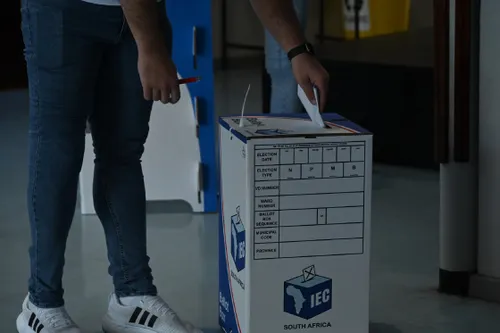
Municipal leaders and governance experts urged voters to demand stronger performance from their elected representatives.
With South Africans heading to the polls on November 4, experts and municipal leaders are urging voters to demand more than election promises, saying the next local government councils must prioritise accountability, sound financial management and infrastructure maintenance to improve service delivery.
The call came during a University of KwaZulu-Natal (UKZN) discussion on how municipalities can strengthen governance, support local economies and respond more effectively to community needs after the local government elections.
The panel included academic and political analyst Zakhele Ndlovu, Morar Incorporated chief executive Jennifer Reddy, uMngeni Local Municipality deputy mayor Sandile Mnikathi, eThekwini Municipality speaker Thabani Nyawose and uMlalazi Local Municipality mayor Queen Xulu.
Ndlovu argued that South Africa’s apartheid past continues to influence voting patterns, with many voters choosing parties along racial and ethnic identity lines rather than holding political leaders accountable for their performance.
He said this contributed to an environment in which leaders could avoid consequences for corruption because they did not expect to lose electoral support.
The November 4 elections, he said, would give voters an opportunity to hold their representatives accountable.
“Unfortunately, we are still trapped in the politics of apartheid and people continue to vote along identity lines. We have yet to have a political party in South Africa that is going to attract support across race and across ethnicity,” Ndlovu said.
Reddy highlighted the need for municipalities to become financially resilient, capable and prepared for future challenges.
“Financial stability is the bedrock of local governance without a doubt. Without sound municipal finance and even the most ambitious policy goals will remain promises on paper without the action and implementation to manage it,” she said.
She called for strict audit standards, prudent budget execution, debt management, effective revenue recovery, transparent revenue collection and sound financial controls.
“To secure long-term financial health of our municipalities. We must enforce strict audit standards, prudent budget execution, debt management, ensure our recoveries are recovered, and transparent revenue collection systems, sound financial controls guarantee that every public cent works for our community. Local governments must act as a proactive catalyst for economic growth,” Reddy said.
Mnikathi outlined five priorities he said were essential if residents were to experience meaningful improvements in governance, services and economic opportunity after the elections.
Nyawose argued that the focus should extend beyond deciding who governs a municipality to determining what kind of local government emerges after the elections.
He said post-election programmes needed to link service delivery with spatial transformation, ensuring that housing, transport, economic development and municipal services worked together.
“The post-election programme therefore must connect service delivery to spatial transformation. Human settlement cannot simply produce houses. Transport cannot simply assist commuters. Economic development cannot simply attract investment,” Nyawose said.
“Planning must deliberately connect people, housing, transport, service delivery and economic opportunity. This speaks directly to the principle of the right to the city or a right to your municipality.”
Xulu said the upcoming elections offered an opportunity to strengthen accountability, improve infrastructure priorities and make citizen participation an established part of municipal governance.
She argued that elections gave voters a way to remove political leaders who had failed to address their concerns or weaken their mandates.
“Since elections allow politicians who failed to solve citizens’ problems to lose their mandate or at least become weaker in using it. The fear of losing votes might persuade councillors and other municipal authorities to respond better to community complaints,” Xulu said.
Related Topics
Keywords
Related Stories
HEART FOR ART: Award-winning artist Annette Kamfer paints her way back after Parkinson’s diagnosis
After achieving international recognition for her watercolour paintings, acclaimed artist Annette Kamfer stepped away from art to focus on her health. Now she is back, and has brought her latest collection home to Nelson Mandela Bay.
LOCAL ELECTIONS 2026: Ten critical questions as South Africa heads into high-stakes poll
With the ANC under intense pressure, the DA seeking gains and smaller parties eyeing roles as kingmakers, voters face a contest that could reshape municipal government.
Sanwo-Olu makes runaway appearance at Lagos Fashion Week (PHOTOS)
It is his second runway appearance. The post Sanwo-Olu makes runaway appearance at Lagos Fashion Week (PHOTOS) appeared first on Premium Times Nigeria.

EXCLUSIVE: Ebola: 34-year-old pilot, wife identified as suspected cases who tested negative in North-east Nigeria
The Nigeria Centre for Disease Control and Prevention (NCDC) on Saturday announced that two suspected Ebola cases had been identified in the North-east. The post EXCLUSIVE: Ebola: 34-year-old pilot, wife identified as suspected cases who tested negative in North-east Nigeria…

Top Stories
HEART FOR ART: Award-winning artist Annette Kamfer paints her way back after Parkinson’s diagnosis
LOCAL ELECTIONS 2026: Ten critical questions as South Africa heads into high-stakes poll
Sanwo-Olu makes runaway appearance at Lagos Fashion Week (PHOTOS)

Valkyries win WNBA title in their second season
EXCLUSIVE: Ebola: 34-year-old pilot, wife identified as suspected cases who tested negative in North-east Nigeria
Zuma to make first public appearance since hospital discharge

When youths move, society changes: The 2026 barricades, By Owei Lakemfa

Why war makes Ukraine media more determined than ever to hold power to account
Latest
HEART FOR ART: Award-winning artist Annette Kamfer paints her way back after Parkinson’s diagnosis
LOCAL ELECTIONS 2026: Ten critical questions as South Africa heads into high-stakes poll
Sanwo-Olu makes runaway appearance at Lagos Fashion Week (PHOTOS)
Valkyries win WNBA title in their second season
EXCLUSIVE: Ebola: 34-year-old pilot, wife identified as suspected cases who tested negative in North-east Nigeria
Zuma to make first public appearance since hospital discharge
When youths move, society changes: The 2026 barricades, By Owei Lakemfa
Why war makes Ukraine media more determined than ever to hold power to account