2027: Professor urges journalists to probe campaign promises, prioritise citizens’ needs

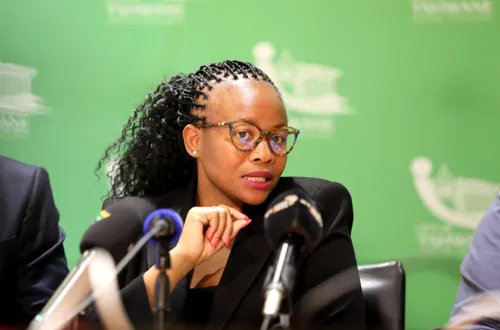
The Director of UNIZIK FM at the Nnamdi Azikiwe University, Awka (NAU), Ifeoma Dunu, has urged Nigerian journalists to shift focus from routine coverage of political campaigns and embrace accountability journalism ahead of the 2027 general elections.
Join the Premium Times WhatsApp Community For Quick Access To News and Happenings Around You.
NAU is a federal university in Anambra State, popularly known as UNIZIK, and UNIZIK FM is the university’s radio station, mainly for journalism students.
Mrs Dunu, a professor, made the call on Thursday while presenting a paper at a two-day media workshop in Enugu.
The workshop was organised by the International Press Centre (IPC) and supported by the European Union.
The professor challenged media practitioners to make public accountability, citizens’ welfare and rigorous fact-checking central to their election coverage rather than focusing on politicians and their statements.
She stressed that the forthcoming 2027 general elections placed an important responsibility on the media to strengthen democratic participation, promote accountability and safeguard citizens’ access to credible electoral information.
Mrs Dunu warned journalists against focusing largely on political parties, defections, rallies, endorsements, and contests among candidates.
Stay Ahead with Premium Times
Follow us on Google News and never miss breaking stories, investigations, and in-depth reporting.
“Effective election journalism must move beyond reporting what politicians say to investigating what they do, verifying what they claim, and establishing how their decisions affect citizens’ lives,” she said.
She contended that journalists must rigorously compare political promises against available evidence, budgets, and implementation rather than focusing on campaign rhetoric.
“The media remains agenda-setters. Therefore, there’s a need to focus on the priority concerns of the people rather than the promises of politicians at campaign rallies.
“So, what people identified as their needs should matter to journalists more than what politicians are promising them,” she added.
Fact-checking
In his presentation, a fact-checker with the IPC, Olusola Oludiran, took the journalists on fact-checking and the utilisation of digital tools in journalism.
Mr Oludiran stressed the importance of verification and responsible journalism, especially in the face of the growing challenge of misinformation, manipulated information and artificial intelligence-generated content.
Media responsibility
Earlier, in his address, Lanre Arogundade, executive director of IPC, said the media has a responsibility to ensure that citizens’ voices are heard in the democratic process in addition to scrutinising political promises and holding public officials accountable.
“However, the effectiveness of this responsibility depends significantly on the quality of electoral reporting.
“An election period characterised by sensationalism, unverified claims, inflammatory rhetoric, and the unchecked spread of misinformation and disinformation can undermine public confidence, deepen social divisions, and weaken democratic institutions,” Mr Arogundade said.
Continuing, the executive director said: “Conversely, a media environment that prioritises accuracy, fairness, verification, conflict-sensitive reporting, and accountability can strengthen public trust and contribute to peaceful, credible, and inclusive elections.”
READ ALSO: Six journalists begin six-month fellowship to scrutinise development efforts in Niger Delta
He also warned that while digital platforms have expanded information sharing and public participation, they have accelerated the spread of misinformation, manipulated content, hate speech and divisive narratives.
“The media must, therefore, strengthen its verification skills, exercise caution before publishing politically sensitive information, and resist the pressure to prioritise speed over accuracy.
“In this regard, fact-checking and verification should not be treated as optional additions to journalism. They must be integral to responsible electoral reporting,” he stated.
Share this:
Discover more from Premium Times Nigeria
Subscribe to get the latest posts sent to your email.
Type your email…
Subscribe
Tinubu to commission multi-billion naira projects in Akwa Ibom
Fighting Somali piracy needs local leadership, foreign naval backing
Chinagorom Ugwu
More News
Police arrest 36 suspects in Niger State
Bandits torment eight Taraba communities, 10 captives freed
Jos stadium gets facelift in 38 years ahead of APC rally
2027 Politics Watch: From Atiku’s court setback to APC’s divided loyalty
Former Cross River PDP chair doubts party’s 2027 chances
Ex-Air Force spokesperson identifies ‘flaw’ affecting Nigeria’s multi-trillion naira defence budget
Keywords
Related Stories
I have a picture for you! 01 November-06 November
The First Thing newsletter's Ever-lasting Subscriber Photo Gallery.

ENVIRONMENTAL JUSTICE: African climate voices demand fair funding and influence before COP31
The winds, drought and excessive rains of climate change are blowing in Africa and it’s time for the Global North to listen and deliver on its climate finance promises. At COP31 in Turkey, which runs from 9-20 November, African countries will need greater weight in…

Diwali lamingtons with jam and coconut
These soft cake squares are coated in raspberry jam and desiccated coconut for a simple twist on the classic lamington.

ActionSA to negotiate for Nasiphi Moya to serve another five years as Tshwane mayor
ActionSA National Chairperson Michael Beaumont has thrown his weight behind Dr Nasiphi Moya serving another term as Tshwane mayor, saying the party will negotiate to ensure she remains at the helm of the metro for five more years.
Top Stories
I have a picture for you! 01 November-06 November
ENVIRONMENTAL JUSTICE: African climate voices demand fair funding and influence before COP31

Met chief says he wouldn't be surprised if more allegations made about Brand after rape conviction
Diwali lamingtons with jam and coconut

Train worker recalls repelling attacker with frying pan
ActionSA to negotiate for Nasiphi Moya to serve another five years as Tshwane mayor

Katherine Ryan says she feels 'grief and relief' after Russell Brand conviction

Two Gloucester schools in lockdown after boy hurt in incident
Latest
I have a picture for you! 01 November-06 November
ENVIRONMENTAL JUSTICE: African climate voices demand fair funding and influence before COP31
Met chief says he wouldn't be surprised if more allegations made about Brand after rape conviction
Diwali lamingtons with jam and coconut
Train worker recalls repelling attacker with frying pan
ActionSA to negotiate for Nasiphi Moya to serve another five years as Tshwane mayor
Katherine Ryan says she feels 'grief and relief' after Russell Brand conviction
Two Gloucester schools in lockdown after boy hurt in incident