₦70k transport allowance: Relief for some, questions for all, By Posi Olatubosun


Ultimately, a short-term allowance should be weighed against the more lasting alternatives available: a sustainable wage framework, targeted cash transfers for vulnerable households in the informal economy, and cheaper mass transport that lowers costs for every commuter. Relief for public servants is welcome, and labour has negotiated hard for it. A country where most workers have no employer to bargain on their behalf needs a wider safety net. The task is to turn a six-month concession into a lasting framework: fair wages, targeted support for the vulnerable and cheaper transport for all.
Ultimately, a short-term allowance should be weighed against the more lasting alternatives available: a sustainable wage framework, targeted cash transfers for vulnerable households in the informal economy, and cheaper mass transport that lowers costs for every commuter. Relief for public servants is welcome, and labour has negotiated hard for it. A country where most workers have no employer to bargain on their behalf needs a wider safety net. The task is to turn a six-month concession into a lasting framework: fair wages, targeted support for the vulnerable and cheaper transport for all.
₦70,000 a month will ease the commute for civil servants. What about the trader, the okada rider and the farmer?
Join the Premium Times WhatsApp Community For Quick Access To News and Happenings Around You.
That is the question raised by the Federal Government’s agreement with organised labour to pay a monthly transport intervention of ₦70,000 to public service workers across all levels for six months, beginning in November. The same agreement provides for arrears of the peculiar allowance, backdated to 1 May, to be paid in three monthly installments, and for minimum wage negotiations to begin immediately. The deal followed weeks of pressure from the Nigeria Labour Congress over the pump prices of petrol, wages, tax relief and unpaid allowances. It may avert a strike and bring genuine relief to many households. But it also raises important questions about fairness, fiscal cost and what happens when the six months end.
The workers’ case is strong. Since the removal of petrol subsidy in May 2023, transport has become one of the heaviest burdens on household budgets. Earlier this year, civil servants in Abuja told the News Agency of Nigeria that commuting now consumes more than half of their salaries, with some daily fares more than doubling. Inflation has eased to 14.63 per cent, but food inflation remains close to 20 per cent, and the earlier surge in prices has not been reversed. Notably, the new allowance equals the ₦70,000 national minimum wage agreed in 2024.
For the lowest-paid public servants, it effectively doubles their monthly income for six months. That is significant relief. Precision matters, however. An allowance of this kind is not a wage increase, and it is not targeted at a need. It is a temporary, flat payment to a defined group of employees. Its value lies in speed and simplicity, but those same features shape its limitations. The test is whether it is the best use of scarce public resources to cushion hardship, and whether it is affordable for every tier of government that it covers.
The first concern is fairness. Public servants are an important constituency, but they are a small portion of Nigeria’s entire workforce. The majority of Nigerians earn their living in the informal economy as traders, artisans, commercial drivers, farmers and casual labourers. Many of them face the same transport costs with less job security and no employer to negotiate on their behalf. Critics, including opposition presidential candidate Atiku Abubakar, have already asked what the arrangement offers the millions of people without formal jobs. The question deserves a serious answer. Relief that reaches only those with a payslip risks widening the gap between the formal and informal economy.
The fourth concern is the cliff edge. The agreement does not state what happens after six months. Temporary payments have a way of becoming permanent expectations, especially in an election season. If the allowance ends abruptly in April 2027, just weeks after the general elections, workers will face a sharp fall in income. If it is extended, it becomes a recurrent commitment without a clear funding source.
The fourth concern is the cliff edge. The agreement does not state what happens after six months. Temporary payments have a way of becoming permanent expectations, especially in an election season. If the allowance ends abruptly in April 2027, just weeks after the general elections, workers will face a sharp fall in income. If it is extended, it becomes a recurrent commitment without a clear funding source.
The second concern is cost. The agreement has not been accompanied by a published estimate of its total cost. Simple arithmetic shows why one is needed. Every one million beneficiaries would cost ₦70 billion a month, or ₦420 billion over six months, before the peculiar allowance arrears are added. Nigeria is already spending heavily on debt service, which reached ₦5.28 trillion on domestic debt alone in the first half of 2026. The president has also asked the National Assembly to approve a new external borrowing plan of about $20.5 billion. In that context, citizens are entitled to know how the allowance will be funded, whether it is provided for in the budget, and what spending, if any, will be reduced to accommodate it.
The third concern pertains to the states. The agreement covers public service workers across all levels, which presumably includes the state and local governments. Their finances vary widely. Some states have already raised their minimum wages well above ₦70,000; others still struggle to pay salaries on time. Experience suggests caution. In 2023, when the Federal Government agreed to a ₦35,000 wage award for its workers, states were divided over whether they would follow. An allowance that some states pay and others cannot would create new grievances and possibly fresh industrial disputes.
Stay Ahead with Premium Times
Follow us on Google News and never miss breaking stories, investigations, and in-depth reporting.
The fourth concern is the cliff edge. The agreement does not state what happens after six months. Temporary payments have a way of becoming permanent expectations, especially in an election season. If the allowance ends abruptly in April 2027, just weeks after the general elections, workers will face a sharp fall in income. If it is extended, it becomes a recurrent commitment without a clear funding source. Either outcome needs to be planned for now, not improvised later.
The fifth concern is the wider economic effect. Putting additional cash into the hands of public servants will support spending in markets, shops and transport services, which is welcome for small businesses. But if the payments are financed by borrowing rather than savings or reallocated spending, they add to demand at a time when inflation, though easing, remains high, and pre-election spending is already expected to rise. The Central Bank cut its policy rate in September partly because price pressures were moderating. A sizeable fiscal injection without a clear funding source could complicate that progress and make further easing harder. That would ultimately hurt the same workers through higher prices and dearer credit.
…payment systems must be secure. Nigeria’s payroll has long been vulnerable to ghost workers and padded nominal rolls. Before the first installment is paid, federal and state authorities should verify beneficiaries through existing payroll and identity systems, so that the money reaches genuine workers, rather than leak through fraud. Independent audits after each payment cycle would strengthen confidence further.
…payment systems must be secure. Nigeria’s payroll has long been vulnerable to ghost workers and padded nominal rolls. Before the first installment is paid, federal and state authorities should verify beneficiaries through existing payroll and identity systems, so that the money reaches genuine workers, rather than leak through fraud. Independent audits after each payment cycle would strengthen confidence further.
None of this means the allowance is wrong. It means it should be seen as a bridge, not a destination. The more durable solutions lie elsewhere.
First, the minimum wage negotiations now beginning offer an opportunity to agree on a sustainable framework. Wages linked to productivity and reviewed regularly would protect workers more reliably than periodic emergency payments. Second, relief for the informal majority should come through targeted cash transfers. The National Social Register already provides a platform for this. Making it accurate, transparent and timely would allow government to support vulnerable households, regardless of where they work. This is the approach that the IMF has repeatedly recommended. Third, the root cause, the cost of moving people and goods, must be addressed directly. Expanding CNG-powered mass transit, improving urban rail and road networks, and encouraging competition in fuel supply would lower transport costs for everyone, not just salaried workers.
A cheaper commute benefits the trader and the farmer as much as the civil servant. Fourth, transparency should accompany every intervention. The government should publish the expected cost, the number of beneficiaries and the funding source, and report on disbursement. Public confidence depends on seeing that relief is honestly accounted for. Fifth, payment systems must be secure. Nigeria’s payroll has long been vulnerable to ghost workers and padded nominal rolls. Before the first installment is paid, federal and state authorities should verify beneficiaries through existing payroll and identity systems, so that the money reaches genuine workers, rather than leak through fraud. Independent audits after each payment cycle would strengthen confidence further. Every naira lost to an inflated payroll is a naira that could have supported a vulnerable household outside the public service.
Ultimately, a short-term allowance should be weighed against the more lasting alternatives available: a sustainable wage framework, targeted cash transfers for vulnerable households in the informal economy, and cheaper mass transport that lowers costs for every commuter. Relief for public servants is welcome, and labour has negotiated hard for it. A country where most workers have no employer to bargain on their behalf needs a wider safety net. The task is to turn a six-month concession into a lasting framework: fair wages, targeted support for the vulnerable and cheaper transport for all. That would be a relief worth celebrating.
Posi Olatubosun is a UK-based academic faculty member in accounting and finance.
Share this:
Discover more from Premium Times Nigeria
Subscribe to get the latest posts sent to your email.
Type your email…
Subscribe
NASS Roundup: Rising school fees, insecurity, poor telecom network, other stories from House of Reps
Access Bank appoints new deputy managing director, executive director
Premium Times
More News
Sultan Muhammadu Sa’ad Abubakar III: Twenty years of a reign shaped by destiny, By Samuel Aruwan
The draft Nigeria Economic Policy Framework and the necessity of fiscal discipline, By Uddin Ifeanyi
EDITORIAL: 2027: Voting candidates of popular choice, not by threats
Toluwanisings’ death and social media prosecutors, By Festus Adedayo
Decoupling Sovereignty Index (5): How decoupling reinforces itself, By Max Amuchie
Article of Faith: Ways of the Kingdom of God (1), By Femi Aribisala
Related Topics
Keywords
Related Stories
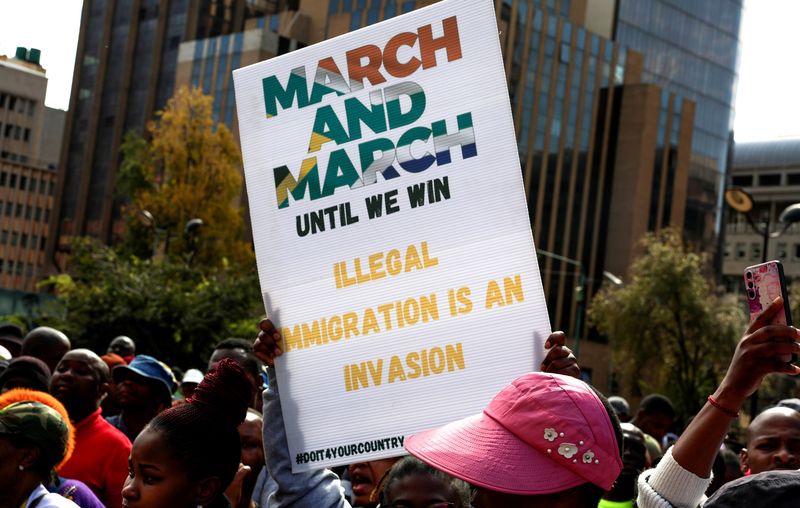
DIGITAL POLITICS OP-ED: The anti-foreigner movement squares up to the state in run-up to elections
From xenophobic campaigning to farm attacks and coordinated influencer messaging, political factions sharpen their attacks on the government and rivals before the 4 November local elections.
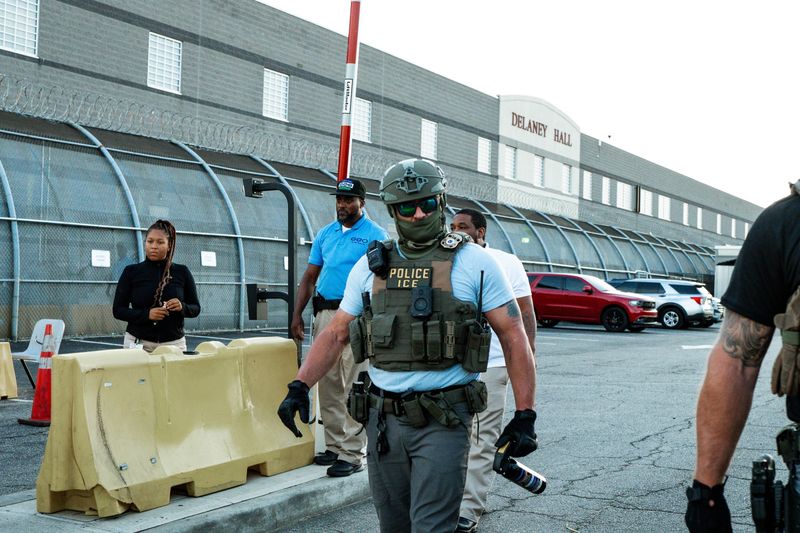
Afghanistan asks US to act responsibly on deporting Afghan immigrants back home
The Afghan Taliban government asked the United States to act responsibly when deporting Afghan immigrants back home, the Afghan foreign ministry said on Monday, adding that Kabul was prepared to engage constructively with Washington on the issue.
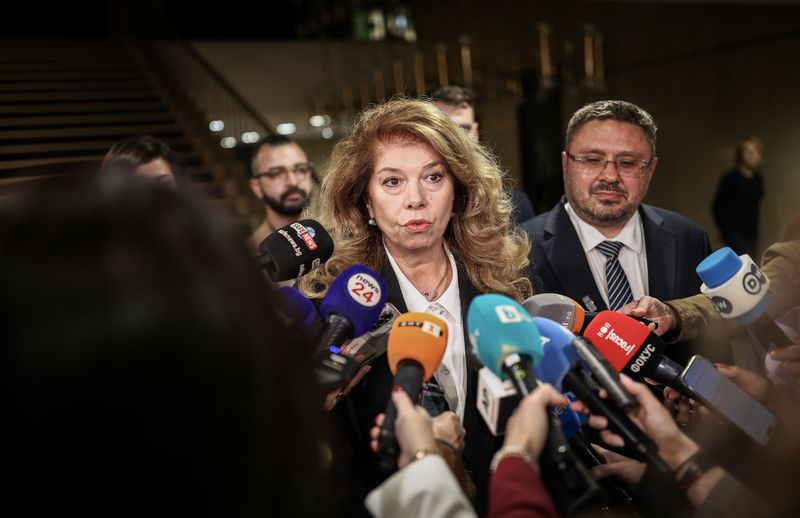
Bulgaria’s Iotova wins presidential runoff, near-final results show
Bulgaria's acting President Iliana Iotova won the presidential runoff election, near-final results from the Central Election Commission showed on Monday, becoming the country's first elected female head of state amid low voter turnout.
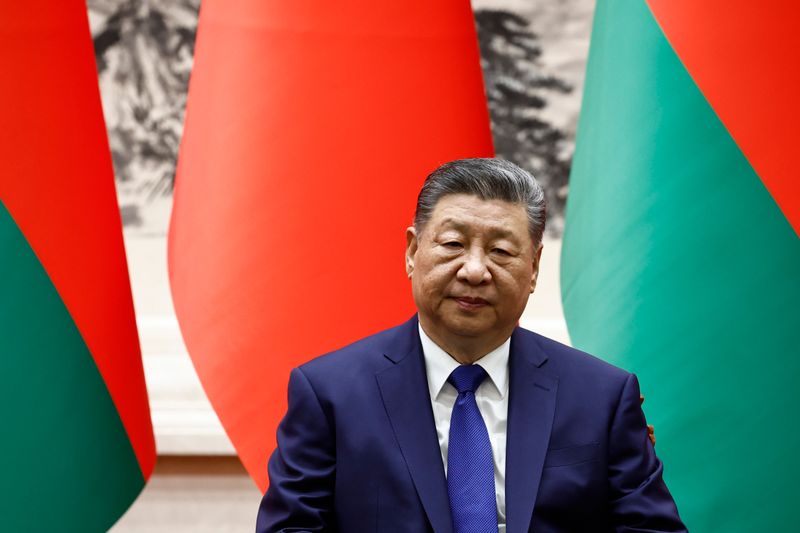
China’s Xi says Middle East should not become battleground for great power rivalry
The Middle East and Gulf region should not become a battleground for great-power rivalry and China is willing to work with Arab nations to achieve lasting peace, Chinese President Xi Jinping told Oman's sultan on Monday
Top Stories
DIGITAL POLITICS OP-ED: The anti-foreigner movement squares up to the state in run-up to elections
Afghanistan asks US to act responsibly on deporting Afghan immigrants back home
Bulgaria’s Iotova wins presidential runoff, near-final results show
China’s Xi says Middle East should not become battleground for great power rivalry

PZ Cussons shareholders approve N9.926bn dividend payout
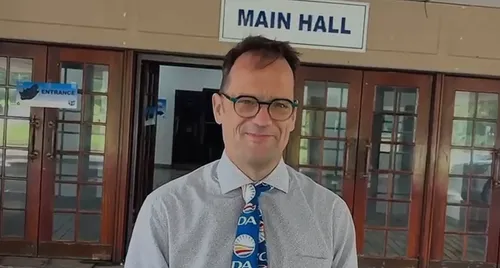
Martin Meyer urges KZN special voters to turn out for local elections
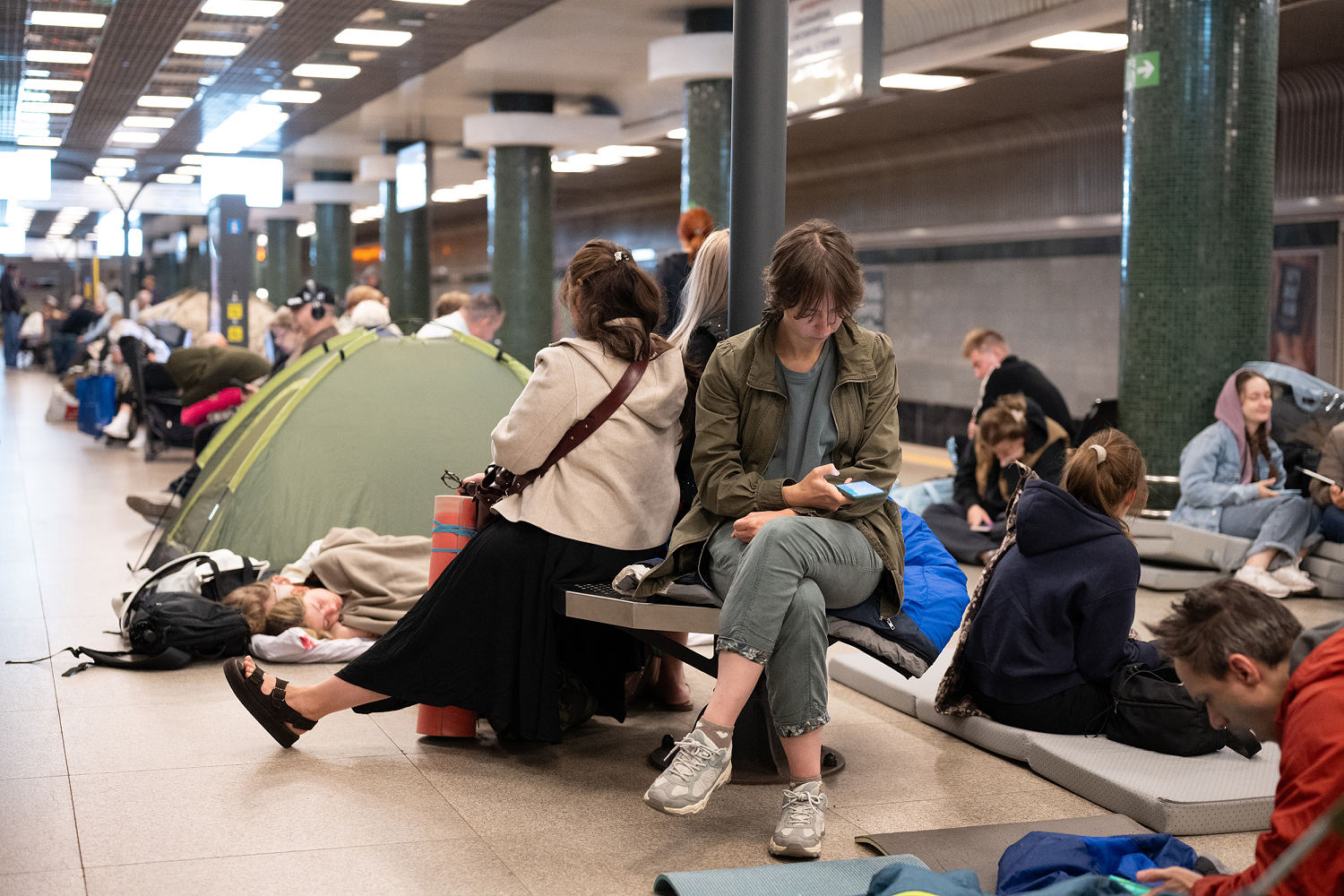
Fake alerts warn of nuclear danger as Ukraine and Russia report emergency app hacks
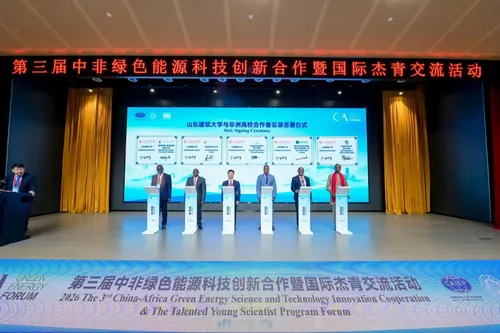
China-Africa green energy forum strengthens research ties in Jinan
Latest
DIGITAL POLITICS OP-ED: The anti-foreigner movement squares up to the state in run-up to elections
Afghanistan asks US to act responsibly on deporting Afghan immigrants back home
Bulgaria’s Iotova wins presidential runoff, near-final results show
China’s Xi says Middle East should not become battleground for great power rivalry
PZ Cussons shareholders approve N9.926bn dividend payout
Martin Meyer urges KZN special voters to turn out for local elections
Fake alerts warn of nuclear danger as Ukraine and Russia report emergency app hacks
China-Africa green energy forum strengthens research ties in Jinan