A moment in history

Yesterday my eight year old granddaughter stepped up to a ballot box and voted for the very first time. The room looked like any other voting station. The voting station scene reminded me of the voting station in Hilbrow where I was the presiding officer in 1994. My granddaughter Melo and her colleagues waited patiently in the long queue, not quite as snaky as our 27 April 1994 queues when we as adult Africans voted for the first time in this country.
Melo’s face seemed a mixture of excitement and signs of deep contemplation. I wondered if she had already decided what to vote for or planned to decide when alone in the voting cubicle that ensures no one sees what the voter puts in their ballot paper.
Before anyone rushes to court to sue the Independent Electoral Commission (IEC), let me clarify: this was a simulation at Melo’s school. The purpose, I was later informed, was to teach children that voting is not a mysterious adult ritual, but a fundamental pillar of democracy. It taught them that by voting, you chose a pathway or pathways to the future. It made them aware that each vote counts in determining collective futures, good or bad.
That classroom moment is not separate from what happened on Wednesday being the day for Local Government Elections (LGEs).
As South Africans we hold the future local government pathways and flowing from such the future of our local communities and as a cumulative effect, our country in our collective hands.
Days from now, we get to determine what those pathways will be and, as a consequence, what the future of our communities will be and what our shared future as a country will look like.
Though looked down upon, local governance is critical in determining whether our communities are governed justly, with fairness to all, mindful of our diversity and the visible legacy of injustices of past capricious governments. But justice, incorporating social justice, is not the only collective future outcome that local government contributes to.
In this way, local elections are where the choice of stewards of our collective power and shared resources as a people dimension of democracy becomes real. They decide who fixes the potholes, who delivers clean water, who manages clinics and schools, who manages waste removal, who ensures there is proper lighting in every street while equitably ensuring that all streets are tarred and who responds when communities are in distress.
Local government elections also determine if we will get competent, corruption free leaders who will govern ethically and constitutionally, stewarding our collective power in a manner that is just and fair. The just and fair part transcends formal appearances but also considers distributional impacts of decisions that treat everyone the same despite difference and disadvantage thus exacerbating structural inequalities on grounds such as age, disability, gender, race and spatial inequalities. Just and equitable is essential deployment of our shared scarce resources for delivering these basic services.
A municipality that works justly for all is the foundation of a country that works justly for all. When local government fails, ordinary people feel it first in the streets they walk, the lights that go out, and the services that never arrive, the houses they cannot get, the rent they cannot afford and the land they cannot access.
Wednesday’s vote is therefore not a side event. It is the front line of sustainable democracy and the rule of law. This moment is made even more special because it coincides with the One Young World Summit right here in South Africa. Young leaders from more than 190 countries have gathered in Cape Town to confront the world’s hardest problems. Both events ask the same question: What kind of leadership will the next generation bring?
The world faces challenges that will not wait. Climate disruption is already reshaping lives and landscapes. Inequality continues to widen. Conflict and division test the limits of peace. Technology advances faster than our ethical frameworks. These problems cannot be solved by the same thinking or the same leaders who allowed them to grow. They require courageous, innovative young leaders who place integrity above popularity and service to all humanity above self-interest and/or justice as “just us”.
As my granddaughter learned having confided in her mother afterwards, democracy itself is not easy. You do not always get what you want. That is part of its design. The majority decides, but the minority must still be heard. Compromise is often required. This is where real leadership is tested. True leaders do not simply demand their pre-ferred outcome. They persuade others with facts, with empathy, and with a vision that serves the common good. Persuasion that is honest strengthens democracy.
Persuasion that misleads as we see in manufacturing of consent through fake news, fake poll prediction and other trickster gimmicks, that twist truth, stoke fear, or divide for personal gain or group agendas, leads democracy astray. It erodes trust, weakens the rule of law, and ultimately threatens peace. Integrity is the line between the two.
As Kate Robertson, co-founder of One Young World, has reminded us: “Leadership isn’t about power or position. It’s about purpose.” Purpose rooted in integrity keeps democracy honest. For democracy to hold sustainably, it must be rooted in justice, as incorporating social justice, that is rooted in an ethos of shared humanity. Ancient Kemet citizens regarded this as part of ma’at or balanced human conduct and power relations. Our forebears in sub- Saharan Africa called it ubuntu, which the Constitutional Court in S v Makwanyane said is an anchor metavalue system of our democracy.
As Graca Machel reminded the One Young World Summit attendees on 3 November 2026, Ubuntu is anchored on the interconnectedness of humanity and equal worth of components of that ecosystem. Often summarised by Mandela and Tutu among others “as I am because we are”, Ubuntu rejects the idea that any of us succeeds in isolation. It insists that our humanity is bound up with the humanity of others. When we use Ubuntu, we ask not only “What is good for me?” but “What strengthens the whole community?” The latter goes beyond only being concerned about people like us and demands what Richard Rorty refers to as expanded loyalty while I refer to it as the highest of five levels of justice consciousness.
To lead with integrity and success in local government, the Thuma foundation believes leaders need the EPIC leadership mindset. Anchored in the EPIC leadership code, the EPIC leadership model requires leaders to pay attention to the implications of any of their planned decisions on leadership, ethics, purpose impact and commitment to serve all fairly. It reminds us that power is a trust, not a trophy. It is a licence anchored in stewardship.
Good leadership shapes democracy. It also keeps the flame of democracy alive sustainably. But good leadership is not confined to who governs. It also applies to who chooses who governs and who cocreates the future with those who govern. This is what was being taught to Melo. “No one is born a good citizen; no nation is born a democracy. The school understood that young people must be included from birth.” Young people are not waiting in the wings. Melo got what she wanted in a menu of five, which was to not read a book every two days. I was not happy with her choice. But her mother defended it as rationally explained by Melo. She said it was time consuming. Talk about the microwave generation! The other choices included ditch Maths and a test.
I hope young people and others think like Melo in voting rationally, not based on emotions. I hope they vote to move the needle on local government as a contributor to a country and world that work for all in fairness to all.
Professor Thuli Madonsela is the director of the Centre for Social Justice, where she occupies the Law Faculty Trust Chair in Social Justice, and the founder of the Thuma Foundation.
Related Topics
Keywords
Related Stories
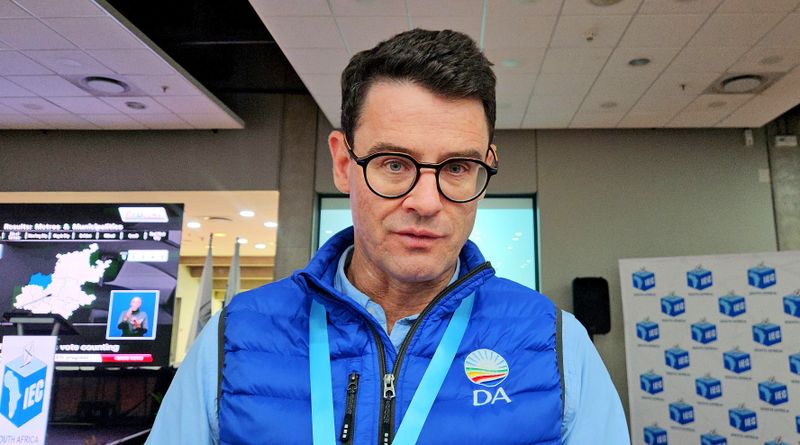
LOCAL ELECTIONS 2026: DA draws coalition red lines as Nelson Mandela Bay results take shape
With the DA leading the vote count in Nelson Mandela Bay, provincial leader Andrew Whitfield says the party is open to coalition negotiations but will not work with the EFF or MK party. He says good governance and service delivery, rather than positions and power, must guide any…
Gov Abiodun declares Ogun ready for state police
The governor described the establishment of state police as a critical step towards strengthening security, protecting investments and sustaining the state’s growing economic activities The post Gov Abiodun declares Ogun ready for state police appeared first on Premium Times…

Former Cross River PDP chair doubts party’s 2027 chances
Former Cross River PDP chairman Venatius Ikem questions the party’s ability to challenge the APC in 2027, describing its structures as fragmented and its Wike-backed presidential candidate, Sandy Onor, as politically invisible. The post Former Cross River PDP chair doubts…

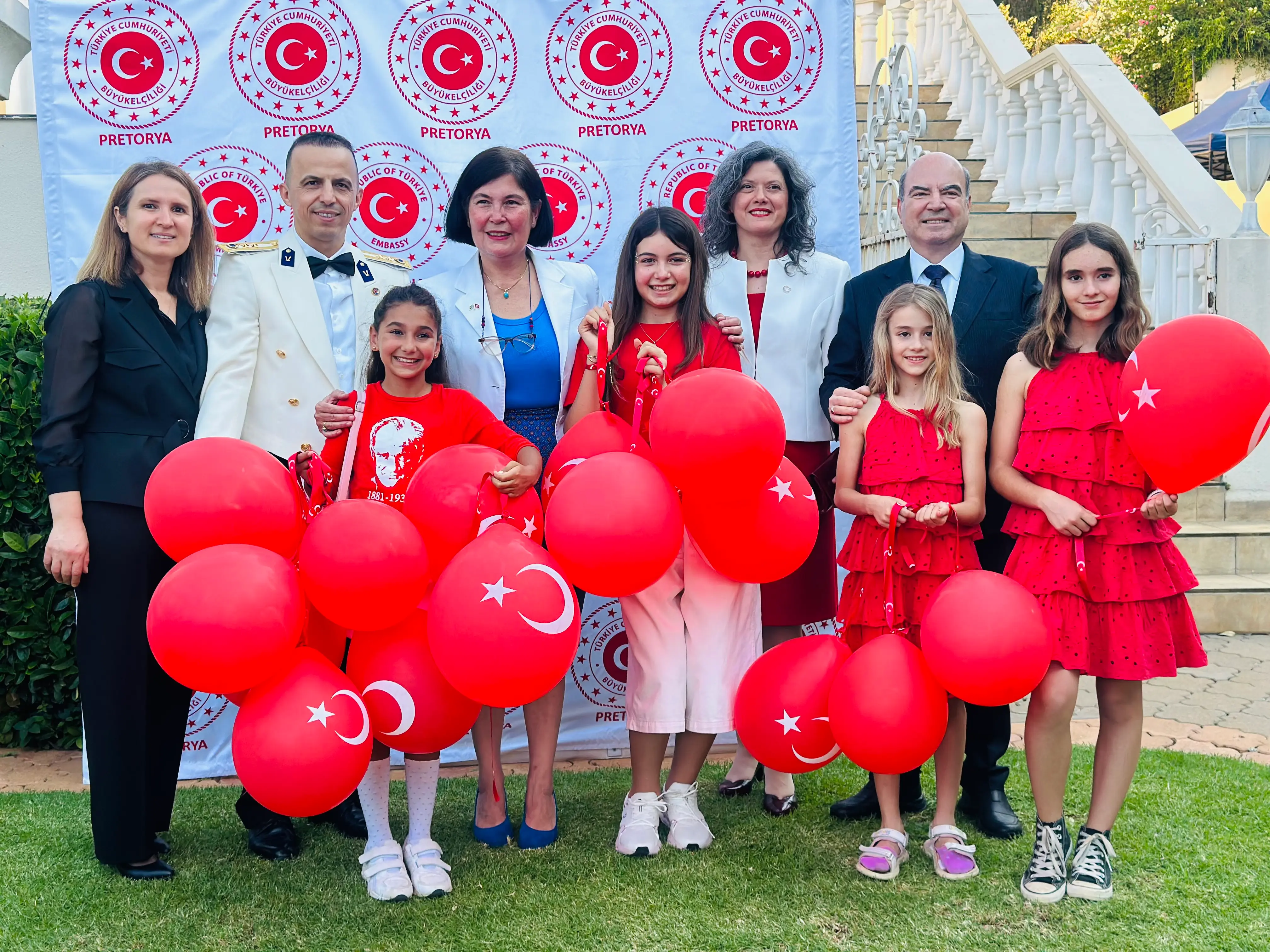
Türkiye and SA look to a bigger future together
The Embassy of the Republic of Türkiye in Pretoria celebrated the 103rd anniversary of the proclamation of the Republic, spotlighting growing diplomatic and economic ties with South Africa.
Top Stories
LOCAL ELECTIONS 2026: DA draws coalition red lines as Nelson Mandela Bay results take shape

USMNT's Gold Cup path to look different as Concacaf unveils revamped group-stage format

Best horse racing betting sites: Where to bet on horse racing
Gov Abiodun declares Ogun ready for state police
Former Cross River PDP chair doubts party’s 2027 chances

Cowboys stars reject George Pickens trade talk ahead of NFL deadline
Türkiye and SA look to a bigger future together

Firms told to publish salaries in job adverts ahead of new law
Latest
LOCAL ELECTIONS 2026: DA draws coalition red lines as Nelson Mandela Bay results take shape
USMNT's Gold Cup path to look different as Concacaf unveils revamped group-stage format
Best horse racing betting sites: Where to bet on horse racing
Gov Abiodun declares Ogun ready for state police
Former Cross River PDP chair doubts party’s 2027 chances
Cowboys stars reject George Pickens trade talk ahead of NFL deadline
Türkiye and SA look to a bigger future together
Firms told to publish salaries in job adverts ahead of new law