Addressing Zimbabwe’s inflation: The role of the digitalization of financial transactions
Commentary
February 7, 2022
Below is a viewpoint from the Foresight Africa 2022 report, which explores top priorities for the region in the coming year. Read the full chapter on Africa’s economic recovery.
 When I was sworn in as Zimbabwe’s minister of finance and economic development in September 2018, our economy was characterized by sustained fiscal imbalances, financial sector vulnerabilities, and cash shortages. Since 2013, the Government had been incurring budget deficits as high as 12.9 percent in 2017, up from 1.3 percent of GDP in 2013. As a result, I immediately introduced a set of economic and structural reforms to stabilize the economy.
Indeed, through a combination of fiscal consolidation and widening of the tax base, we were able to turn these perpetual deficits into surpluses during the periods 2019 and 2020, setting the stage for stability.
More specifically, after years of hyperinflation, the country officially dropped the Zimbabwean dollar in 2015 and introduced a temporary multi-currency platform, which ended up bringing confusion into the system. In 2019, we introduced a new Zimbabwe Dollar as the domestic currency alongside a foreign exchange foreign currency auction system in 2020 to improve transparency in the foreign currency market and facilitate the discovery of a market-based exchange rate.
Consequently, prices of goods and services have stabilized, with annual inflation dropping from a peak of 761 percent in August 2020 to 50 percent in August 2021 and is expected to close the year within the range of 45 percent to 55 percent. While the system has secured relative price stability, we will continue to monitor the system to ensure it achieves the twin objectives of supporting domestic currency and eliminating arbitrage opportunities.
Digitalization of financial transactions in Zimbabwe
Alongside these reforms, Zimbabwe had already been looking to adopt and promote a number of digital payment systems, which included the Real-Time Gross Settlement (RTGS), Electronic Funds Transfer (EFT), mobile money, and electronic cards (both local and international), among others.
Indeed, in recent years, the growth in digital transactions in Zimbabwe has been astronomical: The number of mobile money agents increased significantly from 38,745 in December 2015 to 59,218 at the end of 2019, while the number of active mobile subscriptions increased from 3.3 million in 2016 to 7.67 million as of March 31, 2020.
In addition, the number of point-of-sale (POS) devices in Zimbabwe has grown dramatically from 16,363 in December 2015 to 121,413 in 2019—driven mainly by Government efforts to promote electronic payments and introduce POS devices to micro, small, and medium enterprises (MSMEs).
Notably, this shift towards digital transactions reduced the demand for hard cash, which had been the norm during the hyper-inflationary era.
Lessons and challenges
The introduction of digital financial transactions in Zimbabwe has brought numerous transformational benefits: First, it saved the country from the burden of continuous money printing to meet demand, especially in such a hyperinflationary environment.
This financial digitization process also contributed to transformation and increased uptake of information and communications technologies in the country.
This financial digitization process also contributed to transformation and increased uptake of information and communications technologies in the country.
Second, it dramatically added to increased financial inclusion for marginalized citizens, particularly rural folks. Because informal businesses or startups struggle to access funding from normal banking services, the flourishing of products that enable digital financial transactions has somewhat increased access to the financial sector.
Third, to some extent, this financial digitization process also contributed to transformation and increased uptake of information and communications technologies in the country, including ramping up demand for internet services. In essence, the process created other economic opportunities through the creation of new and innovative businesses, generating employment opportunities in the process.
The major challenge in rolling out the digital financial system was limited coverage of network, especially in rural areas where there is no electricity, this then requires costly diesel-powered generators for network boosters. Furthermore, the country being under sanctions, has limited options for external financing; therefore, ICT companies were finding it difficult to undertake the necessary investment to expand network coverage to meet demand.
Related Content
Makhtar Diop
January 20, 2022
Ameenah Gurib-Fakim, Landry Signé
January 26, 2022
H.E. Hakainde Hichilema
January 21, 2022
Author
The Brookings Institution is committed to quality, independence, and impact.
We are supported by a diverse array of funders. In line with our values and policies, each Brookings publication represents the sole views of its author(s).
Economic Indicators Federal Reserve
Economic Indicators Federal Reserve
Sub-Saharan Africa
Sub-Saharan Africa
Global Economy and Development
Africa Sub-Saharan Africa
Africa Growth Initiative
Robin Brooks
November 5, 2026
Jonathan A. Czin, Mary E. Gallagher, Logan Wright
October 27, 2026
Kari Heerman
October 22, 2026
Originally published and reported by Brookings.
Read original coverage on BrookingsKeywords
Related Stories
Labubu hype seemed unstoppable, now the fluffy monster mania is dying
Parent company Pop Mart's revenue has fallen as appetite for the quirky collectible monsters wanes.

Can New Zealand's new government win over disillusioned voters?
Polling shows the mood among Kiwis is low, with faith in politics even lower - with voters deserting the main parties at the polls.

'My mortgage is going up £200': How rising interest rates are hitting people's pockets
With UK interest rates set to rise, mortgages, credit cards and loans could get more expensive for millions.

Why the US midterms sparked an AI stock selloff
Fears of more AI regulation appear to have sparked fear among investors, but concerns about the industry have been growing for some time.

Top Stories

Billam-Smith stopped as Clarke repeats amateur win

Ambika Mod says the 'glass ceiling is always getting higher' for South Asian actors

The rise of microdramas: The 'snackable' shows made for the scrolling age

Can the Zelda remake capture the magic of the original?

'Dana, please take the job!' - Trump asks UFC boss to be White House press secretary
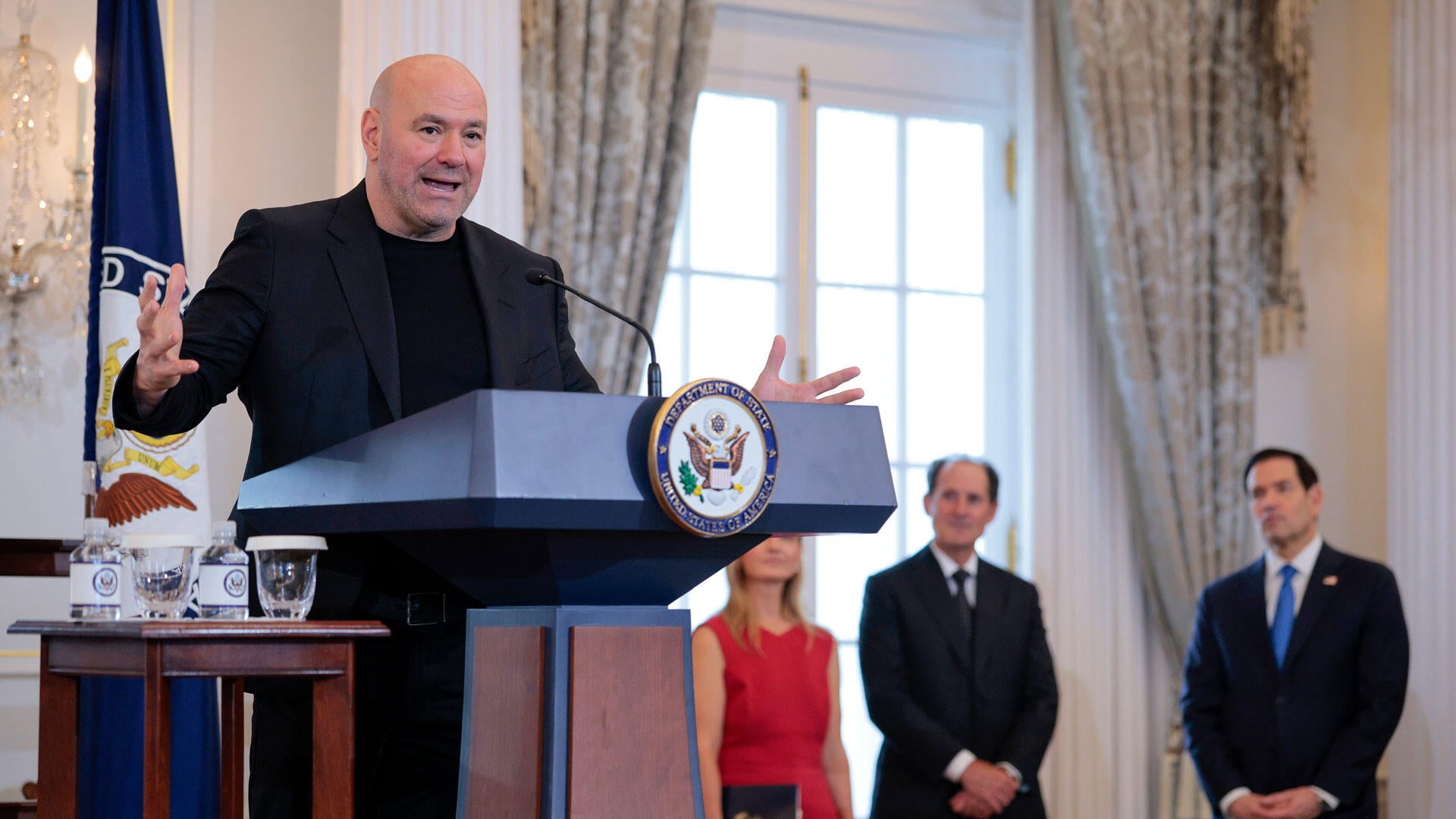
Dana White next White House press secretary? UFC boss set for meeting with President on Monday

'The worst conditions in my 35-year career' - commentating in the FA Cup fog

'Curtains for Robinson' or can floundering Aberdeen boss survive?
Latest
Billam-Smith stopped as Clarke repeats amateur win
Ambika Mod says the 'glass ceiling is always getting higher' for South Asian actors
The rise of microdramas: The 'snackable' shows made for the scrolling age
Can the Zelda remake capture the magic of the original?
'Dana, please take the job!' - Trump asks UFC boss to be White House press secretary
Dana White next White House press secretary? UFC boss set for meeting with President on Monday
'The worst conditions in my 35-year career' - commentating in the FA Cup fog
'Curtains for Robinson' or can floundering Aberdeen boss survive?