AFTER THE BELL: The fall of Numsa’s Irvin Jim — when institutions outgrow their eternal leaders
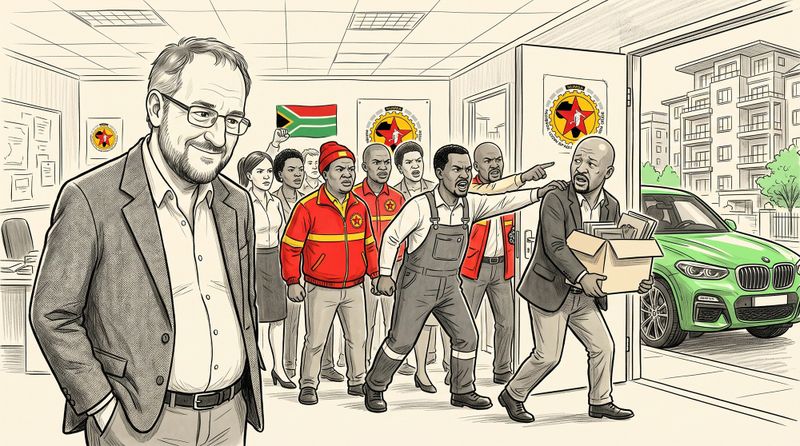
As Numsa moves beyond Irvin Jim’s leadership, the union faces a critical test: rebuilding legitimate, principled leadership focused on workers’ interests.
One of the small joys of finally entering the middle part of being middle-aged is that you start to see all of the patterns that occur around people.
It almost doesn’t matter who the person is, you start to see the same things happen again and again.
I’ve often been slightly envious of older and more experienced colleagues who could watch a short part of a press conference, grunt and know exactly what was going to happen next. To them it seemed so clear.
Reading News24’s reporting this morning on how Irvin Jim has been kicked out as secretary general at our biggest union, the National Union of Metalworkers of SA (Numsa), is a reminder of one of those rules of life you start to see again and again. When someone starts to stay in the prime leadership position of any kind of institution for too long, the institution starts to serve their interests.
And eventually, the institution faces a choice. Does it go on like this, or does it have to renew itself? A process that usually involves kicking the leader out.
In the case of Jim it was pretty clear what had to happen.
While there is a long and difficult legal history about the technicalities of union meetings and decision-making processes, when he started trying to prevent meetings from taking place, the die was obviously cast.
Subverting legitimate processes
Of all the bad things bosses can do I reserve a special place in my (incredibly long) list of people I don’t respect for those who try to subvert legitimate processes.
It really irritates me when CEOs or chairs or whoever go to court a million times to prevent something that is so obviously right.
But I think the worst are those who actually try to subvert democracy in their unions. That must be almost unforgivable.
And that is precisely what Jim tried to do.
It also seemed to me the final outcome of all of this was pretty much on the wall the moment it was first reported that he was living off the largesse of someone else.
R5-million BMW
This shadowy figure that is the Chinese-American billionaire Roy Singham seemed to be funding his penthouse at Melrose Arch and his specially armoured R5-million BMW.
If you are the leader of the biggest union in the country and receiving a salary and they’re paying for your security, why on earth are you living off someone else? Mr Jim, what were you doing for him?
I don’t expect any answers from him, of course. I’m sure we will get some guff about “security concerns” and unverifiable threats.
It is to the eternal credit of Numsa, and its members and provincial leaders, that they were actually able to see this for what it was and do something about it.
But it only went on for so long because Jim had been in office for more than 18 years.
And therein lies my real problem. If someone is running any kind of institution for that amount of time, no matter they do the institution starts to shape itself around them.
I always worry about this in business.
On our own JSE you will see people like Jebb McIntosh, who has been running Combined Motor Holdings for about 50 years (on his almost bare LinkedIn page under experience it literally says “CEO CMH Group”. It is, I suspect, entirely accurate).
Michael Mark has been the CEO at Truworths since 1991 while Terry Moolman has been the CEO at Caxton since before I could talk.
In the US of course the one person everyone looks to is Jamie Dimon, he’s been the CEO at JPMorganChase since 2005.
All of these CEOs come with certain advantages. If you’re Dimon in a very politicised financial environment, you have the huge advantage of knowing exactly where the line is. You know how to manage your various constituencies, whether it be your shareholders, your customers and that pesky person in the White House.
Your experience becomes a real asset.
I’m sure the same is true of Moolman and McIntosh, and many others.
Financial performance
But what really keeps them in their jobs is the financial performance of the companies they lead. There is a very simple metric to assess.
And even someone like Dimon wouldn’t survive a very sustained period of bad performance by his company.
In the union movement that metric is much harder to assess.
You could look at the average wage increase for members over the period, or how the number of members has grown or shrunk, or all sorts of other achievements.
There is of course another metric that could matter more.
Which is what happens after this long-term CEO or general secretary leaves office.
In the case of Numsa I hope that the union is able to elect new leadership and get on with the business of protecting workers.
Goodness knows our workers need all the help they can get. And in particular they need strong, well-organised unions with legitimate leadership.
Jim stopped providing that years ago.
Hopefully, this will be the rebirth of a principled union that looks after workers, negotiates fairly, and makes sure its new leader is not in some kind of debt to someone with their own interests. DM
Related Topics
Keywords
Related Stories
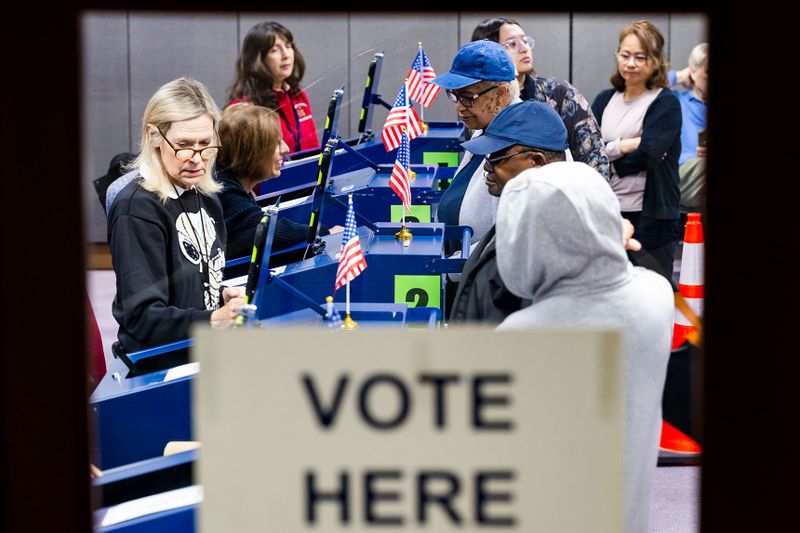
CONGRESS IN THE BALANCE: A blue tsunami, a tide, or chaos as usual — the US midterm election
With just hours to go before the American midterm election takes place, the day before South Africa’s own local election, control of both houses of the American Congress hangs in the balance.
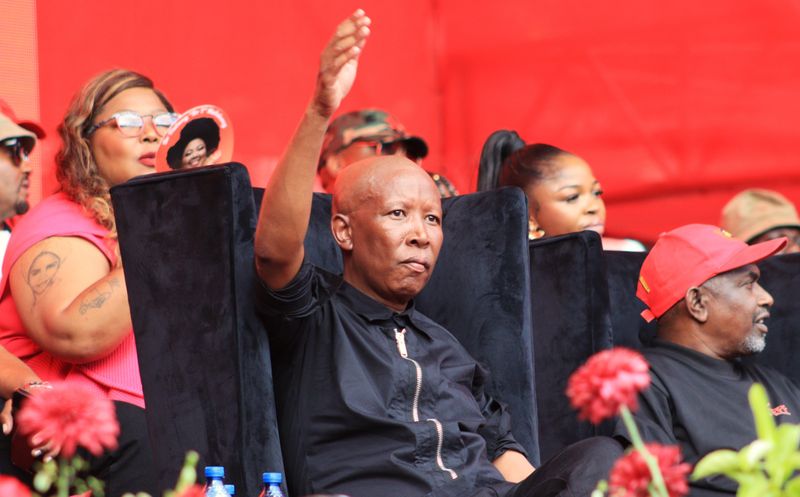
DIVISIVE WORDS: ‘We never called for literal killing’ — Malema appeals for farm killings to stop.
EFF leader Julius Malema says the chant “Kill the boer, kill the farmer” was never meant literally and has appealed for farm killings to stop.
TRC ROULETTE : Victims’ families place key hidden evidence before Khampepe inquiry
A physical inspection of old lever arch files by the legal team representing the families of apartheid victims at the Khampepe Commission strengthens Anton Ackermann’s claim that a disputed 2006 memo was forged, reshaping the Khampepe inquiry into delayed apartheid prosecutions.
REAL ESTATE & GOVERNANCE: How SA property prices reflect municipal service delivery
South Africa’s property prices broadly track municipal performance, with Cape Town leading and Buffalo City lagging, but several metros challenge the pattern.
Top Stories
CONGRESS IN THE BALANCE: A blue tsunami, a tide, or chaos as usual — the US midterm election

'We've got big problems' - Hamilton says Ferrari need 'serious talks'

Detroit linebacker Campbell taken to hospital with neck injury
DIVISIVE WORDS: ‘We never called for literal killing’ — Malema appeals for farm killings to stop.

Antonelli becomes world champion as Verstappen wins in Mexico
TRC ROULETTE : Victims’ families place key hidden evidence before Khampepe inquiry
REAL ESTATE & GOVERNANCE: How SA property prices reflect municipal service delivery

LOCAL ELECTIONS 2026: Thirteen mayoral candidates, plenty of blame and a crowd of fed-up residents
Latest
CONGRESS IN THE BALANCE: A blue tsunami, a tide, or chaos as usual — the US midterm election
'We've got big problems' - Hamilton says Ferrari need 'serious talks'
Detroit linebacker Campbell taken to hospital with neck injury
DIVISIVE WORDS: ‘We never called for literal killing’ — Malema appeals for farm killings to stop.
Antonelli becomes world champion as Verstappen wins in Mexico
TRC ROULETTE : Victims’ families place key hidden evidence before Khampepe inquiry
REAL ESTATE & GOVERNANCE: How SA property prices reflect municipal service delivery
LOCAL ELECTIONS 2026: Thirteen mayoral candidates, plenty of blame and a crowd of fed-up residents