AGRICULTURAL SECTOR: SA farmers swap maize for sunflower as ‘Godzilla’ El Niño threatens harvests
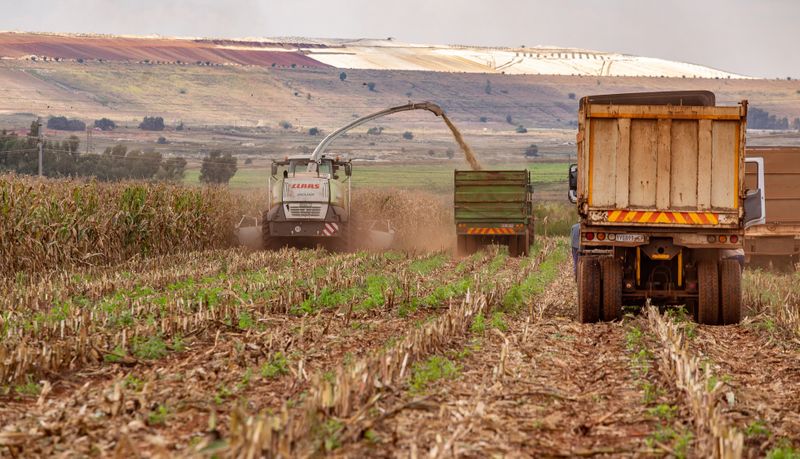
As an intense El Niño threatens the summer grain belt, farmers are shifting from maize to faster-growing, drought-tolerant sunflower amid mounting economic pressure.
South Africa’s commercial grain farmers intend to plant significantly less maize this season than last year as the unfolding El Niño, surging fertiliser and fuel costs and low prices create a perfect storm of uncertainty across the platteland.
South Africa currently has ample carryover maize stocks – a record 4.3 million tonnes of the white variety – in the wake of last season’s stout harvest. But if this summer’s harvest is much smaller because of less planting and drought, it could potentially herald tight supplies next year and accelerating food inflation.
The official Crop Estimates Committee (CEC) released its first projections on Tuesday for the intentions of producers to plant summer crops, and it was a sobering look at how farmers are preparing for the “Godzilla” El Niño.
Based on its surveys, it showed that at this early stage of the game, farmers intend to devote 12.37% less land this season than they did last year for maize plantings – dropping to 2.387 million hectares, down from 2.724 million hectares in 2026, and the lowest in eight years.
For the staple white maize, the picture is even more worrying – a drop of more than 18% in the amount of land that will be devoted to the crop that is the main source of calories for lower-income households.
This is partly a function of soaring input costs and drought concerns, but also speaks to depressed prices for the commodity.
“If you go back a season or two, farmers had very good prices for white maize,” said Tobias Doyer, the CEO of industry group Grain SA. “But internationally, maize prices have been dropping for a while. South Africa dodged that bullet when southern Africa had a drought a couple of years ago, and our white maize prices remained higher than they should have been.
“And that gave farmers the signal to plant white maize and continue planting white maize. And now the biggest part of the surpluses that we currently have in silos all over the country is white maize.”
The drop in the amount of land intended for planting key summer crops has fallen across the board, adding up to a 2.0% decrease.
The outlier is the amount of land that farmers have signalled they plan to devote to sunflower seed. That has soared by almost 45% because of a range of factors including higher prices, lower input costs, and the fact that the crop is less vulnerable to drought with the benefit of a shorter growing season.
Revealingly, Grain SA has noted an exceptionally early start to sunflower seed plantings in the western production areas of the summer grain crop – in some cases two months earlier in August, in part to take advantage of good soil moisture levels while they last.
Modern planting decisions are far from arbitrary: decades of technological breakthroughs, including GMOs and GPS-driven precision farming, allow farmers to tailor inputs based on exact soil conditions.
The current El Niño, which formed in June, is widely regarded by climate scientists to be the most intense on record – possibly a once-in-a-millennium event – and it is not predicted to fade before February or March at the earliest – near the end of South Africa’s summer crop season.
El Niño typically heralds drought in this region, and while this is not always the case, October has mostly been hot and dry over large parts of the summer grain belt after deceptive rains in September.
Anecdotal reports from farmers suggest this fits the pattern of previous El Niño events – a wet September preceding a summer of drought and heatwaves.
Doyer elaborated on how these historic trends influence the way farmers are approaching this season of extreme uncertainty.
“With El Niño, you are probably going to get lots of rain in the beginning, lots of rain at the end, with drought in the middle. But all things considered, it’s going to be a shorter season, and you want a crop that gets to maturity faster than other crops, and that’s also a motivation for switching to sunflowers,” said Doyer.
The South African Weather Service forecasts that the far northeast, which includes the Kruger National Park, will likely be the hardest-hit region in South Africa, but the summer grain belt is also seen getting baked in a scorcher of a summer.
And the wider region where much agricultural production remains subsistence and rain-fed could experience chronic food shortages, leaving tens of millions in need of assistance at a time when aid budgets have been gutted.
It is still early days, with things changing week by week. The onset of hot weather and the sudden dearth of rain in October has slowed the initial early planting binge as farmers wait to see when the heavens will open again.
“We are optimistic that most farmers will continue to plant early in the season, taking advantage of the soil moisture, although the heatwave is quickly raising our concerns,” Wandile Sihlobo, chief economist at the Agricultural Business Chamber, pointedly noted in a comment on the CEC data.
The full picture will only come into clear focus in January when the CEC releases its preliminary estimates on the amount of land that was actually planted – which could differ significantly from the amount that farmers have signalled they intend to plant.
The bottom line is that it is planting time and South African commercial farmers have indicated that they are going to plant less maize this season and a lot more sunflower. The consequences of that decision will only be clear a few months hence. DM
Keywords
Related Stories
Ebola: No new cases in Nigeria as two suspected cases in North-east test negative
Details obtained exclusively by PREMIUM TIMES revealed that a 34-year-old pilot and his wife, a medical doctor, are the two people suspected of having Ebola virus disease in Adamawa State, North-east Nigeria. The post Ebola: No new cases in Nigeria as two suspected cases in…

Ebola: Saudi Arabia suspends travel to Kenya, halts visa issuance
The Saudi Press Agency (SPA) announced the measures in a statement published on its official X account on Friday, 30 October, saying they followed epidemiological assessments by the country’s health authorities The post Ebola: Saudi Arabia suspends travel to Kenya, halts visa…

Group seeks end to health workers’ absenteeism in PHCs
“Our expectation is that the government and other policymakers will take renewed action to ensure that these interventions are implemented across the state,” the group's coordinator said. The post Group seeks end to health workers’ absenteeism in PHCs appeared first on Premium…

Catholic diocese, CAN reject inclusion of clerics in APC campaign list
PREMIUM TIMES reports that the APC in the state had included Mr Obodo and many other Christian clerics in the party's governorship campaign council. The post Catholic diocese, CAN reject inclusion of clerics in APC campaign list appeared first on Premium Times Nigeria.

Top Stories

Hamilton takes first pole for Ferrari at Mexico City Grand Prix

These firms you've never heard of are feeding fears the AI bubble could burst

How the downfall of Serbia's Vučiċ mirrored that of Hungary's Orbán

College football winners, losers: Oregon's Dylan Raiola bounces back, Wisconsin falls flat

On 'tense' Antonelli's big weekend, this was Hamilton's day

Thick fog to create hazardous driving conditions into next week

Oklahoma offense stuck in neutral: Loss to South Carolina highlights key decisions ahead for Brent Venables

No more washing up: How Airbnb's new house rules have divided hosts and guests
Latest
Hamilton takes first pole for Ferrari at Mexico City Grand Prix
These firms you've never heard of are feeding fears the AI bubble could burst
How the downfall of Serbia's Vučiċ mirrored that of Hungary's Orbán
College football winners, losers: Oregon's Dylan Raiola bounces back, Wisconsin falls flat
On 'tense' Antonelli's big weekend, this was Hamilton's day
Thick fog to create hazardous driving conditions into next week
Oklahoma offense stuck in neutral: Loss to South Carolina highlights key decisions ahead for Brent Venables
No more washing up: How Airbnb's new house rules have divided hosts and guests