ATHLETE ADVOCACY: Why South African sportspeople need an independent voice to fight governance failure
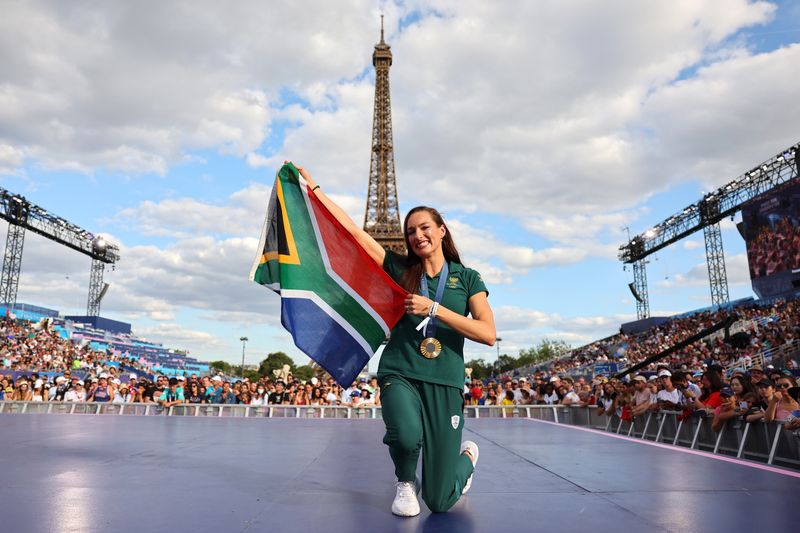
It’s time for South African athletes to stand up for themselves and take on corrupt and incompetent officials, or risk having their dreams shattered.
How many times have you heard the phrase, “our athletes achieve in spite of their federations”. We all have a chuckle, shake our heads, mumble about corruption, malfeasance and basic incompetence and then move on to other stories in the national discourse of corruption, incompetence and malfeasance.
Hardly a week goes by when we, at Daily Maverick Sport, aren’t sent a tipoff about alleged corruption in South African sport.
Just this week we had a steer about alleged nefarious goings-on in squash.
Another week it could be swimming, or water polo, cycling, diving, netball, athletics, road running and others.
The general theme of the claims is always the same. A handful of senior officials run the federation as their own personal fiefdom, allegedly freely spending the scant resources on overseas trips and other jollies, while often asking athletes to pay their own way to international events.
Daily Maverick has reported on many of these, while our limited resources mean we cannot cover them all.
Media pressure
Approaching the media is usually a last resort for frustrated athletes, but our reporting has occasionally had consequences for officials.
Swimming South Africa (SSA) recently apologised to Olympic champion Tatjana Smith at a briefing to Parliament’s Sports Portfolio Committee. SSA paid her R75,000 in interest on world championship prize money it had withheld for more than a year.
The federation’s acting president, Zikie Molusi, told the portfolio committee that the withholding of Smith’s prize money “should never have happened”.
Smith won the 200m breaststroke at the World Aquatics Championships in Fukuoka, Japan, in July 2023.
On 16 August that year SSA told her it was withholding her $35,000 prize money because she had competed in the wrong kit.
The money was paid more than a year later, around the time of the 2024 Paris Olympics. The interest it earned in the meantime was paid only after her lawyers demanded it and Daily Maverick reported on it. Smith has said she still does not feel safe in her own federation.
Athlete power
Smith finally received her money because she had lawyers and the media on her side. Most athletes have neither.
While the media plays an important role in shining light on these issues, it’s athletes who hold the real power.
No one has ever paid money to watch an official guzzling at the free lunch buffet or snoozing through a committee meeting.
TV rights holders, fans and sponsors pay to watch athletes performing at their peak.
In the simplest of terms, the job of any federation is to do everything in its power to support athletes in fulfilling their potential. They need expertise in coaching, world-class facilities, as well as funding and other structural support. It’s really not rocket science. Yet very few federations appear to take this mandate seriously.
It should start with officials who actually have the sport and the athletes at the centre of their thinking. If federations acted with an honest effort to support athletes, South African sportspeople would already be much better off than they are.
Unfortunately, reams of evidence show that this is not the case.
The only way for real change to occur is for athletes to take a stand – and it might come at some short-term cost such as missing out on a major event.
It might need athletes to boycott high profile events, demanding change, or for athletes to speak out more publicly about the roadblocks put in their way.
I understand it’s not easy and that young, aspiring world-class athletes only want to compete and focus on being the best they can be.
But too many of them are being robbed of fulfilling those dreams by self-serving officials who cling to power over numerous terms of office – sometimes against the limits of their own constitutions.
Athletes are going to have to wake up to the fact that they hold the power, that they are the most important link in the chain. Bluntly, they must take the fight to officials.
The time has come for an independent national body representing all athletes, outside the SA Sports Confederation and Olympic Committee (Sascoc) and the federations.
A system in trouble
If that sounds drastic, consider the state of the system in recent months.
SSA’s leadership is under scrutiny. In August the World Aquatics integrity unit provisionally suspended the federation’s president, Alan Fritz, and chief executive Shaun Adriaanse, over potential violations, including abuse of power.
SSA’s planned high-performance centre in Franschhoek, funded with tens of millions of rand of lottery and other money, is under investigation by the Special Investigating Unit because there is nothing to show for it.
The federation’s own figures show athletes are carrying a growing share of the cost of competing for South Africa. In 2025 SSA spent R15.44-million on high performance, of which athletes paid R9.53-million, according to its annual report. The federation and its partners, including government and sponsors, contributed R5.91-million. The athletes’ share rose by R2.4-million on the previous year.
In September, Sascoc suspended its president, Barry Hendricks.
This, after retired judge Basheer Waglay found prima facie grounds to refer anonymous complaints of alleged safeguarding breaches to Sascoc’s judicial body. Sascoc has said the suspension is not a finding of wrongdoing.
Weeks earlier Hendricks had told Parliament that the state of the national federations saddened him.
Athletics South Africa’s (ASA’s) disciplinary panel has found its suspended president, James Moloi, guilty of misusing funds after a forensic report into unauthorised credit card spending. He has subsequently been fired.
World Athletics gave ASA six months to adopt a new constitution and hold fresh elections or face sanctions, which could include suspension. The Los Angeles Olympics are less than two years away. ASA has responded swiftly to the directive.
In September, South African Football Association (Safa) delegates elected Danny Jordaan to a fourth term as president, by 157 votes to 82.
Jordaan faces charges of fraud and theft involving more than R1.3-million of the association’s money and is due in court in November. He has not been convicted and is presumed innocent.
Netball, karate and basketball are also dealing with suspensions and internal disputes.
What a new body could look like
Some sports, such as cricket, rugby and football have well-organised player bodies that fulfil a role for athlete protection and representation.
The South African Cricketers’ Association (Saca) and MyPlayers (rugby) provide a blueprint for ensuring security and certainty in contracting and remuneration for their athletes – ultimately, that is what all athletes want, and deserve.
But the time has come for an independent, national body representing the interests of all athletes, removed from Sascoc and individual federations.
Hypothetically, it could take the form of an independent non-profit association for all national-team athletes, plus a registered union section for athletes who are employees (such as contracted rugby and cricket players).
Funding would be a challenge, but Sports Minister Gayton McKenzie could put his money where his mouth is and commit to funding such an organisation while it could also seek commercial partnerships.
It would have to establish its own membership criteria such as automatic and free entry for national representatives.
Obviously, it would have to follow good business principles such as an athlete-elected board and published audited accounts.
And it wouldn’t necessarily have to be in opposition to Sascoc. It could work alongside the Sascoc Athletes’ Commission rather than replacing it. The commission would keep its seat inside Sascoc while the new outside body held the system to account.
There is precedent too. In Germany, 45 athletes founded Athleten Deutschland in 2017 despite open scepticism from the national Olympic committee. It now gets state funding independent of that committee. That also answers the obvious objection that a state-funded body can’t be independent.
There might be a better way than outlined here, but the reality is that the status quo cannot go on for much longer.
Athletes are not only in a sporting contest, but a fight for their very existence at the highest level against incompetence and greed. The choice is theirs. DM
Related Topics
Keywords
Related Stories
2027: Makinde unveils presidential manifesto, faults leaders over failures
The APM candidate and Oyo governor also proposed a government of national unity and an electoral threshold to encourage political alliances across ethnic, religious and political divides. The post 2027: Makinde unveils presidential manifesto, faults leaders over failures…

Democrats sweeps Congress leaving defiant Trump a lame-duck president
US President Donald Trump was coming to terms on Wednesday with the prospect of two years of political impotence, after the Democrats won control of both houses of Congress in the midterm elections.

Many injured, missing as Nasarawa APC presidential rally turns bloody
The rally, which had Vice President Kashim Shettima in attendance, turned chaotic when some youths dressed in APC regalia began chanting slogans in support of the Social Democratic Party (SDP) governorship candidate, former Inspector-General of Police (IGP), Adamu Abubakar. The…

BUSINESS REFLECTION: Loaded for Bear: Midterm elections spark relief as US voters embrace dawn of decency
Following the Republicans’ defeat in the midterm elections, Trump will no doubt continue to bang on with his baseless lies about the ‘very bad things’ happening in South Africa. But it will be the quacking of a lame duck.
Top Stories
What's next for the Valkyries? Why Golden State could add star free agent to championship core
Today's top games to watch, best bets, odds: 76ers at Pistons, Flagg vs. Wembanyama, college football and more
Previewing a Week 10 that could reshape the CFP race as the biggest Saturday yet arrives

Gemini for Home now plugs into AT&T’s smart security system
Jacoby Brissett trade: Ravens strike deal for Cardinals QB amid injury crisis
2027: Makinde unveils presidential manifesto, faults leaders over failures
NBA DFS: Top DraftKings, FanDuel daily Fantasy basketball picks for Wednesday, Nov. 4 include OG Anunoby
Week 9 NFL picks, best bets from proven model: This 5-leg parlay returns nearly 30-1
Latest
What's next for the Valkyries? Why Golden State could add star free agent to championship core
Today's top games to watch, best bets, odds: 76ers at Pistons, Flagg vs. Wembanyama, college football and more
Previewing a Week 10 that could reshape the CFP race as the biggest Saturday yet arrives
Gemini for Home now plugs into AT&T’s smart security system
Jacoby Brissett trade: Ravens strike deal for Cardinals QB amid injury crisis
2027: Makinde unveils presidential manifesto, faults leaders over failures
NBA DFS: Top DraftKings, FanDuel daily Fantasy basketball picks for Wednesday, Nov. 4 include OG Anunoby
Week 9 NFL picks, best bets from proven model: This 5-leg parlay returns nearly 30-1