Beyond the X lies a constitutional promise
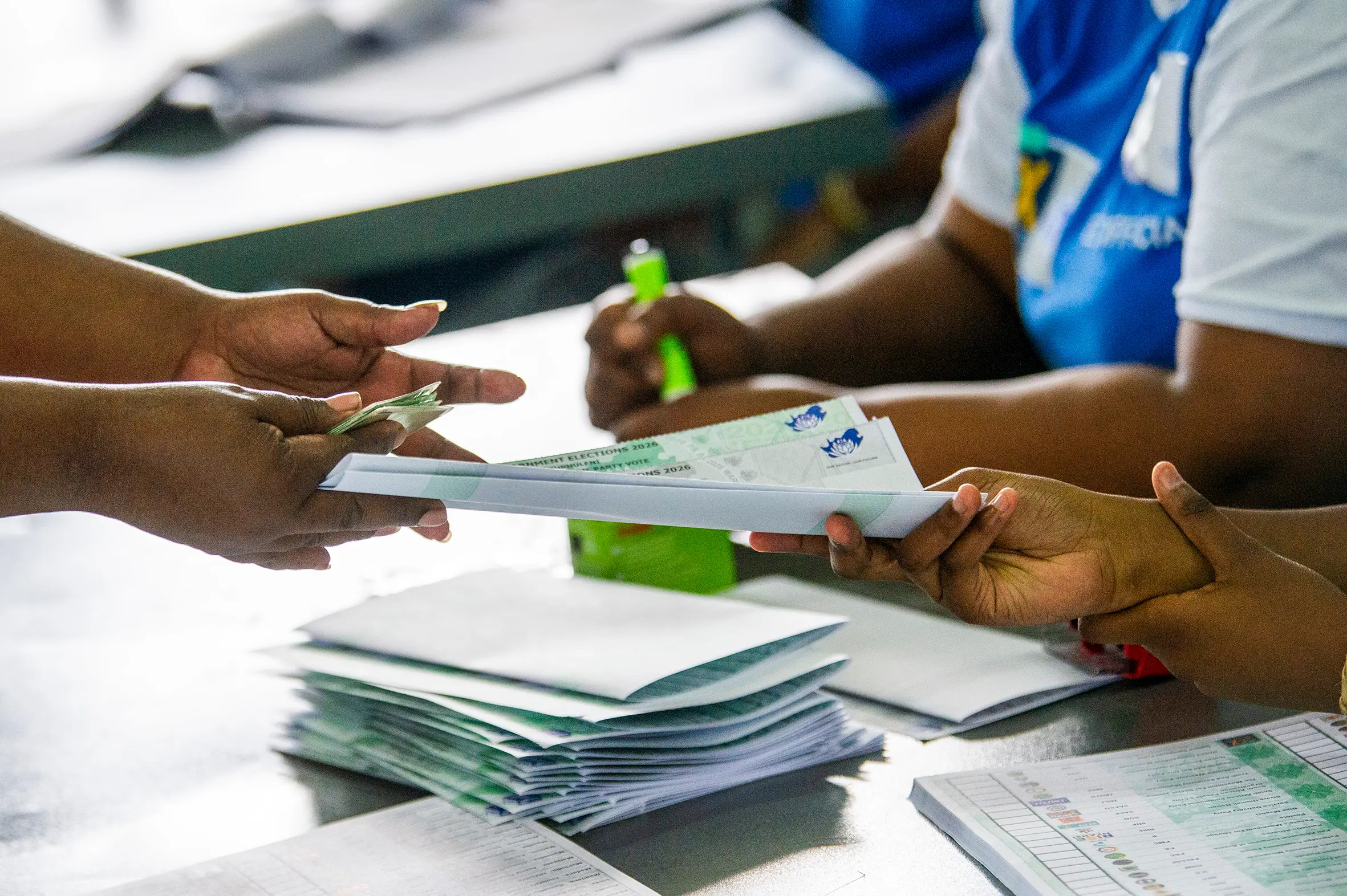
There is a stillness that falls over a polling station just before the doors open on election day. In community halls, school classrooms, church fellowships and tents pitched against the dust of a rural road, South Africans arrive with IDs in hand and queue, sometimes for hours, to make a mark on a ballot.
That mark is small. Its significance is immense. It is the oldest and most dignified gesture in a constitutional democracy; the deliberate transfer of power from the governed to those who govern, bounded by the supreme law of the Republic.
The Constitutional Court (United Democratic Movement versus Speaker of the National Assembly and Others) reiterates that “South Africa is a constitutional democracy — a government of the people, by the people and for the people through the instrumentality of the Constitution. It is a system of governance that “we the people” opted for to create a free, just and united nation. Central to this vision is the improvement of the quality of life of all citizens through good governance. Every ballot cast at local government level is a renewal of the compact set out in the Preamble to our Constitution — to heal the divisions of the past, establish a society founded on democratic values and social justice and improve the quality of life of every citizen.
Local government is where that compact is most intimately tested, for it is in the municipality that the Constitution either delivers water to the tap, light to the clinic and refuse removal to the street or fails to.
South Africans are entitled to hear from the institutions supporting constitutional democracy that the covenant between the voter and the State remains intact.
We stand at a juncture in which no single political formation commands uncontested authority across the local sphere. Since the 2021 municipal elections, more than 60 municipalities have been governed through coalition arrangements.
In metropolitan centres such as the City of Johannesburg, the City of Tshwane, Ekurhuleni and Nelson Mandela Bay, executive office has changed hands with distressing frequency. Residents have borne the costs of that turbulence in the currency that matters most.
In Hammanskraal, this Office found a cumulative failure of governance spanning more than 15 years, a failure to maintain infrastructure, spend grants correctly and exercise oversight, that denied clean water to a community that had every right to expect it.
At Enoch Mgijima Local Municipality, our investigation into the construction of the Lesseyton Sports Field, a project that absorbed more than R22 million while delivering little more than cleared ground, rudimentary tracks and metal bleachers, revealed procurement irregularities, a tender pro-cess flouted and officials who were not held to account but, in several instances, moved or promoted.
At Emfuleni, residents of Sebokeng Zone 3 waited through undue delay for the restoration of water services. At Lekwa-Teemane and Nama Khoi, we found irregularities in the appointment of service providers for smart meter installations.
These are findings issued, in each case, with binding remedial action. They are the measurable cost of a politics that forgets who it is for.
Section 41 of our Constitution offers an answer that is too often overlooked. Its principles of co-operative government; effective, transparent and accountable administration, exercised in good faith and in a partnership of mutual trust; were drafted to govern relations between the spheres of government.
They apply with equal force within a coalition. A coalition that honours them is a working partnership in service of the people. A coalition that abandons them becomes precisely what the headlines describe.
Which brings us to the calibre of councillor that this moment requires. Reports issued by Public Protector South Africa, taken together, describe with unavoidable clarity what the Constitution expects.
Section 195 commands a high standard of professional ethics, the efficient and effective use of resources, accountability and transparency. These are not aspirations; they are commands.
The councillor the Constitution requires is one who places the public interest and community needs above factional or private interests, who respects the line between political oversight and administrative execution, who declines to interfere with the procurement machinery and who insists on merit-based appointments in place of cadre deployment.
The councillor the Constitution requires understands, as the Constitutional Court held in United Democratic Movement versus Speaker of the National Assembly, that the fiduciary duty of a public office-bearer is to advance the constitutional project of improving the lives of all citizens, not to serve a party, a faction or a benefactor. That is the measure. It is a demanding one. It is also the only one that will do. From that constitutional measure flows the urgent task. The remedial action of this institution, the implementation of which has risen from a historical low of approximately 2% cent toward the 67% mark and continues to climb, points consistently in one direction.
Professionalise the administration. Insulate the engineers, finance officials and service managers from the churn of political change, so that water continues to flow while the politics is sorted out.
Make consequence management real rather than rhetorical, for a disciplinary process that is announced and then shelved is itself a form of corruption. Strengthen the protection of whistleblowers whose courage keeps our investigations alive, and whose silencing is the surest sign that a council has lost its way.
Move from the reactive processing of symptoms to systemic correction of root causes.
And remember, in every council chamber, that the Lesseyton field project in Enoch Mgijima Municipality was once a budget line item signed off by council.
Where governments change often, institutions that do not change become anchors. The mandate of the Public Protector in a coalition environment is sometimes misunderstood as adversarial. It is not. It is a role of partnership — with councillors who wish to honour their fiduciary duties, with administrators who hold the line against undue political interference, and above all with the citizen whose complaint, however modest, is treated as the opening of a constitutional conversation.
The voter’s demand drives our democracy and must be honoured through action, not just words. It is honoured when a coalition agreement is reduced to writing and placed before the public.
It is honoured when a motion of no confidence is reserved for genuine failures in office rather than deployed as a tactic in the trade of positions.
It is honoured when the institutions supporting democracy such as Public Protector South Africa, the Auditor-General, the South African Human Rights Commission, the Electoral Commission and others are afforded the resources to do their constitutional work.
It is honoured, above all, when ethical conduct puts the people’s needs first.
South Africa has never been a country for easy solutions. The Constitution did not promise us an easy path. It promised us a destination: a society in which human dignity, equality and freedom are not slogans but lived realities for every person.
That promise was always going to ask more of us than the casting of a ballot every five years. It asks the slow, often unglamorous work of making institutions function, and not just functioning for the sake of functioning but functioning in the interests of the governed; of holding leaders to account, and of refusing to allow coalition negotiations to become transactions over positions rather than compacts over service.
To the voter who will again mark an X at a local government election: the trust you place in the ballot is not misplaced. It is answered by every institution that still does its work when the cameras have moved on, and by every public servant who remembers that constitutional office is held on behalf of, and for the common good of the people.
Our democracy is not a finished project. It is a project renewed each time a citizen exercises his/her democratic right to elect public representatives to govern their affairs.
Advocate Kholeka Gcaleka is the public protector of South Africa.
Related Topics
Keywords
Related Stories
LOCAL ELECTIONS 2026: DA draws coalition red lines as Nelson Mandela Bay results take shape
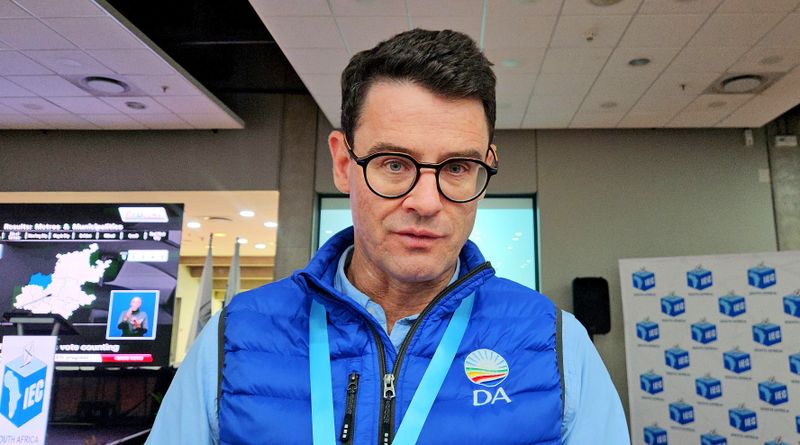
With the DA leading the vote count in Nelson Mandela Bay, provincial leader Andrew Whitfield says the party is open to coalition negotiations but will not work with the EFF or MK party. He says good governance and service delivery, rather than positions and power, must guide any…
Gov Abiodun declares Ogun ready for state police
The governor described the establishment of state police as a critical step towards strengthening security, protecting investments and sustaining the state’s growing economic activities The post Gov Abiodun declares Ogun ready for state police appeared first on Premium Times…

Former Cross River PDP chair doubts party’s 2027 chances
Former Cross River PDP chairman Venatius Ikem questions the party’s ability to challenge the APC in 2027, describing its structures as fragmented and its Wike-backed presidential candidate, Sandy Onor, as politically invisible. The post Former Cross River PDP chair doubts…

Türkiye and SA look to a bigger future together
The Embassy of the Republic of Türkiye in Pretoria celebrated the 103rd anniversary of the proclamation of the Republic, spotlighting growing diplomatic and economic ties with South Africa.

Top Stories
LOCAL ELECTIONS 2026: DA draws coalition red lines as Nelson Mandela Bay results take shape

USMNT's Gold Cup path to look different as Concacaf unveils revamped group-stage format

Best horse racing betting sites: Where to bet on horse racing
Gov Abiodun declares Ogun ready for state police
Former Cross River PDP chair doubts party’s 2027 chances

Cowboys stars reject George Pickens trade talk ahead of NFL deadline
Türkiye and SA look to a bigger future together

Firms told to publish salaries in job adverts ahead of new law
Latest
LOCAL ELECTIONS 2026: DA draws coalition red lines as Nelson Mandela Bay results take shape
USMNT's Gold Cup path to look different as Concacaf unveils revamped group-stage format
Best horse racing betting sites: Where to bet on horse racing
Gov Abiodun declares Ogun ready for state police
Former Cross River PDP chair doubts party’s 2027 chances
Cowboys stars reject George Pickens trade talk ahead of NFL deadline
Türkiye and SA look to a bigger future together
Firms told to publish salaries in job adverts ahead of new law