‘Biggest polluters must be main contributors’ say experts on tackling Africa climate change
Temperatures are rising fast in Africa. Last year was one of the three warmest years on record and that trend is expected to continue, with climate change increasingly affecting all parts of life, from health to food security, according to the World Meteorological Organisation’s (WMO) State of the Climate in Africa report released this week.
Simon Thuo is an expert on sustainable development based in Nairobi and working on Kenya’s climate adaptation plan, and Gilles Yabi is a political and economic analyst based in Dakar, Senegal. He is also the former director of International Crisis Group for West Africa and founder of the WATHI think tank. The two experts gave us their take on what the key issues are and what can be done to tackle climate impact in Africa.
Simon Thuo: Since 2012, food security has deteriorated, and this is especially affecting children up to five years, causing their susceptibility to disease and, thus infant mortality to go up. This is coupled with the spread of diseases associated with climate change, particularly with wet seasons and temperature rises, to new areas and to new populations. The health sector is particularly vulnerable in this respect.
Gilles Yabi: Whether it’s health, food security or any other crisis, the main issue is the States’ capacity to deal with them, and Africa’s capacity of response is the most limited in financial and technological terms. What’s important is to understand the wide variety of climate impacts so that we can do what needs to be done to limit the damage, even though in reality containing the consequences of climate change is not possible anymore.
ST: Governments and international partners should encourage African countries and communities to move away or to diversify from cash crops such as cereals, which are highly tradable and bring income, towards root crops and tubers, which grow fast, are much more water-efficient and can feed a lot more people. Smart agriculture doesn't mean just growing the same food. There have to be deliberate efforts towards crops that do not require as much high input, especially expensive input like fertiliser and special seeds, such as indigenous vegetables, cereals, roots, tubers and even trees that provide fruits and have high nutritional value like Moringa, Baobab and so on. The revenue from exported cash crops could be used to support these traditional crops. Swiss, Dutch and other international institutions have also done research on traditional crops and trees that provide a combination of nutrition and medicinal value to households. This information should be disseminated fairly rapidly in order to help the population start on the difficult road to transition.
GY: Food insecurity is likely to be exacerbated by climate issues, but it should be remembered that even without climate impact, this has been an issue, often because of political and security factors, as well as inequality in global trade policies that do not always favour local production and distribution of these products within the continent.
This is why policies having multiple targets are needed. For instance, tackling climate change can be coupled with increasing employment for young people. Not only do we need to develop new varieties of crops resistant to climate change, but also in a way that corresponds to the reality, which is that we have millions of young people with low levels of education and qualification.
ST: Extreme climate creates insecurity in rural areas, causing the population to move to the periphery of the urban areas. Since they don't have competitive skills to work in an urban environment, some of them, especially younger men, are likely to resort to robbery, increasing insecurity. They might also cut trees for charcoal, which is sold for a high price. This also has an environmental impact.
GY: When quality of life deteriorates, security does as well. This can lead to frustration and spark demonstrations and even insurrections. We must take into account the political situation the continent is already going through, even if the situation varies greatly from one region and one country to another. There is political tension as well as insecurity linked to terrorism, especially in sub-Saharan Africa, West Africa or the Horn of Africa. If we add population displacement caused by climate change, the prospects for peace and security won’t be better for the continent as a whole.
ST: In clean energy, Africa has the opportunity and the means to deliver, as has been demonstrated by Kenya. Here, energy production has changed completely, and now renewables can make up for almost 100 per cent of the requirement for electricity. Also, clean energy stoves are helping tremendously to reduce the amount of charcoal used. It hasn't spread adequately enough, but there is a very promising trend if supported. The only challenge is that prices are dropping globally, so investors are getting a return close to zero. There needs to be some kind of subsidy for these investors.
GY: In some way, Africa is already leading as an example. There are many countries that have developed renewable energy projects in recent years, for example, large solar energy fields in North Africa, West Africa and Burkina Faso. There is a willingness on the part of countries on the continent to make energy and economic decisions that are sensitive to the environment and the threat of climate change. But even if these projects are going in the right direction, climate change and rising temperatures are linked to long-term economic choices that were not made by African countries at the right moment.
ST: One way to ensure climate justice is through carbon trading. The problem is that the price of carbon is extremely low, and only the developed economies can raise it so it adequately compensates for the impacts of climate change on Africa. It is a decision that G20 leadership needs to make. The funds can then be used, for instance, in restoring soil fertility, improving water flows, which requires both green and grey infrastructure, and compensating farmers for planting trees and practising agroforestry.
GY: The message of accountability needs to be clear. African countries have to put pressure on countries that are polluting the most so that they become the first contributors to limiting greenhouse gas emissions. It is hard for African countries, when they are facing a series of other crises, such as food and security, to keep the attention on climate change when it seems so far away. This is what our think tank is trying to do by making the data on climate change available to the public and showing that it is not a far-away threat but something that is already happening and having concrete consequences for the population.
Geneva Solutions content is licensed under Creative Commons BY 4.0.
Your morning update on International cooperation and development, seen from Geneva. Sent Monday to Fridays at 6 AM. We cover five core themes: Climate, Global Health, Peace & Humanitarian, Technology, and Sustainable Business & Finance, featuring opinion pieces as well as guest-edited newsletters.
Free |Monday to Friday | Archives
The GS Monthly Digest is sent every last Wednesday of the month. It features our top stories of the month for each of our five themes (Climate, Global Health, Peace & Humanitarian, Science & Technology, Sustainable Business & Finance) as well as the latest opinion pieces.
Free | Monthly | Archives
The GS Monthly Digest is sent every last Wednesday of the month. It features our top stories of the month for each of our five themes (Climate, Global Health, Peace & Humanitarian, Science & Technology, Sustainable Business & Finance) as well as the latest opinion pieces.
Free | Monthly | Archives
Originally published and reported by Geneva Solutions.
Read original coverage on Geneva SolutionsRelated Topics
Keywords
Related Stories
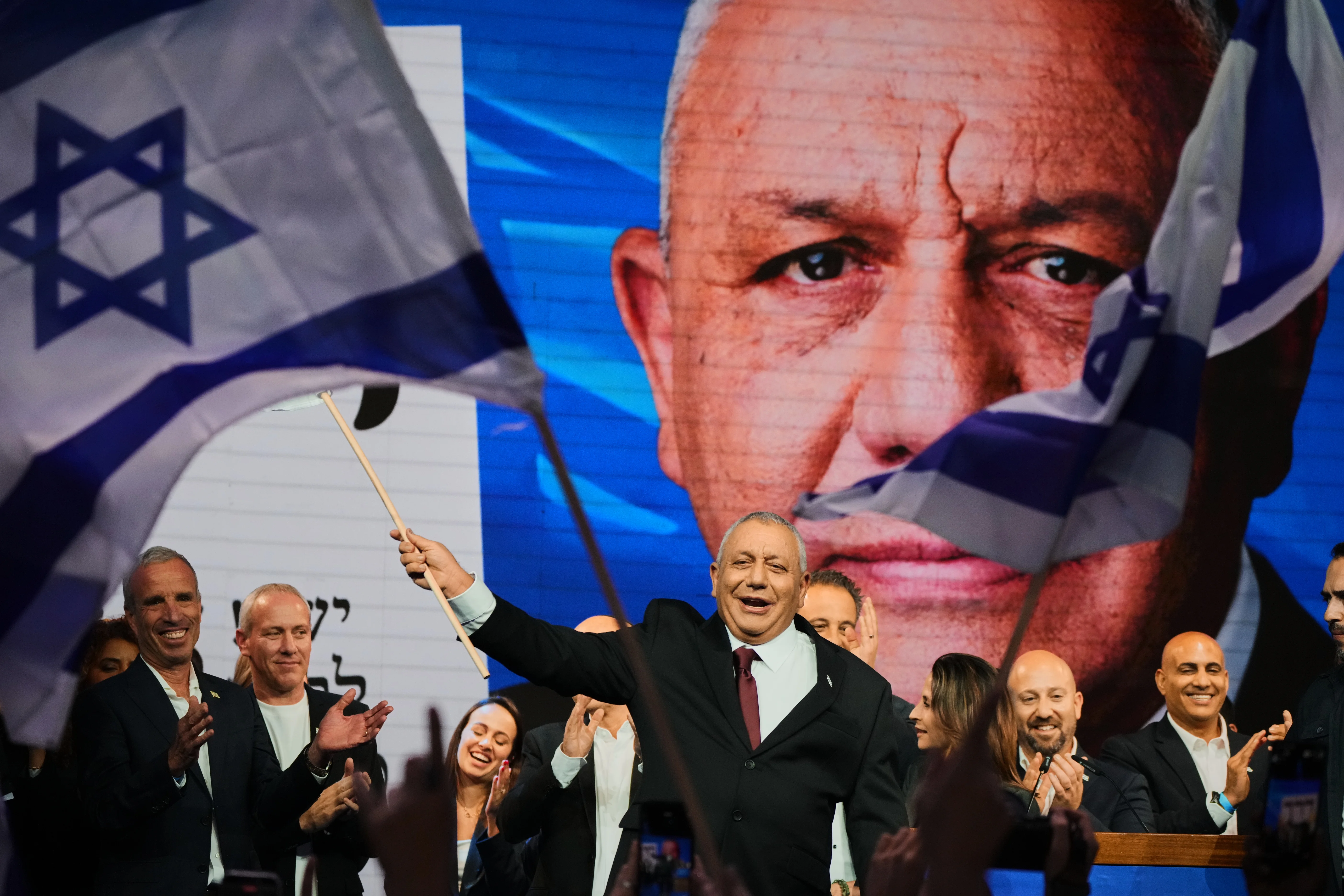
Israel's president tasks opposition leader Eisenkot with forming government
Neither PM Benjamin Netanyahu's bloc nor that of his rival secured a majority in last week's election.

Israel's president taps opposition candidate, not Netanyahu, to form a government
Gadi Eisenkot ran as the main rival to Prime Minister Benjamin Netanyahu, but neither won enough support to command a majority. Israel's main parties have recommended Eisenkot form a new government.
What we know so far after Polish gunman in military clothing opens fire in Krakow
At least six people were killed by a gunman in military fatigues who opened fire in Poland's second largest city.

Paraguay's former president charged after bank collapse
Santiago Peña was ousted due to a banking crisis which left millions of people unable to access their money.

Top Stories

Billam-Smith stopped as Clarke repeats amateur win

Ambika Mod says the 'glass ceiling is always getting higher' for South Asian actors

The rise of microdramas: The 'snackable' shows made for the scrolling age

Can the Zelda remake capture the magic of the original?

'Dana, please take the job!' - Trump asks UFC boss to be White House press secretary
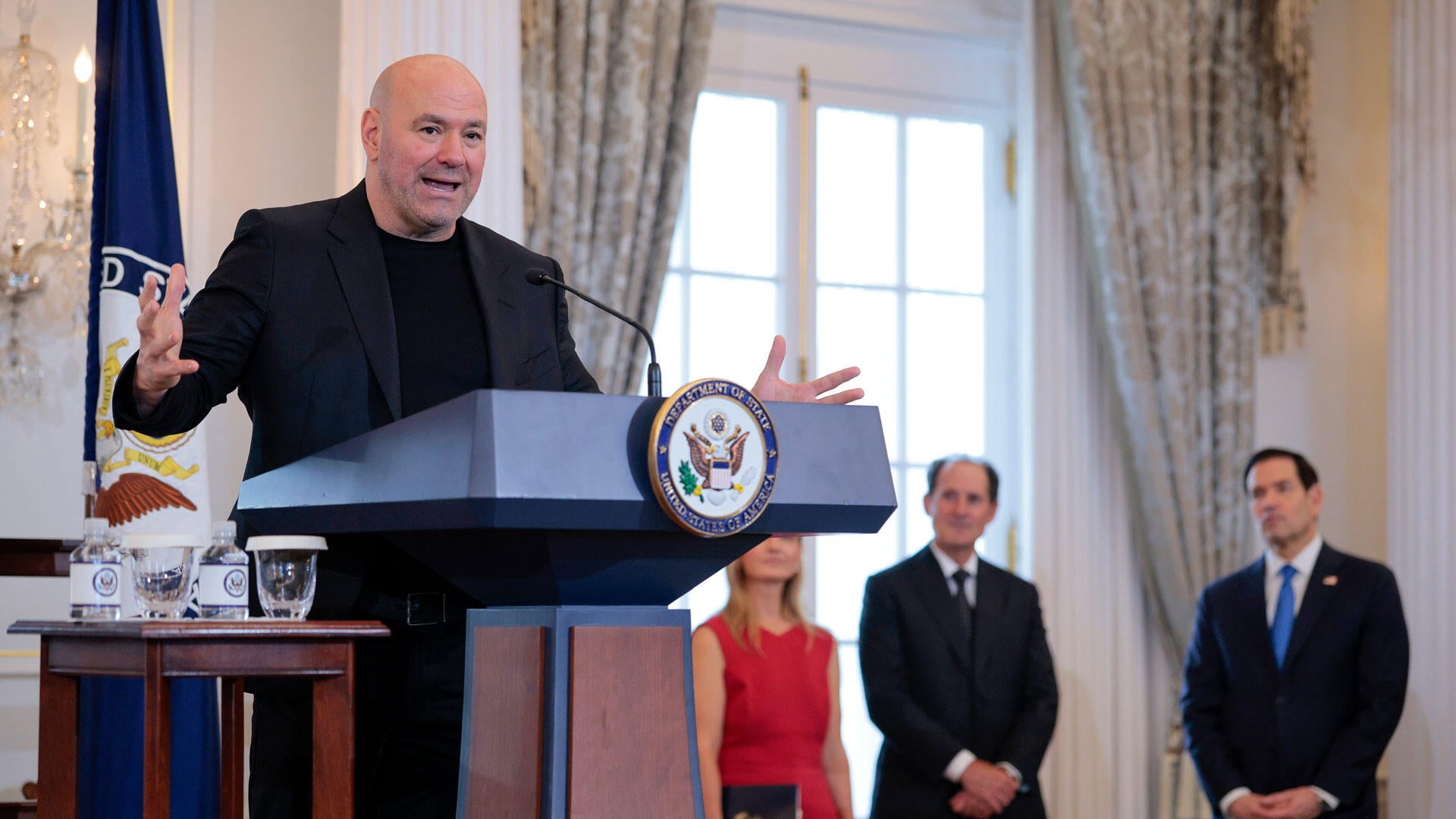
Dana White next White House press secretary? UFC boss set for meeting with President on Monday

'The worst conditions in my 35-year career' - commentating in the FA Cup fog

'Curtains for Robinson' or can floundering Aberdeen boss survive?
Latest
Billam-Smith stopped as Clarke repeats amateur win
Ambika Mod says the 'glass ceiling is always getting higher' for South Asian actors
The rise of microdramas: The 'snackable' shows made for the scrolling age
Can the Zelda remake capture the magic of the original?
'Dana, please take the job!' - Trump asks UFC boss to be White House press secretary
Dana White next White House press secretary? UFC boss set for meeting with President on Monday
'The worst conditions in my 35-year career' - commentating in the FA Cup fog
'Curtains for Robinson' or can floundering Aberdeen boss survive?