Blind and visually impaired students press for access to global reading materials as legal delay continues
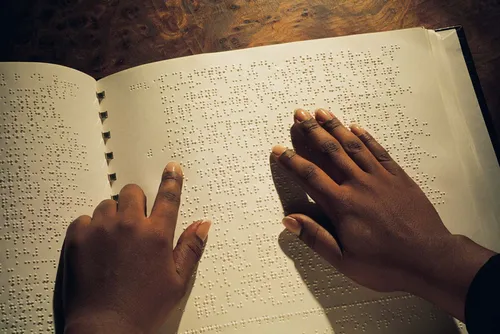
Blind and visually impaired students are struggling to access books already available overseas because South Africa has yet to join an international treaty, which has led to a court case and calls from within the government for urgent action.
BlindSA, represented by SECTION27, has approached the Gauteng High Court, Pretoria, to challenge the Department of Trade, Industry and Competition's (DTIC) decision to postpone accession to the Marrakesh Treaty until the Copyright Amendment Bill becomes law.
The treaty enables participating countries to exchange books in Braille, audio and accessible digital formats. BlindSA estimates that only 1% to 7% of published works are available in accessible formats.
Without accession, South African students face barriers to obtaining accessible copies from overseas libraries, even when the books have already been converted, forcing costly and time-consuming duplication of learning materials.
BlindSA President Christo de Klerk argued that the delay was legally unnecessary following a Constitutional Court ruling in May 2025 that introduced Section 19D into the Copyright Act.
"We believe the Minister misunderstands the position. Section 19D, which was read into the currently applicable Copyright Act of 1978, establishes the legal framework for accession to the Marrakesh Treaty," he said.
De Klerk said the failure to join the treaty forced local organisations to reproduce material already available internationally, increasing costs and delaying students' studies.
"As an example, to convert an average novel into braille would take about a month and cost around R30 000."
Technical material could take longer, he explained, with waiting lists potentially leaving students without prescribed books when classes begin.
BlindSA is now seeking a court order compelling the government to develop an implementation plan with clear deadlines and regular progress updates. De Klerk expects international book exchanges to become available within12 months if the court rules in the organisation's favour.
The South African government has promised to join the Marrakesh Treaty since 2013, but more than a decade later, it still has not joined.
Spokesperson for Trade, Industry and Competition Minister Parks Tau, Kaamil Alli, confirmed that the department was holding consultations on the matter but declined to comment further because the case was before the courts.
"We are in the process of consulting our various teams on the matter," Alli said. "We don’t believe that a public debate on this sensitive matter would be appropriate and considering the matter has been brought before the courts, we reserve comments on this matter for the time being."
The Department of Women, Youth and Persons with Disabilities, however, acknowledged that continued non-accession was restricting opportunities for learners and university students, despite the interim copyright protections introduced by the Constitutional Court.
The department's director of communications, Cassius Selala, said the delay was not simply a legal dispute but an issue affecting equality, education, and participation in society.
"The department believes that urgent, co-ordinated action is required to ensure that the rights of blind and visually impaired people are realised in practice, not merely recognised in law."
Selala warned that university students were particularly affected when they could not obtain prescribed readings, academic journals, and research materials essential for their studies.
He said the problem extended beyond textbooks, with specialised learning materials presenting additional difficulties for students pursuing science, technology, engineering, and mathematics.
"We cannot speak of inclusive education, youth empowerment, or meaningful participation in the economy while learners and students with visual disabilities continue to face avoidable barriers to knowledge."
The department expressed concern that South Africans were still unable to benefit fully from cross-border exchanges of accessible publications and called for the outstanding legal questions to be resolved promptly.
"We support constructive interdepartmental engagement to establish a clear way forward, clarify the outstanding legal and procedural matters, and identify practical steps towards accession," he said.
Selala said the rights of people with disabilities must remain a priority, but did not confirm whether the department had held talks with the DTIC.
"We would not wish to misrepresent the status of engagements or announce commitments that have not been formally agreed upon," he said.
While the court case proceeds, the department identified closer co-operation with education authorities, universities, libraries, and disability organisations as priorities to improve access to prescribed textbooks, academic journals and digital collections.
Selala said government departments should establish clear responsibilities, delivery timeframes, and measurable indicators, including how long students wait for learning materials and how many benefit from improved access.
He also emphasised the importance of involving organisations representing people with disabilities in identifying practical solutions and assessing whether government interventions were making a difference.
Selala clarified that the measures outlined by the department were still proposals and had not been confirmed as programmes already in place.
"Ultimately, no learner or university student should have to wait for essential educational material simply because they are blind or visually impaired," he said.
Keywords
Related Stories
HEART FOR ART: Award-winning artist Annette Kamfer paints her way back after Parkinson’s diagnosis
After achieving international recognition for her watercolour paintings, acclaimed artist Annette Kamfer stepped away from art to focus on her health. Now she is back, and has brought her latest collection home to Nelson Mandela Bay.
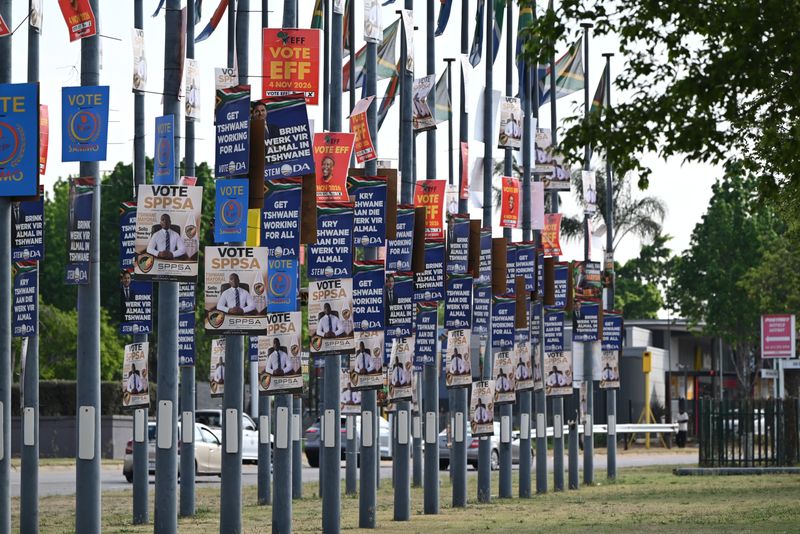
LOCAL ELECTIONS 2026: Ten critical questions as South Africa heads into high-stakes poll
With the ANC under intense pressure, the DA seeking gains and smaller parties eyeing roles as kingmakers, voters face a contest that could reshape municipal government.
Sanwo-Olu makes runaway appearance at Lagos Fashion Week (PHOTOS)
It is his second runway appearance. The post Sanwo-Olu makes runaway appearance at Lagos Fashion Week (PHOTOS) appeared first on Premium Times Nigeria.

EXCLUSIVE: Ebola: 34-year-old pilot, wife identified as suspected cases who tested negative in North-east Nigeria
The Nigeria Centre for Disease Control and Prevention (NCDC) on Saturday announced that two suspected Ebola cases had been identified in the North-east. The post EXCLUSIVE: Ebola: 34-year-old pilot, wife identified as suspected cases who tested negative in North-east Nigeria…

Top Stories
HEART FOR ART: Award-winning artist Annette Kamfer paints her way back after Parkinson’s diagnosis
LOCAL ELECTIONS 2026: Ten critical questions as South Africa heads into high-stakes poll
Sanwo-Olu makes runaway appearance at Lagos Fashion Week (PHOTOS)

Valkyries win WNBA title in their second season
EXCLUSIVE: Ebola: 34-year-old pilot, wife identified as suspected cases who tested negative in North-east Nigeria
Zuma to make first public appearance since hospital discharge

When youths move, society changes: The 2026 barricades, By Owei Lakemfa

Why war makes Ukraine media more determined than ever to hold power to account
Latest
HEART FOR ART: Award-winning artist Annette Kamfer paints her way back after Parkinson’s diagnosis
LOCAL ELECTIONS 2026: Ten critical questions as South Africa heads into high-stakes poll
Sanwo-Olu makes runaway appearance at Lagos Fashion Week (PHOTOS)
Valkyries win WNBA title in their second season
EXCLUSIVE: Ebola: 34-year-old pilot, wife identified as suspected cases who tested negative in North-east Nigeria
Zuma to make first public appearance since hospital discharge
When youths move, society changes: The 2026 barricades, By Owei Lakemfa
Why war makes Ukraine media more determined than ever to hold power to account