Business Dialogue marks the start of industry’s role in building Ekurhuleni’s university
The New Higher Education Institution Business Dialogue, convened by the Department of Higher Education and Training (DHET) in partnership with the ST&I Business Forum, will bring captains of industry together with government and the academy to help shape the proposed Ekurhuleni Higher Education Institution on 5 November 2026. Minister of Higher Education and Training, Mr Buti Manamela, will deliver the keynote address. The message to the business community is that this university is being designed now, and industry has a critical role to play in shaping its future.
When President Cyril Ramaphosa announced the Ekurhuleni University of Applied Science and Innovation at the Presidential Imbizo in August 2024, he gave national weight to a long-standing call and this was reiterated again on 20 October ahead of the upcoming local government elections. The question now is not whether the institution should exist, but what kind of institution it will be, and whose needs it will meet.
Ekurhuleni is the country’s industrial heartland. It is home to OR Tambo International Airport, a dense manufacturing base and some of the continent’s most important logistics corridors. Yet it remains the only metropolitan municipality in South Africa without a university of its own.
Close to 100 senior executives will gather at Emperors Palace for this first Business Dialogue on the Ekurhuleni university. Drawn from across science, engineering and technology, they bring hands-on experience from the very sectors the new institution is meant to serve: engineering, advanced manufacturing, logistics, information and communication technology, aerospace and healthcare.
The Dialogue marks a significant milestone in the long campaign for a university in Ekurhuleni. For the first time, companies, industry bodies and the wider science, technology and innovation community have a formal seat at the table, with the chance to shape the institution before its blueprint is set and to help make it a world-class university. No university achieves real social and economic impact without an active partnership with business and industry.
This is an opportunity for companies, industry bodies, innovators and sector experts to influence programme design, support work-integrated learning, and build a talent pipeline aligned with some of South Africa’s key economic growth sectors.
The proposed institution will be built around a dual model of higher education, drawing on cooperative and applied-science universities in countries such as Germany and Switzerland. Students will alternate between periods of academic study and structured workplace training, so that what they learn in the lecture hall and what they learn on the factory floor continually reinforce each other. Graduates leave not only with a qualification, but with real workplace experience and employers who already know their abilities.
Such a model cannot work without business. It depends on companies that host students, mentor them, co-supervise their projects and help keep curricula current. That is why public-private partnership is not an add-on to this project; it is its foundation. Government brings policy, funding and the authority to establish a public university. The university brings teaching, research and quality assurance. Business brings the workplace, the technology and a clear view of the skills the economy will demand.
The Dialogue itself models that partnership. DHET brings the mandate and authority of the state to establish the institution. The ST&I Business Forum, which is a business advocacy led organization that champions science, technology and innovation as drivers of industrialization, brings its networks across industry and its role as a bridge between business and policy. Together, they signal that this is not a government project with business invited to observe, but a joint undertaking in which industry is a partner from the start.
The seven proposed core knowledge areas show how closely the institution is tied to the regional economy: smart manufacturing; aerospace engineering; information and communication technology; green-energy technologies; smart transport and logistics; technology-driven agro-processing and digital health. In each, Ekurhuleni and Gauteng already have industrial strength, and skills shortages already constrain growth.
The Dialogue has a practical purpose. It will test the knowledge areas against real industry demand, gather input on the competencies graduates will need, identify companies willing to offer work-integrated learning, and seek views on how industry should be represented in the institution’s governance. Confirmed speakers include senior industry leaders representing each of the knowledge areas, alongside international expertise on dual education.
Too often, business engages with higher education only at the end of the pipeline which then laments the skills gap. The Ekurhuleni university offers a different path. Here, business can help decide what is taught, how it is taught and where students learn, before programmes and structures are fixed.
This is an invitation for businesses to own the space and not wait to be consulted, but to step forward. Companies that commit early will help build a talent pipeline to their own specification, gain access to applied research and student projects aimed at their operational challenges and contribute meaningfully to skills development and transformation.
The invitation extends beyond large corporates. Chambers of commerce, sector bodies, small and medium enterprises and the communities in which these firms operate all have a stake. A university anchored in Ekurhuleni must also be a university for Ekurhuleni.
In more than three decades of democracy, South Africa has established only a handful of entirely new universities, most recently Sol Plaatje University in the Northern Cape and the University of Mpumalanga, both opened in 2014, followed by Sefako Makgatho Health Sciences University in 2015. Ekurhuleni would be the first new public university in over a decade, and the first designed from the outset around applied science, innovation and industry partnership. That gives us a rare opportunity to build an institution that can stand alongside the world’s leading technical and STEM universities.
South Africa does not lack policy ambition. What it often lacks is the sustained partnership between government, business and the academy that turns ambition into institutions. The Ekurhuleni Higher Education Institution is a chance to get that partnership right from the start.
The 5 November Dialogue is not the end of a process; it is the beginning. It is the first in a series of engagements that will draw the business community into the life of the institution, from design to delivery. A university built with industry, in the heart of the country’s industrial economy, is one of the most powerful investments we can make in inclusive growth. We cannot change the past, but we can shape the future. On 5 November, we invite business to help shape it.
Mr Tilson Mphathi Manyoni is the Chairperson of the ST&I Business Forum.
Keywords
Related Stories
DIGITAL POLITICS OP-ED: The anti-foreigner movement squares up to the state in run-up to elections
From xenophobic campaigning to farm attacks and coordinated influencer messaging, political factions sharpen their attacks on the government and rivals before the 4 November local elections.

Afghanistan asks US to act responsibly on deporting Afghan immigrants back home
The Afghan Taliban government asked the United States to act responsibly when deporting Afghan immigrants back home, the Afghan foreign ministry said on Monday, adding that Kabul was prepared to engage constructively with Washington on the issue.

Bulgaria’s Iotova wins presidential runoff, near-final results show
Bulgaria's acting President Iliana Iotova won the presidential runoff election, near-final results from the Central Election Commission showed on Monday, becoming the country's first elected female head of state amid low voter turnout.

China’s Xi says Middle East should not become battleground for great power rivalry
The Middle East and Gulf region should not become a battleground for great-power rivalry and China is willing to work with Arab nations to achieve lasting peace, Chinese President Xi Jinping told Oman's sultan on Monday
Top Stories
DIGITAL POLITICS OP-ED: The anti-foreigner movement squares up to the state in run-up to elections
Afghanistan asks US to act responsibly on deporting Afghan immigrants back home
Bulgaria’s Iotova wins presidential runoff, near-final results show
China’s Xi says Middle East should not become battleground for great power rivalry

PZ Cussons shareholders approve N9.926bn dividend payout
Martin Meyer urges KZN special voters to turn out for local elections

Fake alerts warn of nuclear danger as Ukraine and Russia report emergency app hacks
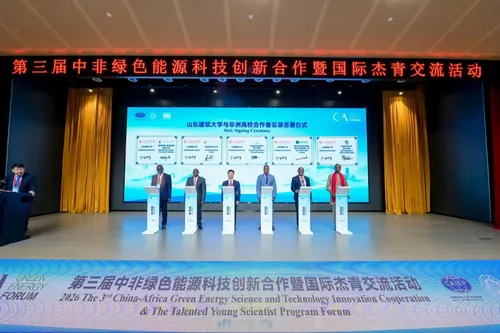
China-Africa green energy forum strengthens research ties in Jinan

Latest
DIGITAL POLITICS OP-ED: The anti-foreigner movement squares up to the state in run-up to elections
Afghanistan asks US to act responsibly on deporting Afghan immigrants back home
Bulgaria’s Iotova wins presidential runoff, near-final results show
China’s Xi says Middle East should not become battleground for great power rivalry
PZ Cussons shareholders approve N9.926bn dividend payout
Martin Meyer urges KZN special voters to turn out for local elections
Fake alerts warn of nuclear danger as Ukraine and Russia report emergency app hacks
China-Africa green energy forum strengthens research ties in Jinan