Did Rocket Lab’s Suborbital Rocket Reach Orbit?

Reading time 2 minutes
Update, June 17, 8:12 a.m. ET: After publication, Rocket Lab provided Gizmodo with the following statement: “Rocket Lab has never placed any object into orbit unintentionally.” The company did not provide additional details about the mission or the object tracked in orbit.
Rocket Lab’s latest mission, named Curveball, has earned its title. The company launched a mysterious payload on its suborbital rocket, and it somehow ended up in orbit.
On June 11, Rocket Lab’s HASTE vehicle lifted off from NASA’s Wallops Flight Facility in Virginia on a government mission. HASTE, short for Hypersonic Accelerator Suborbital Test Electron, is a modified version of the company’s Electron rocket that’s designed to fly at hypersonic speeds up to five times the speed of sound. Another important distinction is that HASTE is a suborbital launch vehicle that has flown seven times without reaching low-Earth orbit.
A few days after its latest launch, however, the U.S. Space Force spotted the rocket in orbit. It’s not clear how HASTE ended up there, or what happened to its payload.
Secret missions
Prior to its debut on June 17, 2023, Rocket Lab shared little information on its HASTE vehicle. The suborbital rocket serves as a commercial testbed for the U.S. Department of Defense and other developers of hypersonic technology.
The rocket provides “reliable, high-cadence flight test opportunities needed to advance hypersonic and suborbital system technology development,” according to Rocket Lab. Prior to Thursday’s launch, HASTE’s most recent mission, also contracted by the Department of Defense, was to deploy a scramjet-powered aircraft developed by Australian aerospace engineering firm Hypersonix.
For Curveball, Rocket Lab did not disclose the payload on the mission. It is simply listed as a government mission, but there’s little else known about the launch. That’s not very unusual for these types of launches.
It is unusual, however, for a suborbital rocket to end up in low-Earth orbit.
Gizmodo reached out to Rocket Lab for clarification. After publication, the company provided the following statement: “Rocket Lab has never placed any object into orbit unintentionally.”
Unexpected trajectory
Following its latest launch, the orbital parameters for HASTE’s Curveball mission indicated that the rocket’s stages are being tracked in a 120-mile (200-kilometer) orbit with a 40-degree inclination, according to astronomer Jonathan McDowell.
There is, however, no associated orbital data for the rocket’s payload. “Does this mean CURVEBALL reached orbit and then the payload was deorbited on first orbit?” McDowell wrote on X. Another possibility, he suggests, is that the payload completed most of an orbit and was recovered over the western U.S. It may have ended up at the Utah Test and Training Range, a military testing and training area located in Utah’s West Desert.
The mission appears to have reached orbit in some fashion, and Rocket Lab says it doesn’t place objects into orbit by accident, suggesting that whatever was tracked in orbit may have been there intentionally. As the company continues to advance its vehicle’s hypersonic capabilities, we hope we will learn more about HASTE and its missions.
Explore more on these topics
Share this story
Sign up for our newsletters
Subscribe and interact with our community, get up to date with our customised Newsletters and much more.
Related Articles
Lawmakers Can’t Ban VPNs No Matter How Hard They Try
Governments can make it harder to get around internet restrictions, but eliminating the workarounds is another matter entirely.
Here’s What China’s Mysterious Spaceplane Actually Looks Like
A U.S. intelligence report provides a rare view of the experimental vehicle in orbit, and it's unsurprisingly familiar.
Stranded? The Air Force Is Testing a Survival Kit That Drops From Orbit
The Starfall capsule carried several experimental cargo pods to see if they would survive the journey to space.
A Minnesota Farmer Found an 11-Foot Metal Object in His Cornfield. It Came From Space
Meanwhile, another chunk of suspected rocket debris turned up in Indonesia.
SpaceX Is Finally Going for the Starship Double Catch
Starship's next flight will aim to achieve a major technical milestone.
This Satellite Could Be the First Step Toward a Power Grid in Space
Star Catcher's network of spacecraft is designed to harvest energy from the Sun and beam it to satellites.
Related Topics
Keywords
Related Stories
Energy bills help 'doesn't go far enough'
Families in the West Midlands say they are worried about paying winter energy bills.

Diwali hampers to bring hope to families in need
The Diwali Basket Brigade volunteers want to help vulnerable households with rising food prices.

Soaring cost of Halloween treats spooks shoppers
The price of candy, especially chocolate, is up, and Halloween bargain hunters are searching for deals and ways to cut costs.

City of London chief tops UK Black Powerlist
Ian Thomas, who heads the City of London Corporation, tops the Black Powerlist in its 21st year.

Top Stories
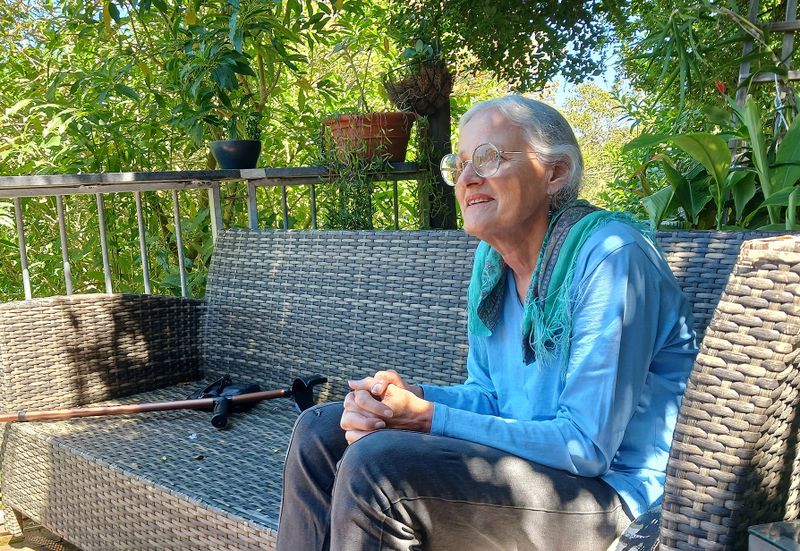
HEART FOR ART: Award-winning artist Annette Kamfer paints her way back after Parkinson’s diagnosis

LOCAL ELECTIONS 2026: Ten critical questions as South Africa heads into high-stakes poll

Sanwo-Olu makes runaway appearance at Lagos Fashion Week (PHOTOS)

Valkyries win WNBA title in their second season

EXCLUSIVE: Ebola: 34-year-old pilot, wife identified as suspected cases who tested negative in North-east Nigeria
Zuma to make first public appearance since hospital discharge

When youths move, society changes: The 2026 barricades, By Owei Lakemfa

Why war makes Ukraine media more determined than ever to hold power to account

Latest
HEART FOR ART: Award-winning artist Annette Kamfer paints her way back after Parkinson’s diagnosis
LOCAL ELECTIONS 2026: Ten critical questions as South Africa heads into high-stakes poll
Sanwo-Olu makes runaway appearance at Lagos Fashion Week (PHOTOS)
Valkyries win WNBA title in their second season
EXCLUSIVE: Ebola: 34-year-old pilot, wife identified as suspected cases who tested negative in North-east Nigeria
Zuma to make first public appearance since hospital discharge
When youths move, society changes: The 2026 barricades, By Owei Lakemfa
Why war makes Ukraine media more determined than ever to hold power to account