Digital services poised to play a defining role in operational resilience across West Africa

This article has been supplied.
By: Nnadozie Ogbuehi - Vice President for Services, SSA at Schneider Electric
Across West Africa, organisations are increasingly rethinking how they manage critical assets and operational reliability. High availability or uptime, once regarded primarily as a performance benchmark, has now become a fundamental business requirement.
This shift is particularly evident in high‑stakes industries such as mining, oil and gas, healthcare, manufacturing, and data centres. The lack of high uptime carries direct financial consequences, disrupts critical services, damages reputations, and in some cases introduces serious safety risks for both personnel and infrastructure.
As a result, organisations are now taking a closer look at maintenance and reliability. Gone are the days of reactive, break‑fix models, replaced by a proactive, data‑driven approach that prioritises predictive and preventive maintenance, supported by continuous operational visibility.
A recent study observing industrial machinery fleets in Senegal found that introducing predictive maintenance boosted operational uptime by 8.7 percentage points.
The strategic role of SLAs and digital maintenance contracts
At the centre of this transformation lies the increasing importance of structured service level agreements (SLAs) and digital maintenance contracts.
Today’s SLAs have evolved into bona fide strategic tools that bring predictability to operations. It defines clear performance expectations, guaranteed response times, and access to the right expertise and resources when needed. This is particularly relevant in industries where operations are continuous and often geographically dispersed.
Digital maintenance contracts then build on this foundation by integrating, through connected products, real-time data, remote diagnostics, and advanced analytics into service delivery.
This allows for an intelligent and responsive support model where potential issues can be identified and addressed before escalates into costly disruptions.
In practical terms, this means:
- Access to skilled engineers and critical spare parts is no longer uncertain or reactive.
- Response times are predefined and aligned to operational priorities.
- Remote expertise can be deployed instantly, regardless of location.
- Predictive insights help prevent unplanned downtime and optimise asset performance.
Addressing real-world operational challenges
For many organisations in West Africa, the challenges are both immediate and systemic.
A single instance of downtime can trigger a cascade of consequences, and in critical sectors such as data centres supporting financial services, even short disruptions can have widespread societal impact.
One of the most persistent challenges is a lack of real-time visibility into asset health. Without this insight, organisations are forced into reactive decision-making, often compounded by limited access to specialised technical expertise at the moment it is most needed.
Here, proactive service models step into the fore, enabling continuous monitoring, predictive analytics, and planned maintenance interventions. These models reduce uncertainty and minimise risk.
A connected, data-driven approach to services
Digital platforms and connected technologies combine real-time monitoring, advanced analytics, and domain expertise in order to provide operators with actionable insights into asset performance, energy usage, and potential risks.
Furthermore, remote diagnostics allow specialists to assess and support systems from anywhere in the world, while intelligent alerting ensures that issues are addressed before they impact operations.
At Schneider Electric, our EcoStruxure open architecture integrates connected products, edge control, and analytics to deliver a proactive and predictive service experience, shifting customers from reactive intervention to continuous optimisation
A shift from reactive intervention to continuous optimisation which enables our customers to reduce downtime, improve efficiency, and extend asset lifecycles.
The future of operational resilience in West Africa
Looking ahead, digital services will undoubtedly play a major role in shaping operational resilience across West Africa.
As industries expand and digitisation accelerates, operational environments will become more complex. Larger data centres, more advanced production facilities, and increasingly interconnected systems will demand smarter, more autonomous approaches to maintenance and support.
At Schneider Electric we expect to see:
- Systems that are not only monitored, but self-diagnosing.
- Greater use of AI to predict failures and guide decision-making.
- Increased reliance on remote expertise and digital collaboration.
- A continued need for strong local engineering capabilities to complement digital insights.
In West Africa’s next phase of industrial growth, resilience will not be defined by how quickly businesses recover from failure, but by how effectively they prevent it through insight, anticipation, and intelligent service models
Edited by Creamer Media Reporter
Article Enquiry
Email Article
Save Article
Feedback
To advertise email advertising@creamermedia.co.za or click here
Related Topics
Keywords
Related Stories
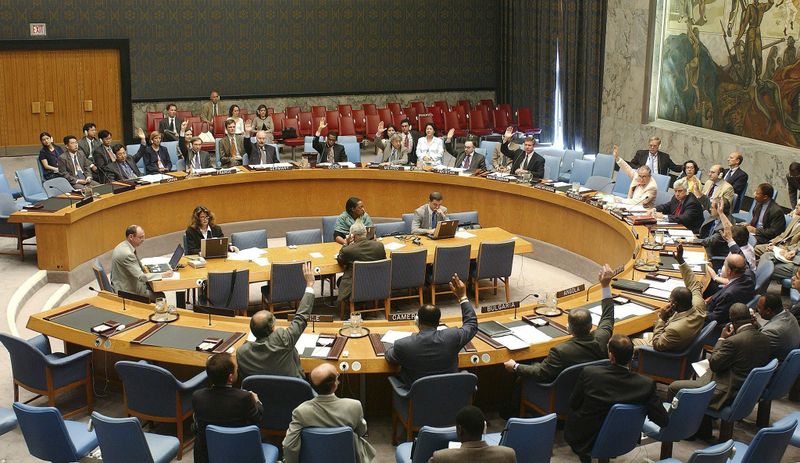
UN peacekeeping mission in Western Sahara ends after 35 years, UN chief says
Nov 1 (Reuters) - The 35-year-old UN peacekeeping mission in the Western Sahara region will come to an end after the Security Council failed to renew its mandate, the UN chief said on Sunday.
CONGRESS IN THE BALANCE: A blue tsunami, a tide, or chaos as usual — the US midterm election
With just hours to go before the American midterm election takes place, the day before South Africa’s own local election, control of both houses of the American Congress hangs in the balance.

DIVISIVE WORDS: ‘We never called for literal killing’ — Malema appeals for farm killings to stop.
EFF leader Julius Malema says the chant “Kill the boer, kill the farmer” was never meant literally and has appealed for farm killings to stop.

TRC ROULETTE : Victims’ families place key hidden evidence before Khampepe inquiry
A physical inspection of old lever arch files by the legal team representing the families of apartheid victims at the Khampepe Commission strengthens Anton Ackermann’s claim that a disputed 2006 memo was forged, reshaping the Khampepe inquiry into delayed apartheid prosecutions.

Top Stories
UN peacekeeping mission in Western Sahara ends after 35 years, UN chief says

Week 8 overreactions: Time for Vikings to bench Kyler Murray? Colts should fire Steichen?

NFL Week 8 winners and losers: Cowboys suffer epic collapse, Joe Burrow delivers historic heroics

How Antonelli 'blew everyone away' to make Formula 1 history

Why is Ashton Jeanty not getting carries? Another Raider emerges as Vegas' top RB in Week 8

Russia and Ukraine accuse each other of hacking emergency alert apps

NFL Week 8 grades for every team: Cowboys get an 'F' for choking, Steelers surge to 'A+'

Ukraine air raid app apparently hacked as users receive false radiation threat, Air Force says
Latest
UN peacekeeping mission in Western Sahara ends after 35 years, UN chief says
Week 8 overreactions: Time for Vikings to bench Kyler Murray? Colts should fire Steichen?
NFL Week 8 winners and losers: Cowboys suffer epic collapse, Joe Burrow delivers historic heroics
How Antonelli 'blew everyone away' to make Formula 1 history
Why is Ashton Jeanty not getting carries? Another Raider emerges as Vegas' top RB in Week 8
Russia and Ukraine accuse each other of hacking emergency alert apps
NFL Week 8 grades for every team: Cowboys get an 'F' for choking, Steelers surge to 'A+'
Ukraine air raid app apparently hacked as users receive false radiation threat, Air Force says