Empty promises and zero accountability — inside Johannesburg’s deepening water crisis

As Johannesburg residents endure repeated water outages despite promises that solutions are in place, the City must confront the deeper governance failures that continue to undermine water security and service delivery.
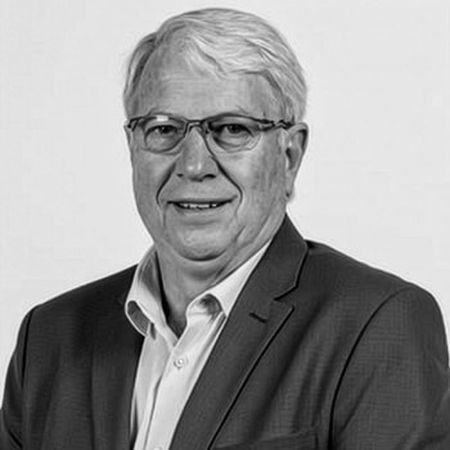 By Leon Basson 17 Jun 2026
Leon Basson is a member of the National Assembly and chairperson of the Portfolio Committee on Water and Sanitation.
- Dive Deeper
- Speed Read
- Listen

The African proverb, “A naked man cannot promise you clothes,” captures the reality confronting Johannesburg residents who continue to endure recurring water shortages despite endless assurances from political leaders that solutions are at hand. Promises have become abundant, but water remains scarce. The growing disconnect between what the City’s government says and what residents experience exposes a deeper crisis of governance, planning and accountability in South Africa’s largest metropolitan municipality.
Johannesburg is not suffering from a sudden water emergency. The city is experiencing the consequences of years of neglect, poor maintenance, inadequate investment and questionable financial priorities. Yet rather than confronting these structural failures, political leaders continue to rely on announcements, launches and public relations exercises that create the illusion of progress while residents queue for water tankers and businesses absorb the costs of interrupted supply.
The recent commissioning of the Brixton Reservoir and Water Tower illustrates this pattern perfectly. The project was presented as a significant intervention that would stabilise water supply in Brixton, Crosby and Hursthill. The Gauteng premier confidently told the National Council of Provinces that the facility would help bring relief to affected communities.
However, reality quickly exposed the gap between rhetoric and performance. Barely weeks after these assurances, communities across Johannesburg once again found themselves without water. Residents in Coronationville, Westbury, Melville, Parktown West and Brixton faced prolonged disruptions. Similar challenges emerged in Midrand, Kaalfontein, Claremont, Kensington, Hillbrow and several other areas following Rand Water’s winter maintenance programme.
The issue is not that maintenance was undertaken. Maintenance is necessary and unavoidable. The real question is why a city that knew months in advance that maintenance would occur was still unable to shield residents from the severity and duration of the resulting disruptions.
The answer lies in the elephant that political leaders seem unwilling to acknowledge: Johannesburg’s water infrastructure is increasingly incapable of absorbing predictable shocks because it has been allowed to deteriorate for years. Successive administrations have failed to make the difficult decisions required to protect and modernise critical infrastructure. Instead, infrastructure maintenance has often been deferred while resources are diverted elsewhere. The result is a system operating on the edge of failure, where planned maintenance, power outages or increased demand can trigger widespread supply interruptions.
Reckless budget cut
Against this backdrop, the City of Johannesburg’s decision to cut Joburg Water’s budget by R201-million for the 2025/26 financial year appears not only irresponsible but reckless. At a time when ageing infrastructure requires urgent refurbishment and replacement, reducing investment in the municipal utility sends exactly the wrong message.
Municipal leaders argue that financial constraints necessitate difficult choices. Yet, one must ask how cutting resources from a utility responsible for delivering one of the most essential services to residents can contribute to long-term sustainability. Infrastructure does not repair itself. Reservoirs do not maintain themselves. Pipes do not replace themselves.
If anything, Johannesburg should be increasing investment in water infrastructure rather than reducing it.
Non-revenue water
The city’s financial challenges are further aggravated by the staggering volume of water that never reaches paying customers. The Auditor-General has highlighted that approximately 44.7% of Johannesburg’s water is lost through leaks and other forms of non-revenue water. This translates into an estimated R3.8 billion in lost revenue annually.
These losses represent more than leaking pipes. They are evidence of systemic governance failures. Every litre lost through neglected infrastructure is revenue that could have been reinvested into upgrading the network. Every burst pipe that goes unrepaired contributes to the city’s financial decline. Every year that maintenance is postponed increases the eventual cost of repairs.
The tragedy is that these losses have become normalised. Instead of treating them as a crisis requiring urgent intervention, municipal authorities appear to accept them as part of the operating environment.
Perhaps even more troubling is Johannesburg’s growing dependence on water tankers. Over the past five years, the city has reportedly spent more than R650-million on tanker services. While emergency water provision may be necessary during genuine crises, the extent of this expenditure raises serious questions. Water tankers should be a temporary measure, not a business model.
Across the country, concerns have been raised about the emergence of “water tanker mafias” that profit from infrastructure failures and service delivery breakdowns. Whether or not such networks exist in Johannesburg, the incentives created by prolonged dependence on tankers should concern every resident and taxpayer.
When millions of rands are spent responding to failures rather than preventing them, something is fundamentally wrong. The beneficiaries of this arrangement are often not the communities left without water, but the contractors who continue to receive lucrative emergency contracts.
This creates a dangerous cycle. Infrastructure deteriorates. Service interruptions increase. Demand for tankers grows. More public money is spent on emergency responses. Meanwhile, the underlying problems remain unresolved.
Lack of accountability
The greatest failure, however, is not technical or financial. It is political.
Johannesburg’s water crisis persists because there is insufficient accountability for failure. Residents are expected to tolerate repeated disruptions while political leaders continue to announce plans, strategies and interventions that rarely produce measurable improvements.
When promises fail to materialise, there are few consequences.
The city does not lack technical expertise. South Africa has engineers, planners and water specialists capable of addressing these challenges. What is lacking is the political will to prioritise long-term solutions over short-term optics.
Water security cannot be achieved through speeches. It cannot be secured through ribbon-cutting ceremonies or optimistic media briefings. It requires sustained investment, disciplined maintenance, sound financial management and transparent governance.
Johannesburg residents are not asking for miracles. They are asking for a basic service that they pay for and deserve. They want a city that plans ahead, maintains its infrastructure and spends public money wisely.
Until leaders confront the uncomfortable realities of infrastructure neglect, water losses, financial mismanagement and possible corruption, the cycle of promises followed by disappointment will continue.
A city that cannot maintain its water infrastructure cannot credibly promise water security. Just as the proverb warns, a naked man cannot promise you clothes. And a municipality that neglects its water system cannot promise its residents reliable water. The time for promises has passed. What Johannesburg needs now is accountability, competence and action. DM
- Opinionistas
- Joburg water crisis
- water tankers
- water outages Johannesburg
- Brixton Reservoir project
- non-revenue water Johannesburg
- water tanker mafias
- opinionistas
Related Topics
Keywords
Related Stories
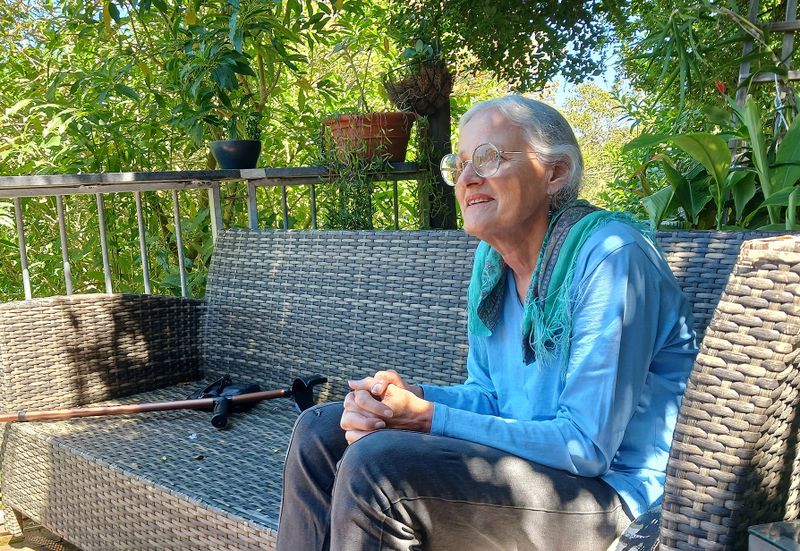
HEART FOR ART: Award-winning artist Annette Kamfer paints her way back after Parkinson’s diagnosis
After achieving international recognition for her watercolour paintings, acclaimed artist Annette Kamfer stepped away from art to focus on her health. Now she is back, and has brought her latest collection home to Nelson Mandela Bay.
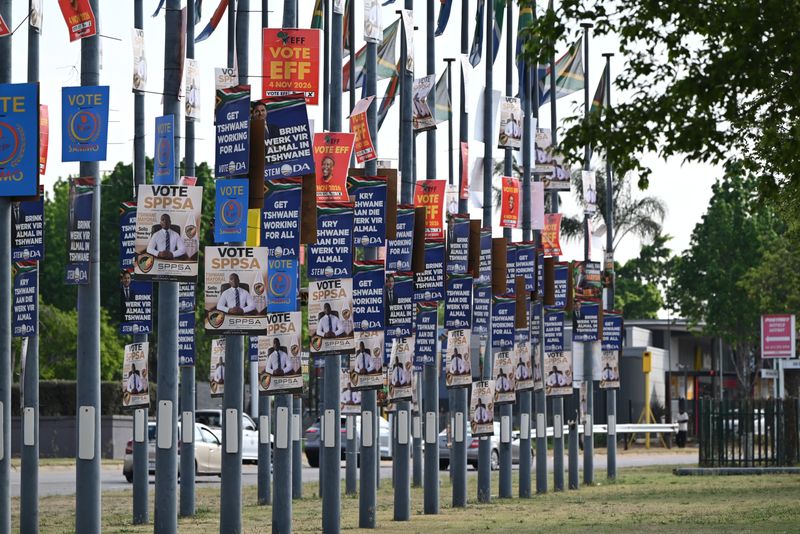
LOCAL ELECTIONS 2026: Ten critical questions as South Africa heads into high-stakes poll
With the ANC under intense pressure, the DA seeking gains and smaller parties eyeing roles as kingmakers, voters face a contest that could reshape municipal government.
Sanwo-Olu makes runaway appearance at Lagos Fashion Week (PHOTOS)
It is his second runway appearance. The post Sanwo-Olu makes runaway appearance at Lagos Fashion Week (PHOTOS) appeared first on Premium Times Nigeria.

EXCLUSIVE: Ebola: 34-year-old pilot, wife identified as suspected cases who tested negative in North-east Nigeria
The Nigeria Centre for Disease Control and Prevention (NCDC) on Saturday announced that two suspected Ebola cases had been identified in the North-east. The post EXCLUSIVE: Ebola: 34-year-old pilot, wife identified as suspected cases who tested negative in North-east Nigeria…

Top Stories
HEART FOR ART: Award-winning artist Annette Kamfer paints her way back after Parkinson’s diagnosis
LOCAL ELECTIONS 2026: Ten critical questions as South Africa heads into high-stakes poll
Sanwo-Olu makes runaway appearance at Lagos Fashion Week (PHOTOS)

Valkyries win WNBA title in their second season
EXCLUSIVE: Ebola: 34-year-old pilot, wife identified as suspected cases who tested negative in North-east Nigeria
Zuma to make first public appearance since hospital discharge

When youths move, society changes: The 2026 barricades, By Owei Lakemfa

Why war makes Ukraine media more determined than ever to hold power to account
Latest
HEART FOR ART: Award-winning artist Annette Kamfer paints her way back after Parkinson’s diagnosis
LOCAL ELECTIONS 2026: Ten critical questions as South Africa heads into high-stakes poll
Sanwo-Olu makes runaway appearance at Lagos Fashion Week (PHOTOS)
Valkyries win WNBA title in their second season
EXCLUSIVE: Ebola: 34-year-old pilot, wife identified as suspected cases who tested negative in North-east Nigeria
Zuma to make first public appearance since hospital discharge
When youths move, society changes: The 2026 barricades, By Owei Lakemfa
Why war makes Ukraine media more determined than ever to hold power to account