EU, Ukraine start formal accession talks after Orban delay
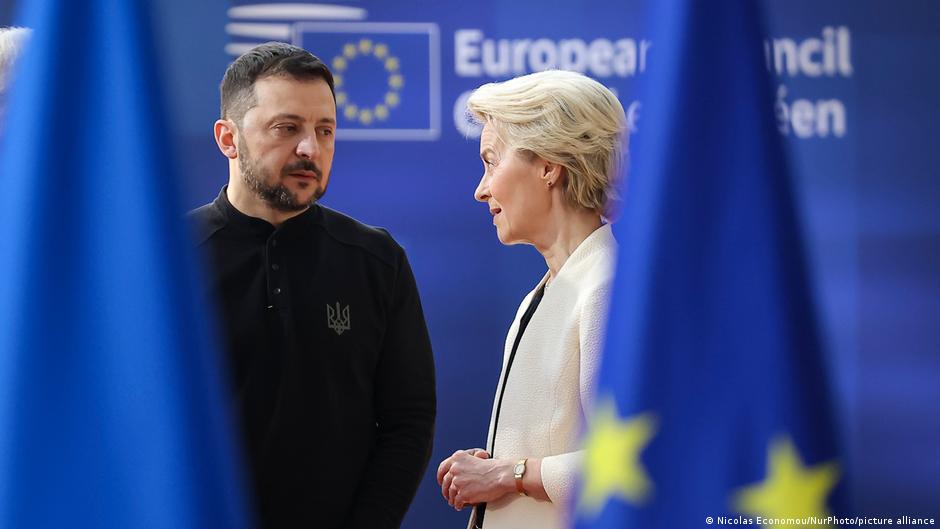
The EU and Ukraine on Monday formally opened the first stage of accession negotiations with a view to Kyiv one day joining the 28-member bloc.
Russia's full-scale invasion of Ukraine in 2022 turbocharged an idea that at one point was contentious among the country's electorate.
Why had Hungary's former government delayed the process?
For the past two years, the process had been on hold. That's because starting it requires unanimous approval from existing EU governments, and Hungary's former Prime Minister Viktor Orban was blocking the move.
The talks had already started on a technical level despite the Hungarian obstruction.
Hungary's new prime minister, Peter Magyar, recently announced that he had reached an agreement with Ukraine on measures to strengthen the rights of the ethnic Hungarian minorityin the country. Magyar had made such an agreement a condition for lifting Budapest's veto of Ukraine's EU accession talks.
What did European and Ukrainian leaders say about the move?
"Today, we are taking a historic step towards Ukraine's future within the EU, by opening formal negotiations for its accession. A united and determined G7 is essential to help bring this war to an end and achieve a just and lasting peace," European Council President Antonio Costa wrote online as he attended the G7 summit in Evian, France.
European Commission President Ursula von der Leyen said that opening the first so-called negotiating cluster was a "huge step forward," praising Ukraine for the progress made so far on reforms on issues like corruption and the rule of law.
Ukraine's President Volodymyr Zelenskyy said Monday's development "sends a clear message that Europe's progress cannot be stopped."
He said he was happy to be speaking about the issue from Chisinau in Moldova, which took the same step on Monday, prior to moving on to the G7 summit in France as a guest.
"Our neighborhood with Moldova is strong. And we support each other, and we are moving toward the EU together – and we will get there together," he said.
What happens in the accession process?
In order to join the EU, prospective members have to demonstrate compliance with the bloc's standards in multiple areas.
These are split across six so-called "clusters" that make up a total of 33 chapters. Another two chapters are negotiated separately, outside the six clusters.
The first cluster to open and the last to be closed is always the one labled "fundamentals," which includes core issues like judiciary and fundamental rights, economic criteria and the functioning of democratic institutions.
EU members must all agree that all requirements have been met, and then the EU's executive, the European Commission, and all member states — as well as the European Parliament — must agree to closing the negotiation process.
That then paves the way for a final set of decisions on the candidate country signing and ratifying an accession treaty, again with the approval of all EU members, currently 27 countries, being required.
EU enlargement: Who's slowing? Who's advancing? Who's next?
To view this video please enable JavaScript, and consider upgrading to a web browser that supports HTML5 video
How long does the accession process usually take?
The accession process tends to take years, or very often decades.
The last country to join the EU was Croatia in 2013, Bulgaria and Romania joined in 2007.
In 2004, the largest expansion in the bloc's history ushered in Cyprus, the Czech Republic, Estonia, Hungary, Latvia, Lithuania, Malta, Poland, Slovakia, and Slovenia simultaneously.
Adding 13 new members to the bloc in less than a decade led to a series of teething problems and dampened the appetite and scope for further expansion.
Perhaps the most famous example of a stalled EU accession bid lasting decades is that of Turkey. The government in Ankara opened its first formal accession talks with the EU in 2005, after initially applying for membership in 1987.
Ukraine's talks are also likely to take years, and finalizing accession would most likely not be possible while the country was still at war with Russia.
Kos: Ukraine's EU integration 'only way' to secure peace
To view this video please enable JavaScript, and consider upgrading to a web browser that supports HTML5 video
Could there be a faster track towards partial membership?
Several European leaders are calling for a move to introduce some kind of "two-tier membership" to accelerate the process of bringing Ukraine, Moldova and other aspirants at least closer to the fold in Brussels.
German Chancellor Friedrich Merz recently proposed a special "associate member" status for Kyiv, suggesting it could involve participation in EU summits and ministerial meetings but without having any voting rights.
The move met resistance inside Ukraine, amid concerns such a status could sideline the country instead of bringing it closer to membership.
Meanwhile, the leaders of two other EU aspirants — Serbia's Aleksandar Vucic and Albania's Edi Rama — recently proposed another possible form of partial membership.
This envisaged ushering countries into things like the European Single Market and granting rights like freedom of movement, but it stopped short of granting them full political membership and veto powers.
This proposal, however, which set out more concrete economic incentives for partial membership, was met with stony silence and hestiancy from Brussels and proponents of two-tier membership systems like Germany or France.
Don't let the algorithm hide the news. If you rely on our team for trusted reporting, please take a moment to select us as your Preferred Source on Google by clicking here and hitting the "star" or "preferred" button, so you'll always see our verified news first.
Edited by: Wesley Rahn
Related Topics
Keywords
Related Stories
The Papers: 'PM lets down the King' and 'Kenny's secret night at Maya's'
Many of Sunday's front pages look at what Andy Burnham's comments on an apology for slavery mean for the King.

Second night of drone disruption at Jersey Airport
Jersey Airport said it was "experiencing disruption.... affecting inbound flights as a result of further drone activity".

Hamilton takes first pole for Ferrari at Mexico City Grand Prix
Lewis Hamilton takes his first pole position for Ferrari and his first for more than three years at the Mexico City Grand Prix.

Thick fog to create hazardous driving conditions into next week
England and Wales are most likely to experience the foggy conditions on Sunday, before the threat shifts northwards into next week.

Top Stories
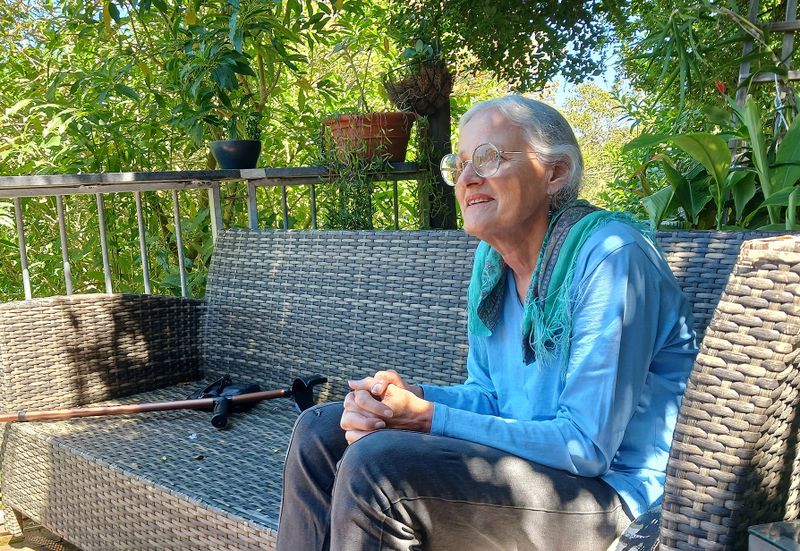
HEART FOR ART: Award-winning artist Annette Kamfer paints her way back after Parkinson’s diagnosis
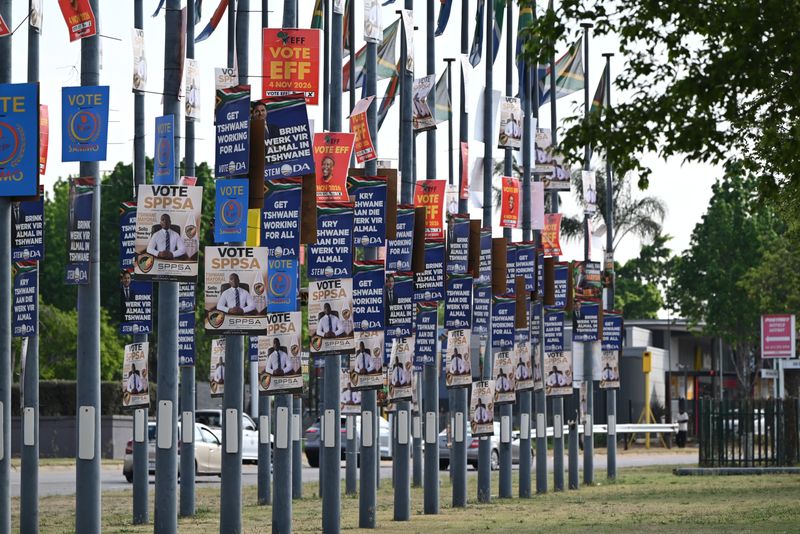
LOCAL ELECTIONS 2026: Ten critical questions as South Africa heads into high-stakes poll

Sanwo-Olu makes runaway appearance at Lagos Fashion Week (PHOTOS)

Valkyries win WNBA title in their second season

EXCLUSIVE: Ebola: 34-year-old pilot, wife identified as suspected cases who tested negative in North-east Nigeria
Zuma to make first public appearance since hospital discharge

When youths move, society changes: The 2026 barricades, By Owei Lakemfa

Why war makes Ukraine media more determined than ever to hold power to account
Latest
HEART FOR ART: Award-winning artist Annette Kamfer paints her way back after Parkinson’s diagnosis
LOCAL ELECTIONS 2026: Ten critical questions as South Africa heads into high-stakes poll
Sanwo-Olu makes runaway appearance at Lagos Fashion Week (PHOTOS)
Valkyries win WNBA title in their second season
EXCLUSIVE: Ebola: 34-year-old pilot, wife identified as suspected cases who tested negative in North-east Nigeria
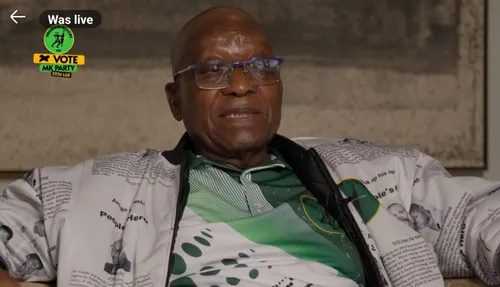
Zuma to make first public appearance since hospital discharge
When youths move, society changes: The 2026 barricades, By Owei Lakemfa
Why war makes Ukraine media more determined than ever to hold power to account