EXPLAINER | How proportional representation determines seats in SA’s local elections
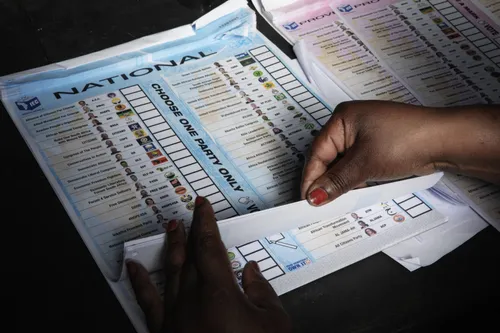
The South African government through IEC uses a mixed voting system that hat combines both a Ward system and a Proportional Representation (PR) system.
South Africa's local government elections, conducted by the Electoral Commission of South Africa (IEC), use a proportional representation (PR) system where parties receive council seats in proportion to the total votes they obtain.
Ahead of the elections on Wednesday, the IEC reported that 38, 571 candidates are contesting PR seats in the 2026 local elections, where voters in a large area vote for political parties, and political parties choose the people who will become their councillors. Each party is allocated a number of seats proportional to how many votes it got in the election.
South Africa's IEC operates under a mixed electoral system that combines both a Ward system and a Proportional Representation (PR) system. This ensures voters have a dual choice; while they may select a ward councillor in their local area, they also cast a vote for a political party that influences how council seats are allocated. Each municipality's council is comprised of an equal split between elected ward councillors and those designated from party lists based on the proportion of votes received, creating a level of fair representation that is vital for democracy in the region.
Each municipality has a fixed number of council seats. Half of these seats are filled through ward elections, and the other half through PR lists. After counting votes, the IEC allocates PR seats so that each party’s total number of councilors (ward + PR) matches its overall share of votes. This ensures fair representation, even if a party wins few or no ward seats.
The IEC reports that due to the large number of contesting parties in the 2026 local government elections, major metros such as Johannesburg, Tshwane, eThekwini, and Ekurhuleni would use double‑column PR ballots because each has more than 48 parties on the PR ballot (Johannesburg has 75). South Africa’s IEC PR system is designed to ensure that municipal councils mirror the overall support each party receives in the election.
However, ahead of the elections, the DA approached the Electoral Court, accusing the Economic Freedom Fighters, uMkhonto weSizwe Party, ActionSA and GOOD Party of trying to dupe voters by not disclosing a full list of candidates.
The DA argued that these four parties had fielded only one proportional-representation (PR) candidate in some municipalities, with the DA approaching the Electoral Court to have the four parties' PR lists declared unlawful. However, the IEC argued that the relief sought by the DA would put the integrity of the local government elections at risk.
The IEC, in its answering affidavit, accused the DA of using flawed arguments to arrive at its complaint, with the IEC stating the relief sought by the DA would disrupt the elections.
“Many of the arguments made by the DA are factually opportunistic and legally specious,” the IEC stated in its court papers. The commission further elaborated that the DA’s application, filed on 21 September 2026—just weeks before voting day—would not only undermine electoral integrity but also contradict established practices that all parties, including the DA, have followed openly in past elections.
Keywords
Related Stories
I have a picture for you! 01 November-06 November
The First Thing newsletter's Ever-lasting Subscriber Photo Gallery.

ENVIRONMENTAL JUSTICE: African climate voices demand fair funding and influence before COP31
The winds, drought and excessive rains of climate change are blowing in Africa and it’s time for the Global North to listen and deliver on its climate finance promises. At COP31 in Turkey, which runs from 9-20 November, African countries will need greater weight in…

Diwali lamingtons with jam and coconut
These soft cake squares are coated in raspberry jam and desiccated coconut for a simple twist on the classic lamington.

ActionSA to negotiate for Nasiphi Moya to serve another five years as Tshwane mayor
ActionSA National Chairperson Michael Beaumont has thrown his weight behind Dr Nasiphi Moya serving another term as Tshwane mayor, saying the party will negotiate to ensure she remains at the helm of the metro for five more years.
Top Stories
I have a picture for you! 01 November-06 November
ENVIRONMENTAL JUSTICE: African climate voices demand fair funding and influence before COP31

Met chief says he wouldn't be surprised if more allegations made about Brand after rape conviction
Diwali lamingtons with jam and coconut

Train worker recalls repelling attacker with frying pan
ActionSA to negotiate for Nasiphi Moya to serve another five years as Tshwane mayor

Katherine Ryan says she feels 'grief and relief' after Russell Brand conviction

Two Gloucester schools in lockdown after boy hurt in incident
Latest
I have a picture for you! 01 November-06 November
ENVIRONMENTAL JUSTICE: African climate voices demand fair funding and influence before COP31
Met chief says he wouldn't be surprised if more allegations made about Brand after rape conviction
Diwali lamingtons with jam and coconut
Train worker recalls repelling attacker with frying pan
ActionSA to negotiate for Nasiphi Moya to serve another five years as Tshwane mayor
Katherine Ryan says she feels 'grief and relief' after Russell Brand conviction
Two Gloucester schools in lockdown after boy hurt in incident