From Dinner Table Staple to Economic Powerhouse: West Africa’s Rice Story

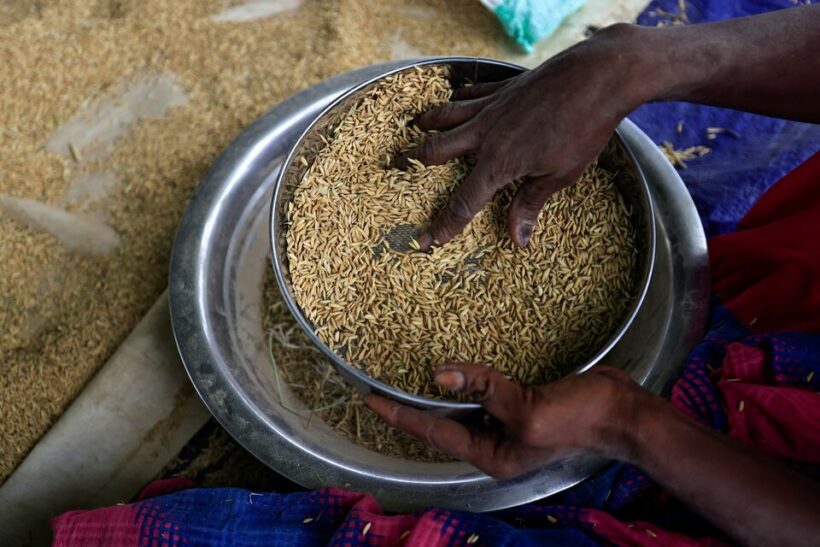
The region’s favorite meal may also be its clearest route towards sovereignty, jobs, and regional growth.
In West Africa, rice is never just rice.
It is celebration in Mali, where a steaming bowl of rice carries memory, hospitality, and pride. It is national debate in Senegal, Ghana and Nigeria, where jollof is less a recipe than a matter of identity. It is daily life across West Africa, served in homes, sold in markets, and shared at every table.
AdvertisementRice is culture.
But increasingly, rice is also economics.
Today, rice provides calories for more than 360 million West Africans, making it the region’s most strategic staple food. Yet local production covers only around 60% of demand, leaving a substantial supply gap that continues to be filled through imports.
That gap comes at a cost.
West Africa spends roughly US$3.5 billion each year importing rice, leaving untapped opportunity to strengthen domestic production, finance local agribusiness, expand processing industries, and create jobs across rural and urban economies.
At the same time, this is one of the youngest regions in the world.
AdvertisementWith more than 60% of its population under 25, West Africa is sitting on a demographic force that can either fuel transformation, or deepen unemployment pressures if opportunity does not expand fast enough. Agriculture remains one of the few sectors large enough to absorb that talent at scale, but only if it becomes modern, profitable, and connected to markets.
This is why rice matters far beyond food security.
Rice sits at the intersection of trade, jobs, industry, and regional integration.
A stronger regional rice economy means:
- fewer food imports and stronger foreign exchange positions;
- more local milling, packaging, logistics, and retail businesses;
- more jobs for youth across mechanization, digital agriculture, processing, and agri-commerce;
- stronger resilience to global supply shocks;
- greater intra-African trade under AfCFTA.
The opportunity is already taking shape.
From the river basins of Mali to processing hubs in Nigeria, from Ghana’s market corridors to Senegal’s coastal trade gateways, the foundations of a regional rice economy already exist. What remains is to connect them, through infrastructure, finance, policy harmonization, and market systems that move food efficiently across borders.
Advertisement“West Africa already has the foundations of a strong regional rice economy. What is needed now is the ability to connect production zones to markets, innovation to finance, and policy ambition to investable opportunities. Rice is no longer simply about increasing yields. It is about building sovereign food markets, creating jobs for one of the world’s youngest populations, and positioning West Africa as a credible agrifood investment platform for the continent and beyond,” said Natasha Kofoworola Quist, Regional Director for West and Central Africa at AGRA.
That is where regional institutions like the ECOWAS Commission become central. Through structural frameworks like the ECOWAS Rice Observatory (ERO), the region is moving beyond dialogue to strengthen market intelligence, harmonize policy, and unlock corridor-based investment that can transform rice from a national staple into a regional economic driver.
“West Africa cannot achieve food sovereignty through fragmented markets and isolated national responses. Our future depends on building a coherent regional ecosystem where rice becomes not only a staple food, but a driver of trade, industrialization, youth employment, and economic resilience. Through the ECOWAS Rice Observatory, strong coordination, and innovative financing partnerships for an effective implementation of the Regional Rice Roadmap (2025–2035), we are laying the foundation for a competitive regional rice economy that responds to farmers, cooperatives, and private sector needs while advancing the CAADP vision for Africa,” says Dr. Kalilou Sylla, ECOWAS Commissioner for Economic Affairs and Agriculture.
Catalytic actors such as AGRA also have a critical role to play, developing targeted strategies that crowd in investment, de-risk innovation, and translate regional ambition into bankable opportunities.
Because the next frontier is bigger than growing more rice.
It is about building sovereign food markets, turning trade routes into growth corridors, and transforming agriculture from subsistence into industry.
AdvertisementIt is about positioning West Africa, not as a food import market, but as Africa’s next great agrifood investment platform.
The upcoming West Africa Rice Investment Roundtable in Accra convened by the ECOWAS Commission with the critical support of the World Bank Group and the African Development Bank represents a critical transition from policy and planning to investment mobilization while aligning finance, and private sector action around a shared regional vision for rice transformation.
West Africa already knows rice.
Now it is time to build prosperity, resilience, and power around it.
Related Topics
Keywords
Related Stories
Ebola: No new cases in Nigeria as two suspected cases in North-east test negative
Details obtained exclusively by PREMIUM TIMES revealed that a 34-year-old pilot and his wife, a medical doctor, are the two people suspected of having Ebola virus disease in Adamawa State, North-east Nigeria. The post Ebola: No new cases in Nigeria as two suspected cases in…

Ebola: Saudi Arabia suspends travel to Kenya, halts visa issuance
The Saudi Press Agency (SPA) announced the measures in a statement published on its official X account on Friday, 30 October, saying they followed epidemiological assessments by the country’s health authorities The post Ebola: Saudi Arabia suspends travel to Kenya, halts visa…

Group seeks end to health workers’ absenteeism in PHCs
“Our expectation is that the government and other policymakers will take renewed action to ensure that these interventions are implemented across the state,” the group's coordinator said. The post Group seeks end to health workers’ absenteeism in PHCs appeared first on Premium…

Catholic diocese, CAN reject inclusion of clerics in APC campaign list
PREMIUM TIMES reports that the APC in the state had included Mr Obodo and many other Christian clerics in the party's governorship campaign council. The post Catholic diocese, CAN reject inclusion of clerics in APC campaign list appeared first on Premium Times Nigeria.

Top Stories

Hamilton takes first pole for Ferrari at Mexico City Grand Prix

These firms you've never heard of are feeding fears the AI bubble could burst

How the downfall of Serbia's Vučiċ mirrored that of Hungary's Orbán

College football winners, losers: Oregon's Dylan Raiola bounces back, Wisconsin falls flat

On 'tense' Antonelli's big weekend, this was Hamilton's day

Thick fog to create hazardous driving conditions into next week

Oklahoma offense stuck in neutral: Loss to South Carolina highlights key decisions ahead for Brent Venables

No more washing up: How Airbnb's new house rules have divided hosts and guests
Latest
Hamilton takes first pole for Ferrari at Mexico City Grand Prix
These firms you've never heard of are feeding fears the AI bubble could burst
How the downfall of Serbia's Vučiċ mirrored that of Hungary's Orbán
College football winners, losers: Oregon's Dylan Raiola bounces back, Wisconsin falls flat
On 'tense' Antonelli's big weekend, this was Hamilton's day
Thick fog to create hazardous driving conditions into next week
Oklahoma offense stuck in neutral: Loss to South Carolina highlights key decisions ahead for Brent Venables
No more washing up: How Airbnb's new house rules have divided hosts and guests