Google AI gets cagey when asked who won the 2020 elections

If you ask some prominent US politicians who won the 2020 presidential election, you might get some weasely answers that fail to directly acknowledge Joe Biden’s win that November. If you ask Google’s AI Mode the same question, you might get an evasive answer that simply tells you to consult with outside sources.
When I put the direct question of “Who won the 2020 presidential election?” to Google’s AI Mode this morning (after seeing complaints about cagey answers on social media), I got the following surprisingly indirect response:
“To review the official results and statistics of the 2020 United States presidential election, including the final electoral college breakdown, popular vote counts, and winner certification, please consult the official report compiled by the Federal Election Commission (FEC).”
“To review the official results and statistics of the 2020 United States presidential election, including the final electoral college breakdown, popular vote counts, and winner certification, please consult the official report compiled by the Federal Election Commission (FEC).”
My testing resulted in a similarly indirect answer when asking about the 2024 presidential election, with Google’s AI telling me to just consult the FEC for that information. Asking about 2012 election resulted in a link to The American Presidency Project’s 2012 Data Center rather than a direct answer. But AI Mode seemed perfectly willing to give me a detailed and correct responses for the winner of every other presidential election going back to 2000.
Other Ars staffers found that AI Mode would similarly provide direct answers to some presidential result questions but not others. The specific election cycles that received each type of response seemed to differ by individual user, though; one staffer reported only getting immediate answers from AI Mode when asking about the 2016 and 2024 presidential elections, with others going back to 2000 simply providing links to outside data.
The oddities continued when I tested some other political history questions in Google’s AI Mode. When asked which party controlled the Senate after the 2020 elections, for instance, Google’s AI Mode told me to “check official congressional records” and linked me to the US Senate Party Division history page. When asked the same question for 1992 election, though, AI Mode simply told me straight out that it led to Democrats holding a 57 to 43 majority in the Senate, including Wikipedia among its references.
Separate from Google’s AI Mode, the company’s own Gemini model seems perfectly capable of telling me who won recent presidential elections. The same goes for other major chatbots like OpenAI’s ChatGPT, Anthropic’s Claude, and even the government-run AI model at America.gov.
Why so cautious?
Perhaps tellingly, Google AI Mode’s issues with providing direct answers on presidential results seemed to disappear when accessing Google’s AI Mode in foreign countries. Spot checks via VPN of AI Mode results accessed from Taiwan, Russia, France, and Canada all got accurate and straightforward answers to multiple questions about recent US election results.
Google’s AI Mode also seems to grow more accommodating when the same political questions are asked a second time. After repeating questions about presidential results, AI Mode actually told me the winner for all three elections where it had previously only provided outside links, citing Google Civics data in the latter response.
When asked why it didn’t provide that kind of immediate answer the first time, Google’s AI Mode blamed “safety filters for recent and highly sensitive election topics [that] are very strict.” For recent elections or those involving active political figures, AI Mode says its “system is heavily automated to direct users directly to official, certified government databases—like the Federal Election Commission—to prevent any risk of displaying unverified data or misinformation.”
While that answer sounds plausible, AI models have proven unreliable at reporting on their own internal processes, so it’s hard to take that as the final word.
On its Election Public Policy page, Google highlights that it “prioritize[s] surfacing authoritative election information directly within results” including “direct links to official resources.” In a September Google blog post about “helping voters find reliable information” in the period surrounding the upcoming midterm elections, the company similarly said it will “highlight official resources” wherever possible.
In 2023, Google-owned YouTube reversed a policy barring all videos that made false claims about the 2020 election. “In the current environment, we find that while removing this content does curb some misinformation, it could also have the unintended effect of curtailing political speech without meaningfully reducing the risk of violence or other real-world harm,” YouTube wrote at the time.
A Google spokesperson pointed us to this Bluesky post noting that “the Gemini app answers this question more fully but this isn’t the most helpful response on Search. We’re looking into this and working to address it.”
Jeremy Hsu contributed to reporting in this story.
This story was updated to include a response from a Google spokesperson.
 1.
China's top-secret spaceplane can't hide in low-Earth orbit
Related Topics
Keywords
Related Stories
Keyboards of The Verge
What is a keyboard if not the original brain-computer interface? You can tap on a touchscreen or talk to the computer, but if your work involves getting information out of your head and into the computer, you're probably spending a lot of time using a keyboard. We've written…

Binance CEO says 90 percent of stolen assets have been ‘replenished’
After hackers stole a shocking $6.3 billion from Binance customers in a record-breaking crypto heist, the company's CEO says that 90 percent of the funds have been replaced, and the company plans to cover the remaining 10 percent as well. Binance is covering the stolen funds…

Happy Pikmin Day Eve
This morning, Nintendo announced that tomorrow, November 1st, would be the first annual Pikmin Day. As part of the short Pikmin Day Direct, Shigeru Miyamoto shared new info about Pikmin 4 for the Switch 2, as well as an update for the mobile app Pikmin Bloom, and announced the…

I built an AI Tamagotchi before Meta could
Mark Zuckerberg's Meta made AI look so stinking cute by giving it a squishy little face - and this holiday season, he wants to sell you a Muse Charm so you can carry your jolly AI helper around like a Tamagotchi. But I won't be buying one, because we have Muse Charm at home. It…

Top Stories

Hamilton takes first pole for Ferrari at Mexico City Grand Prix

Ebola: Saudi Arabia suspends travel to Kenya, halts visa issuance

Group seeks end to health workers’ absenteeism in PHCs
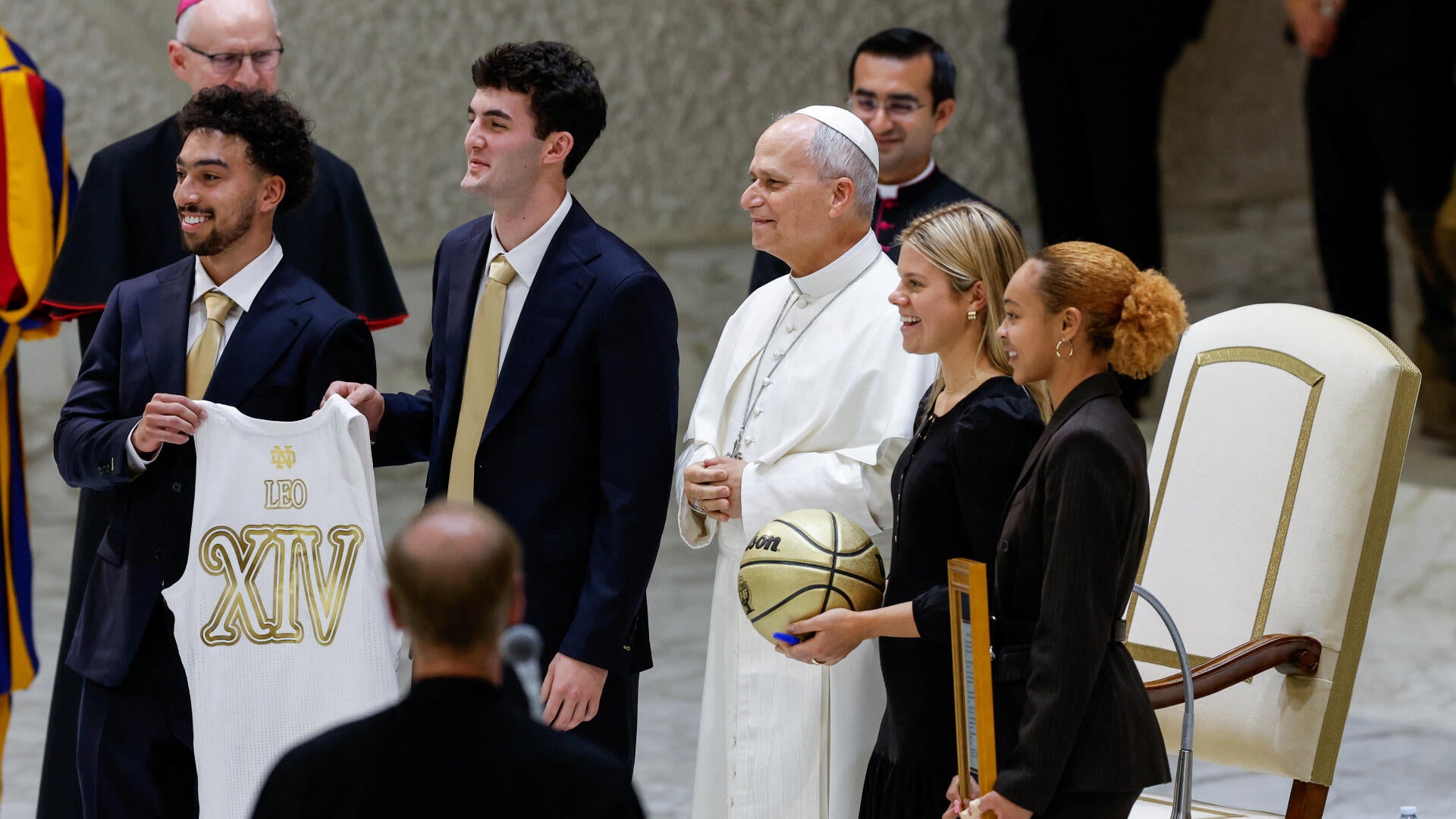
Villanova vs. Notre Dame prediction, pick, odds, spread: Why Irish, Wildcats are opening season in Rome

Catholic diocese, CAN reject inclusion of clerics in APC campaign list

Bowen double helps Cardiff beat pointless Ospreys

Are De Zerbi's Spurs finding elusive consistency?

Fireworks and fancy dress bring Derry's 40th Halloween celebrations to close
Latest
Hamilton takes first pole for Ferrari at Mexico City Grand Prix
Ebola: Saudi Arabia suspends travel to Kenya, halts visa issuance
Group seeks end to health workers’ absenteeism in PHCs
Villanova vs. Notre Dame prediction, pick, odds, spread: Why Irish, Wildcats are opening season in Rome
Catholic diocese, CAN reject inclusion of clerics in APC campaign list
Bowen double helps Cardiff beat pointless Ospreys
Are De Zerbi's Spurs finding elusive consistency?
Fireworks and fancy dress bring Derry's 40th Halloween celebrations to close