Harnessing the breeze: The displaced Gazans building scrap-metal wind turbines
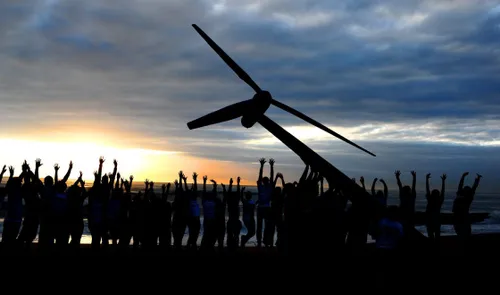
Greenpeace volunteers raise a wind turbine on the beach at dawn in Durban. In a crowded Khan Yunis displacement camp, a former engineering student is building homemade wind turbines out of scrap metal and salvaged debris to provide vital electricity to displaced Palestinians.
Above a maze of tents in a crowded displacement camp in Gaza, homemade wind turbines made from scrap metal and salvaged debris spin in the sea breeze, bringing electricity to struggling Palestinians.
In the southern Khan Yunis camp, Kamal Al-Dabary, a former engineering student, has put his skills to work for families who, like most Gazans, live in displacement with no direct access to the tiny territory's shattered power grid.
According to the World Bank, more than 90% of Gaza's power generation and distribution capacity was destroyed in April, much of it in Israeli strikes that devastated homes and infrastructure.
Sitting on the ground, Dabary tinkered with electrical wires, metal parts and basic tools on a plastic table.
After carefully twisting cables together and testing them with a multimeter, a small bulb flickered on, then another, signalling that the current was flowing.
"When solar panels were still relatively affordable, we bought one and kept moving it around to follow the sun," the 60-year-old, displaced by the fighting between Israel and Hamas, said.
The war was triggered by the Palestinian Islamist movement's deadly October 7, 2023 attack on Israel.
But after three years of war, prices have soared as aid and commercial supplies trickled into Gaza through crossings tightly controlled by Israel.
A single solar panel now costs at least 15,000 shekels (R77,500), putting it out of reach for most Gazans, Dabary said.
A boy walks with a pot past tents for people displaced by war in Khan Yunis in the southern Gaza Strip.
"We haven't had work or income for three years," he added.
"That's when the idea of a wind turbine came to mind. Why not harness the wind? So we salvaged parts from the rubble."
The turbines are built from scooter motors and old water tanks cut into blades.
As the wind turns the blades, they drive a motor that generates electricity. The power then passes through circuits assembled from parts recovered from destroyed homes before being stored in batteries.
This provides enough electricity to charge phones and run lights, fans and even electric razors, small comforts that have become a luxury for families still living in tents and shelters.
Nearly all of Gaza's residents were displaced at least once during the war, and most now live in a small area still under Hamas rule, while Israel controls more than 60% of the territory along its perimeter.
"They help us hold on... until God delivers us from this ordeal and we can return home," said Dabary, known locally as Abu Ayman.
The output remains modest. But in a camp where shortages are constant, every watt counts.
The system "has changed everything," said 50-year-old Saleh ben Hasan.
With healthcare and medication hard to access in Gaza, the power can also help keep medical equipment running.
"If a child needs a nebuliser (a device used to inhale medicine) in the middle of the night, who else can we turn to?" he said.
"Electricity is needed... So we turn to our brother Abu Ayman."
Originally published and reported by IOL South Africa.
Read original coverage on IOL South AfricaRelated Topics
Keywords
Related Stories
WATCH: Seven North Coast communities oppose proposed cemetery and crematorium
Residents from seven La Mercy-area communities have objected to a proposed 33,800-grave memorial park and six-unit crematorium, citing consultation, traffic, LPG safety and emissions concerns.
PKTT arrests suspected hitman in Aubrey Tsengwa murder case
A 44-year-old man suspected of being a hitman has been arrested in connection with the murder of former Knysna mayor Aubrey Tsengwa.
Bread shortage threatens to plunge more Sudanese into hunger
Nearly three and a half years into Sudan's unrelenting war, soaring costs and a nosediving currency have left people like Sawsan Mahmoud struggling to afford even the most basic staple – bread.

Donald Trump says elections were 'giant step back in history' for the US
President Donald Trump vowed to return “bigger and stronger” after Democrats won control of the US House of Representatives in the midterm elections, which he described as a “giant step back” for the country.

Top Stories

Brobbey wins Colwill battle - player ratings for Sunderland's win over Chelsea

Who was back to his best? Player ratings for Crystal Palace v Liverpool

Apple’s M5 MacBook Air is down to its lowest price since July
WATCH: Seven North Coast communities oppose proposed cemetery and crematorium
PKTT arrests suspected hitman in Aubrey Tsengwa murder case
Bread shortage threatens to plunge more Sudanese into hunger
Donald Trump says elections were 'giant step back in history' for the US
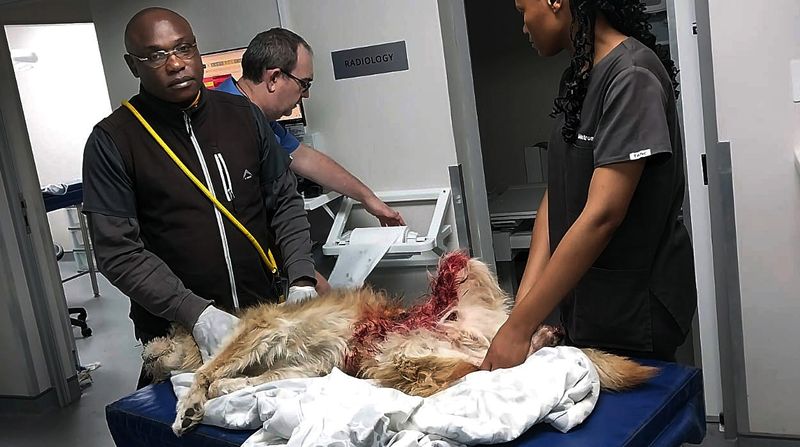
FIREWORKS RISKS: Guy Fawkes fireworks drive Delft dog Max to a horrific death
Latest
Brobbey wins Colwill battle - player ratings for Sunderland's win over Chelsea
Who was back to his best? Player ratings for Crystal Palace v Liverpool
Apple’s M5 MacBook Air is down to its lowest price since July
WATCH: Seven North Coast communities oppose proposed cemetery and crematorium
PKTT arrests suspected hitman in Aubrey Tsengwa murder case
Bread shortage threatens to plunge more Sudanese into hunger
Donald Trump says elections were 'giant step back in history' for the US
FIREWORKS RISKS: Guy Fawkes fireworks drive Delft dog Max to a horrific death