Hope versus Rochas: The court giveth and the court taketh away, By Osmund Agbo


On 8 December, 2014, two parallel governorship primaries took place in Enugu. One was held at Filbon Hotel, where the late Senator Ayogu Eze emerged as the winner, polling 526 votes. At Nnamdi Azikiwe Stadium, the PDP national electoral panel conducted another primary, which produced Hon. Ifeanyi Ugwuanyi, who received 933 votes. The central issue was not necessarily who enjoyed greater popularity among the party’s members or the electorate. It was the legitimacy of the delegate list used to conduct the exercise.
Join the Premium Times WhatsApp Community For Quick Access To News and Happenings Around You.
Eze maintained that the stadium primary that produced Ugwuanyi relied on an improper delegate list and was therefore illegitimate. He argued that the delegates who participated in his own primary had emerged from the 1 November ward congresses and that their list was the authentic one.
His argument drew support from an earlier Federal High Court intervention by Justice Adeniyi Ademola, who issued an interim injunction restraining the PDP from accepting any other list of delegates from the 1 November ward congresses apart from the list submitted by the party’s Electoral Committee headed by one David Aja. That ruling became an important part of Eze’s legal argument.
The litigation dragged on for approximately three years and seven months, beginning in December 2014 and reaching the Supreme Court, which delivered its final judgment on 6 July, 2018. Eze’s challenge was ultimately dismissed, and Ugwuanyi retained the ticket. It was a long and bruising legal battle, one that kept the governor’s political future uncertain for much of the period. Eze plainly believed he had a strong case, and Ugwuanyi had every reason to be concerned about the possibility of an unfavourable judgment.
There were, of course, allegations about the influence of powerful political and judicial interests in the eventual outcome. The late Justice Centus Chima Nweze, who later sat on the Supreme Court, was frequently mentioned in political discussions surrounding the case, even though he was not the presiding judge. Allegations circulated that he had used his connections to tilt the scales in Ugwuanyi’s favour after a lot of water had passed under the judicial bridge. Some even described him as Ugwuanyi’s judicial godfather. Suffice it to say that these rumours remain largely unsubstantiated. Nevertheless, during Ugwuanyi’s tenure, the late justice was widely regarded in some political circles as a man whose wishes the governor would be reluctant to disregard.
The Uzodimma–Okorocha dispute is different and yet similar in some ways. In declaring Okorocha the lawful winner of the recognised primary, the judge also questioned the reliability of the documents produced to support Uzodimma’s nomination.
The documents reportedly contradicted one another, offering different accounts of how the primary was conducted. One suggested that Option A4 was used, another claimed that Uzodimma emerged through consensus, while a third indicated that a direct primary had taken place. The judge considered these inconsistencies significant and declined to attach evidentiary weight to the documents. The judge also faulted the party for failing to provide Okorocha with the relevant nomination form despite his reported requests.
Stay Ahead with Premium Times
Follow us on Google News and never miss breaking stories, investigations, and in-depth reporting.
The similarity between the two cases is that, in a free and fair contest, Ifeanyi Ugwuanyi was the more popular candidate and many believed, could have beaten Ayogu Eze any day. The problem, however, was that the primary process through which he emerged was contested. Similarly, Hope Uzodimma, by all indications, is also a more popular candidate than Rochas Okorocha. But rather than risk his chances in a genuinely competitive primary, he appears to have relied on his control of the party machinery to secure the ticket, the familiar Nigerian way. In doing so, he exposed himself to legal challenges.
But, truth be told, none of this may ultimately matter if the powers that be have decided that your political time is up. In Nigeria, the courts are most often perceived less as independent arbiters of political disputes than as the final theatre in which powerful interests settle their differences. When the political gods decide that a particular individual must go, legal arguments can suddenly acquire an urgency and significance that nobody seemed to notice before. Rules can be excavated from the deepest corners of the statute books and deployed with remarkable enthusiasm.
Uzodimma’s problem, therefore, may not simply be that he emerged through an illegitimate process. After all, many Nigerian politicians have perfected that template. The more consequential question is whether he has stepped on the toes of powerful interests that have now decided he must be brought down.
There is a certain irony in Governor Hope Uzodimma’s current predicament. A man who owes his political ascendancy to one of the most controversial judicial interventions in Nigeria’s electoral history is now discovering that the same institution can take away what it once gave. The Federal High Court in Abuja has nullified his emergence as the All Progressives Congress candidate for Imo West Senatorial District, declared former Governor Rochas Okorocha the lawful winner of the party’s primary, and directed the Independent National Electoral Commission to recognise him.
The ruling, delivered by Justice Obiora Egwuatu on 29 October is undoubtedly a setback for Uzodimma. But it is also a reminder of the Nigerian political truth: when politicians invite the courts into their political battles, they must be prepared for the possibility that the courts may not always rule in their favour.
There is still the Court of Appeal and, ultimately, the Supreme Court. Uzodimma has ample opportunity to challenge the judgment and perhaps reverse his present misfortune. He may also need to mend fences with the gods of the Nigerian judicial establishment and their assorted patron saints, who, in the final analysis, appear to exercise considerable influence over the political fortunes of the powerful. He may also needs to find his own Centus Nweze.
But if he fails, he should spare us the tears. The court giveth, and the court taketh away. Those who have benefited from the extraordinary power of judicial interpretation must learn to live with its consequences, even when the ruling goes against them.
Osmund Agbo is a medical doctor, author, and the 2026 recipient of the Thabo Mbeki Prize for Scholarship and Public Service.
Share this:
Discover more from Premium Times Nigeria
Subscribe to get the latest posts sent to your email.
Type your email…
Subscribe
The N238.4 Billion Question: Tracing Osun’s missing LG funds
2027 Politics Watch: From ADC’s court appeal to APGA’s Tinubu endorsement
Osmund Agbo
More News
Friday Sermon: Stop mocking President Tinubu’s Umrah Ibadah in the name of politics!, By Murtadha Gusau
The 2027 elections: Upsetting the applecart?, By Jibrin Ibrahim
From the Strait of Hormuz to the strait of midterm, Trump pays heavy price, By Azu Ishiekwene
Being responsible when being irresponsible seems convenient, By Yemi Adetayo
Lessons from the 2023 presidential elections: Obi Vs Wike, By Sunday Adelaja
How Sundiata Post is redefining African media’s role in global research, By Max Amuchie
Related Topics
Keywords
Related Stories
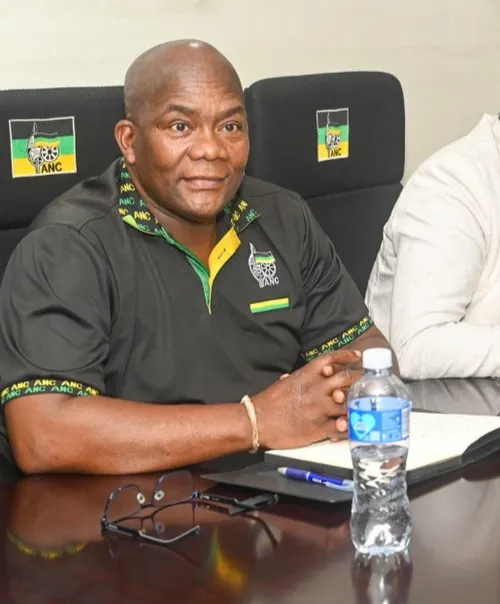
ANC KZN tightens grip on coalition talks, bars regions from independent negotiations
ANC KwaZulu-Natal has instructed its regional structures to obtain provincial approval before engaging in coalition negotiations, as the party prepares for possible hung councils ahead of Sunday's final election results.
‘He’s a special player’: Valencia boss praises Sadiq ahead of Real Madrid showdown
The experienced Mexican tactician was full of praise for Sadiq during Friday's pre-match press conference, highlighting the forward's character, footballing intelligence and qualities both on and off the pitch The post ‘He’s a special player’: Valencia boss praises Sadiq ahead…

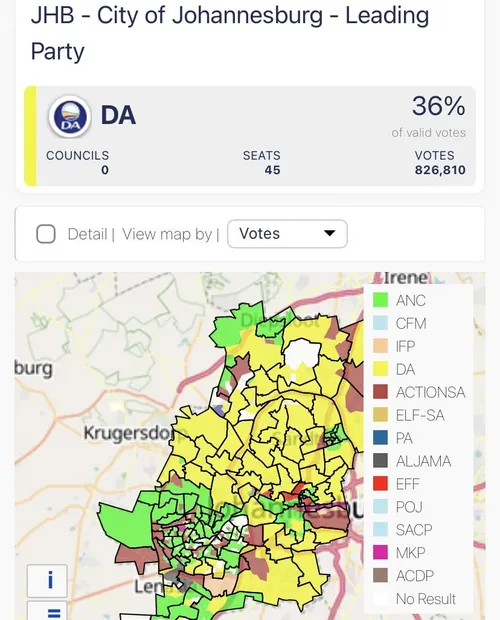
DA shows ANC dust in Johannesburg vote count as coalition talks begin
The DA is tightening its grip on the lead in the City of Johannesburg vote count, leaving the ANC trailing as preliminary results point to a potentially fierce coalition battle for control of the country's economic hub.
South African mom shares why she is moving her family back home after life in Australia
After two and a half years in Australia, Roxy and her family are preparing to return to SA. While the move is in the best interests of her children, she admits she is heartbroken to leave behind the life she has built in Melbourne.

Top Stories
ANC KZN tightens grip on coalition talks, bars regions from independent negotiations
‘He’s a special player’: Valencia boss praises Sadiq ahead of Real Madrid showdown
DA shows ANC dust in Johannesburg vote count as coalition talks begin

Buatsi v Hutchinson 2 - world light-heavyweight title fight predictions
South African mom shares why she is moving her family back home after life in Australia
Durban flood victims face worsening conditions in Astra Building

Amnesty condemns violent attacks on Atiku campaign convoy in Kebbi
Legal showdown looms over SASSA KZN boss’s suspension

Latest
ANC KZN tightens grip on coalition talks, bars regions from independent negotiations
‘He’s a special player’: Valencia boss praises Sadiq ahead of Real Madrid showdown
DA shows ANC dust in Johannesburg vote count as coalition talks begin
Buatsi v Hutchinson 2 - world light-heavyweight title fight predictions
South African mom shares why she is moving her family back home after life in Australia
Durban flood victims face worsening conditions in Astra Building
Amnesty condemns violent attacks on Atiku campaign convoy in Kebbi
Legal showdown looms over SASSA KZN boss’s suspension