‘I was made a scapegoat,’ De Kock tells Khampepe Commission
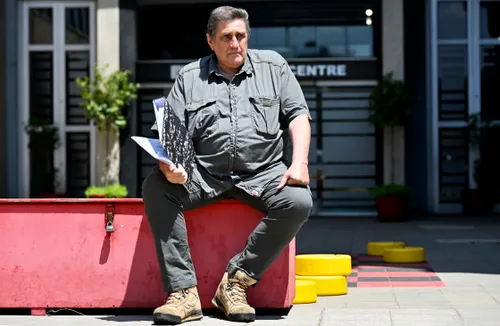
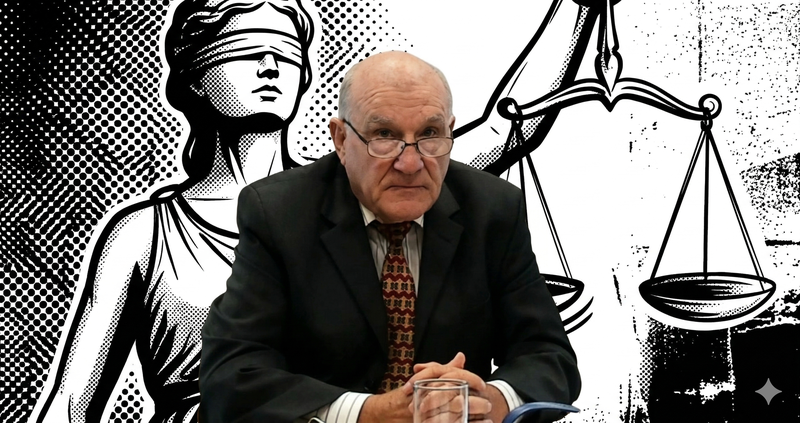
Former apartheid-era police colonel Eugene de Kock appeared before the Truth and Reconciliation Commission (TRC), chaired by retired Justice Sisi Khampepe, at the Sci-Bono Discovery Centre in Newtown on Monday.
Eugene de Kock, the former apartheid-era police colonel notoriously known as ‘Prime Evil’ for his role in the apartheid death squads, has testified that he was made a scapegoat for the crimes against humanity.
Appearing before the Khampepe Commission of Inquiry probing allegations of political interference in TRC cases on Monday, De Kock stated that FW de Klerk’s Nobel Peace Prize must be revoked because he is a killer who was never convicted.
The convicted murderer, a former Vlakplaas security police base commander, also stated that he did not conduct his own recruitment of Askaris. Individuals held under Section 29 of the Internal Security Act assigned them.
“I do not have personal knowledge of whether there has been any agreement between political figures and high-ranking members of the 'security' forces to shut down the prosecution of people who did not receive amnesty through the TRC, or who did not apply,” he stated.
During his testimony, De Kock provided insight into the operations of the apartheid regime's special police unit, Vlakplaas.
He clarified that Vlakplaas did not actively recruit its operatives, known as Askaris; instead, high-ranking officials assigned them to the unit under the draconian Section 29 of the Internal Security Act.
Moreover, De Kock hinted at a potential conspiracy involving political figures and senior members of the security forces to evade justice.
Although he stressed that he lacked personal knowledge of any explicit agreements, the insinuation of collusion could have far-reaching implications for ongoing and future investigations into apartheid-era atrocities.
“Vlakplaas was responsible for counter-insurgency and anti-terrorism activities, and did not conduct its own recruitment of Askaris. Individuals held under Section 29 of the Internal Security Act assigned them,” he stated.
De Kock commanded the C10 counter-insurgency unit based at Vlakplaas, a farm west of Pretoria that became synonymous with state-sponsored violence against anti-apartheid activists.
He further told the Khampepe Commission that he did not have personal knowledge of whether there has been any agreement between political figures and high-ranking members of the 'security' forces to shut down the prosecution of people who did not receive amnesty through the TRC, or who did not apply.
Related Topics
Keywords
Related Stories
UN peacekeeping mission in Western Sahara ends after 35 years, UN chief says
Nov 1 (Reuters) - The 35-year-old UN peacekeeping mission in the Western Sahara region will come to an end after the Security Council failed to renew its mandate, the UN chief said on Sunday.
CONGRESS IN THE BALANCE: A blue tsunami, a tide, or chaos as usual — the US midterm election
With just hours to go before the American midterm election takes place, the day before South Africa’s own local election, control of both houses of the American Congress hangs in the balance.
DIVISIVE WORDS: ‘We never called for literal killing’ — Malema appeals for farm killings to stop.
EFF leader Julius Malema says the chant “Kill the boer, kill the farmer” was never meant literally and has appealed for farm killings to stop.
TRC ROULETTE : Victims’ families place key hidden evidence before Khampepe inquiry
A physical inspection of old lever arch files by the legal team representing the families of apartheid victims at the Khampepe Commission strengthens Anton Ackermann’s claim that a disputed 2006 memo was forged, reshaping the Khampepe inquiry into delayed apartheid prosecutions.
Top Stories
UN peacekeeping mission in Western Sahara ends after 35 years, UN chief says
Week 8 overreactions: Time for Vikings to bench Kyler Murray? Colts should fire Steichen?
NFL Week 8 winners and losers: Cowboys suffer epic collapse, Joe Burrow delivers historic heroics

How Antonelli 'blew everyone away' to make Formula 1 history
Why is Ashton Jeanty not getting carries? Another Raider emerges as Vegas' top RB in Week 8

Russia and Ukraine accuse each other of hacking emergency alert apps
NFL Week 8 grades for every team: Cowboys get an 'F' for choking, Steelers surge to 'A+'

Ukraine air raid app apparently hacked as users receive false radiation threat, Air Force says
Latest
UN peacekeeping mission in Western Sahara ends after 35 years, UN chief says
Week 8 overreactions: Time for Vikings to bench Kyler Murray? Colts should fire Steichen?
NFL Week 8 winners and losers: Cowboys suffer epic collapse, Joe Burrow delivers historic heroics
How Antonelli 'blew everyone away' to make Formula 1 history
Why is Ashton Jeanty not getting carries? Another Raider emerges as Vegas' top RB in Week 8
Russia and Ukraine accuse each other of hacking emergency alert apps
NFL Week 8 grades for every team: Cowboys get an 'F' for choking, Steelers surge to 'A+'
Ukraine air raid app apparently hacked as users receive false radiation threat, Air Force says