IEC says more than 60% of election results captured as collation continues
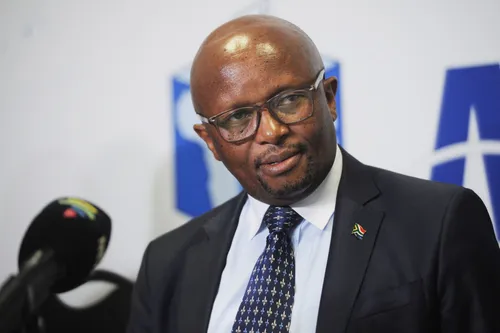
The Electoral Commission of South Africa (IEC) has captured more than 60% of the results from the 2026 local government elections, with the results collation process expected to be concluded by the weekend.
The Electoral Commission of South Africa (IEC) has captured more than 60% of the results from the 2026 local government elections, with the results collation process expected to be concluded by the weekend.
IEC chairperson Mosotho Moepya said that, as of 5pm on Thursday, more than 60% of the 66,073 results had been captured, while approximately 40,202 result slips had been scanned.
A further 2,238 result slips had undergone independent auditing as part of the commission's verification and quality assurance processes.
Moepya was speaking during a media briefing at the National Results Operations Centre (NROC) in Midrand on Thursday evening, as vote counting had concluded and the collation of results continued.
This follows the conclusion of voting across the country after special voting on Monday and Tuesday, and general voting on Wednesday, November 4.
Approximately 29.2 million registered voters were eligible to cast their ballots to elect local government representatives.
Moepya said the commission was pleased with the progress made in capturing and verifying election results across the country.
“The Commission salutes the thousands of men and women who are pulling all the stops to ensure the finalisation of the capturing and auditing of results,” he said.
The Northern Cape had the highest capture rate at 87%, followed by the Western Cape at 69%, the Free State at 64% and the Eastern Cape at 60%.
Mpumalanga had captured 52% of its results, while KwaZulu-Natal stood at 37%.
The North West and Gauteng were both at 35%, while Limpopo had captured 23% of its results.
At municipal level, 65 of the country's 215 municipalities had completed the capturing, scanning, auditing and exception processes, representing approximately 31%.
Moepya provided a provincial breakdown of municipal completion rates, excluding district councils in the Eastern Cape.
In the Eastern Cape, nine of 33 municipalities had completed the process, representing 37%.
In the Free State, seven of 19 municipalities had completed it, also representing 37%.
KwaZulu-Natal had completed the process in six of its 44 municipalities, representing 14%, while Limpopo had completed one of its 22 municipalities, or 5%.
In Mpumalanga, five of 17 municipalities had completed the process, representing 29%. In the North West, two of 18 municipalities had completed it, representing 11%.
The Northern Cape had completed the process in 21 of its 26 municipalities, representing 81%, while the Western Cape had completed 14 of its 25 municipalities, representing 56%.
Moepya cautioned that the figures remained provisional until all objections material to an election had been finalised.
He said the commission wanted to prevent confusion when preliminary results changed during the collation process.
“We in fact are issuing that caution as I speak,” he said.
“The Commission remains committed to finalising the results as expeditiously as possible, while ensuring that all prescribed verification and quality assurance processes are rigorously followed to safeguard the accuracy, transparency and integrity of these results.”
He reiterated that the results collation process was expected to be concluded by the weekend.
The IEC urged political parties, independent candidates, the media and members of the public to exercise caution when interpreting partial results and to rely on officially verified results published by the commission.
Moepya also provided an update on complaints logged through the commission's enhanced issue tracker, which was introduced ahead of the 2026 local government elections.
He said the system was one of the innovations introduced to improve the management of issues affecting the electoral process.
“This mechanism is for contestants and electoral staff to report all issues that could impair the election process. All the issues that are raised are raised there, and the responses are submitted,” he said.
The enhanced issue tracker forms part of the IEC's virtual results operations centre, a platform that provides remote access to the commission's electoral operational systems.
Moepya said the system had helped resolve more than 1,000 cases logged since the commencement of special voting on Monday.
The commission called on all stakeholders to continue observing election regulations governing the results process and to avoid spreading disinformation about the results.
Moepya also sought to clarify reports suggesting that a significant portion of the vote-counting process was still under way.
He said most, if not all, counting had been completed, and that the commission was now focused on collating and capturing results into its system.
“I saw a little scroller saying we have counted about 40%. Most of the counting, if not all of it, is completed,” he said.
“If there's any counting that is taking place, those are issues that the Commission is dealing with and having to make decisions on. What we are doing, you know, is the process of collating and capturing those results into the results system. It's not like 60% of the country continuing to count,” he added.
Related Topics
Keywords
Related Stories
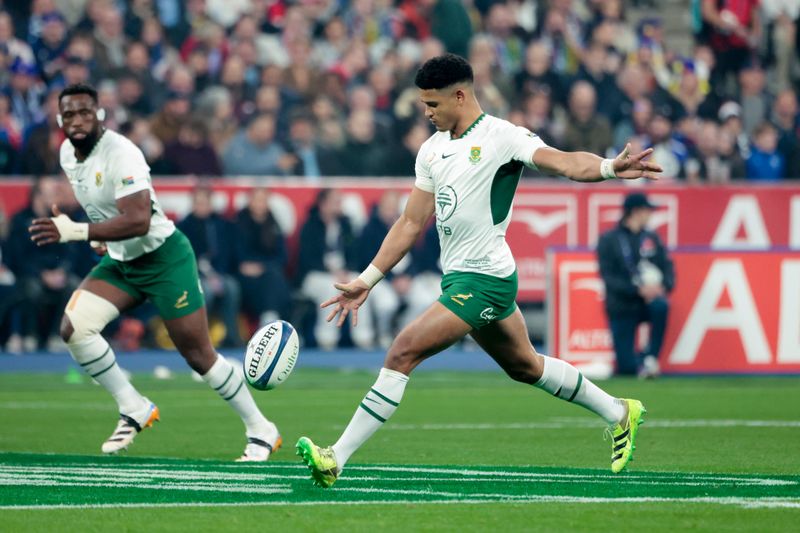
BATTLE PLAN: Erasmus unleashes full-strength Springboks to crush Italy in Nations Championship
Rassie Erasmus named a powerful team to face Italy in Turin on Saturday, which will be led by Siya Kolisi.
HERITAGE & IDENTITY OP-ED: Voices of Knoflokskraal — belonging and everyday survival on contested land
Legal disputes often obscure human realities. In Knoflokskraal near Grabouw, personal accounts of ancestral connection, practical care, and community building bring vital nuance to a complex land debate.

PAINT POWER: Gqeberha artist turns vandalised mural into an ocean-themed second chance
Gqeberha muralist Muneeb Wassin has answered the vandals who defaced his Bayworld mural in the language he knows best: paint.

REFUND WRANGLE: Hospitality agency enters business rescue amid R48m ticket claim scandal
After undelivered tickets for sporting events left it facing refund demands and significant financial pressure, Leisure Connexion has entered voluntary business rescue.
Top Stories
HERITAGE & IDENTITY OP-ED: Voices of Knoflokskraal — belonging and everyday survival on contested land
PAINT POWER: Gqeberha artist turns vandalised mural into an ocean-themed second chance
REFUND WRANGLE: Hospitality agency enters business rescue amid R48m ticket claim scandal
BATTLE PLAN: Erasmus unleashes full-strength Springboks to crush Italy in Nations Championship

Paraguay President Santiago Peña resigns after bank collapse

No budget resolution reached yet, says O'Neill
VIDEO: EFF looks to ward victories to rebuild trust in eThekwini

Greece: Students march in Athens demanding more education funding
Latest
HERITAGE & IDENTITY OP-ED: Voices of Knoflokskraal — belonging and everyday survival on contested land
PAINT POWER: Gqeberha artist turns vandalised mural into an ocean-themed second chance
REFUND WRANGLE: Hospitality agency enters business rescue amid R48m ticket claim scandal
BATTLE PLAN: Erasmus unleashes full-strength Springboks to crush Italy in Nations Championship
Paraguay President Santiago Peña resigns after bank collapse
No budget resolution reached yet, says O'Neill
VIDEO: EFF looks to ward victories to rebuild trust in eThekwini
Greece: Students march in Athens demanding more education funding