Informing Covid-19 preparedness in Sierra Leone
Previous image Next image
As Covid-19 continues to spread, governments in West Africa have been working to meet the virus head-on. In Sierra Leone, the government took measures back in January to quarantine all travelers from countries reporting Covid-19 cases and travelers with high temperatures. With limited public health infrastructure, slowing the spread has been critical to protecting their population of nearly 8 million. In late March, Sierra Leone confirmed the first case in-country, put in place a temporary lockdown, and convened development partners for Covid-19 preparedness and response.
A successful response to Covid-19 requires not only financial and technical resources, but also the efficiency and insights that real-time data bring to the process.
That’s why the MIT Governance Lab (MIT GOV/LAB) and the Institute for Governance Reform (IGR), in partnership with Sierra Leone’s Directorate of Science, Technology and Innovation and Ministry of Finance’s Research and Delivery Division, launched a nationally-representative survey on April 11 to gather critical information to measure people’s understanding of the virus, perceptions of how to prevent spread, and also the prevalence of misinformation across every district in the country.
“It is important to us as a government that we understand what our people know and their ability to effectively respond to and support us in any interventions we plan in this fight against Covid-19” says David Moinina Sengeh SM ’12, PhD ’16, Sierra Leone’s minister of education and chief innovation officer.
Initial results show that awareness of Covid-19 is high. Nearly 98 percent of respondents heard of the virus and 80 percent correctly named coughing as a symptom. Despite this good news, nearly half of respondents (43 percent) didn’t know fever is a symptom, and only 15 percent said they would self-isolate if they or a family member caught the virus or showed symptoms. Accurate and trustworthy messaging about the virus will be critical to ensure citizens are educated to take proper preventative action.
The survey sought to further understand how vulnerable and poor households will be able to withstand a potential lockdown. Preliminary data were grim, showing that most people (60 percent of respondents) say that they could not sustain a lockdown of more than three days at a time. Importantly, food insecurity was high, with only 12 percent of respondents saying they can prepare one week or more of food. The survey also gathered information on health and security, community engagement, trust in government, and the sources of news and information that people trust.
Early results shared with government have already been taken up, Sengeh notes. “As part of the evidence-based and data-driven policymaking process used by the Presidential Taskforce on Covid-19, the results of this survey were used in combination with other evidence across government and from partners to design Sierra Leone's lockdown framework.”
The results aim to rapidly inform the distribution of emergency resources, especially to address health, food security, and policy compliance issues. Since emergency responses are coordinated from the central government, understanding each district’s needs has been critical for developing evidence-based action plans.
This partnership builds on IGR's local research experience, including a rapid assessment of Sierra Leone’s preparedness for Covid-19 and MIT GOV/LAB’s experience in the region designing high-quality surveys that can be done safely and rolled out quickly. Based on both organizations’ experiences during the Ebola epidemic, the survey was been carefully designed to minimize and mitigate risks of person-to-person spread. Multiple rounds of survey responses will be able to provide data over the course of the pandemic.
Share this news article on:
Related Links
Related Topics
Related Articles
How door-to-door canvassing slowed an epidemic
Uninfected patients key to improving Ebola response
Previous item Next item

How door-to-door canvassing slowed an epidemic
Uninfected patients key to improving Ebola response
Fabric molds could bring material-saving concrete beams within reach
Read full story →
How to predict the behavior of molecules from scant data
Read full story →
MIT affiliates elected 2026 American Geophysical Union Fellows
Read full story →
Scene at MIT: Beautiful, intricate, creative quilts
Read full story →
Studying bacteria and the cells they infect
Read full story →
Pinning down the structure of quark-gluon plasma, the universe’s first fluid
Read full story →
Originally published and reported by MIT News.
Read original coverage on MIT NewsKeywords
Related Stories
Ukraine: Russian strikes hit Kyiv region, damaging infrastructure
Russian strikes have damaged infrastructure in the Kyiv region and left a kindergarten in ruins in the Ukrainian capital. Firefighters battled a major blaze as Ukraine faced renewed attacks on its energy network.

COP31: What Nigeria, other African countries will push for at UN climate summit
The group said securing adequate and predictable climate finance, particularly grant-based and concessional funding, would be central to Africa’s negotiating priorities at the conference The post COP31: What Nigeria, other African countries will push for at UN climate summit…

LOCAL ELECTIONS 2026: ANC faces coalition scramble after electoral rout as control of key metros slips away
With councils due to convene within 14 days, the ANC must choose between coalition deals, opposition and uneasy partnerships to retain municipal influence.

NNPC says its gas supply not cause of low power generation
Electricity supply across major Nigerian cities, including Lagos and Abuja, has declined significantly in recent weeks, worsening concerns over the country’s unreliable power supply. The post NNPC says its gas supply not cause of low power generation appeared first on Premium…

Top Stories

Billam-Smith stopped as Clarke repeats amateur win

Ambika Mod says the 'glass ceiling is always getting higher' for South Asian actors

The rise of microdramas: The 'snackable' shows made for the scrolling age

Can the Zelda remake capture the magic of the original?

'Dana, please take the job!' - Trump asks UFC boss to be White House press secretary
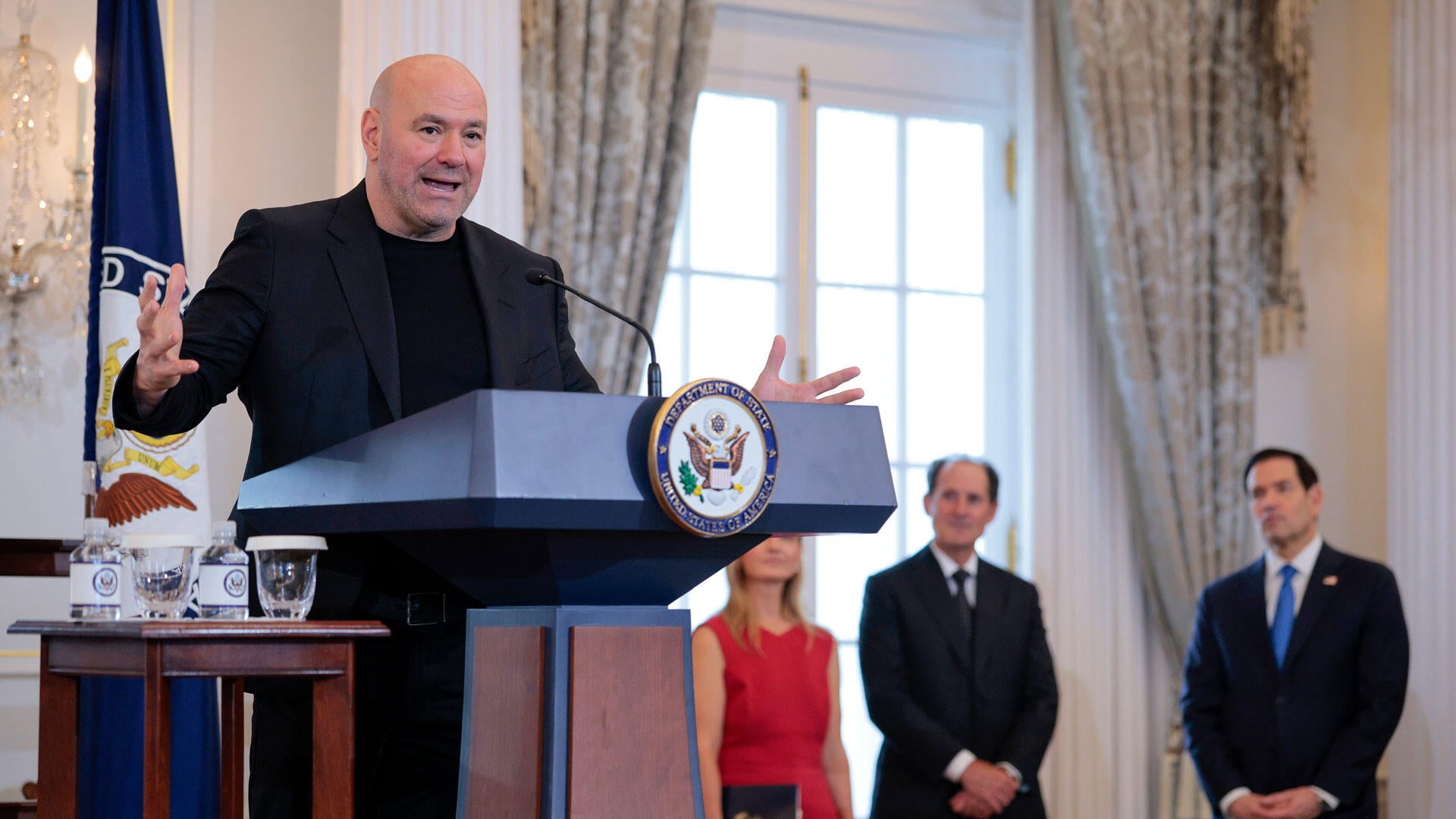
Dana White next White House press secretary? UFC boss set for meeting with President on Monday

'The worst conditions in my 35-year career' - commentating in the FA Cup fog

'Curtains for Robinson' or can floundering Aberdeen boss survive?
Latest
Billam-Smith stopped as Clarke repeats amateur win
Ambika Mod says the 'glass ceiling is always getting higher' for South Asian actors
The rise of microdramas: The 'snackable' shows made for the scrolling age
Can the Zelda remake capture the magic of the original?
'Dana, please take the job!' - Trump asks UFC boss to be White House press secretary
Dana White next White House press secretary? UFC boss set for meeting with President on Monday
'The worst conditions in my 35-year career' - commentating in the FA Cup fog
'Curtains for Robinson' or can floundering Aberdeen boss survive?