Investment Outlook: Did Datatec catch an AI tailwind or is it a breeze?
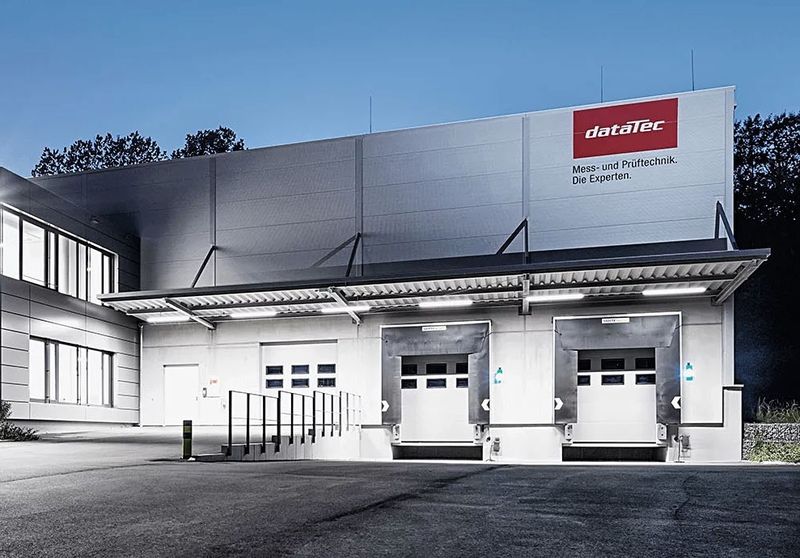
Despite an 18% increase in gross invoiced income, Datatec delivered only 1.4% Heps growth, raising questions about margins, costs and the durability of AI-driven demand.
Datatec’s share price is an odd-looking thing over the past year. A large special dividend to shareholders significantly reduced the overall size of the group, driving a precipitous drop in the share price as the market adjusted to the smaller balance sheet.
This is where the concept of “total return” becomes very important, as it includes the dividends paid to investors. The share price is down 24% year-to-date, yet the total return is positive 21% over that period thanks to the dividend. Always be careful when looking at the chart of a company that paid a special dividend.
In case you’re wondering, this $438-million special dividend (the company reports in US dollars) was funded by a transaction done at subsidiary level in Westcon International.
After an investment by General Atlantic in that company, Westcon was able to repay an intercompany loan from the holding company. This cash was then sent up the chain to shareholders.
But most of the General Atlantic investment came in the form of debt, so this transaction has effectively introduced a lot more gearing on the consolidated Datatec balance sheet. That may sound silly to the casual observer, but it’s part of Datatec’s broader initiatives to “unlock value” (yes, that old cliché) by demonstrating the value embedded in the subsidiaries.
The other thing that management has been doing is telling the market that this era of AI development (the adoption of edge computing solutions) is a strong tailwind for the group. Datatec’s businesses are built around the sale of hardware, software and integration solutions, so a cycle of corporate investment in tech is good news for the group.
This trend was the focus of the company’s presentation at the recent RMB Morgan Stanley Off Piste Investor Conference, which I covered in detail in a previous column.
As I wrote at the time: “A lot is going to ride on the next set of results and how the market assesses the sustainability of growth versus the current valuation.” I wondered out loud whether we might see a trading statement between the conference presentation and the release of results, indicating that Datatec has banked a period of high growth.
Instead, the results for the six months to August 2026 reflect headline earnings per share (Heps) growth of 1.4%. That’s nowhere close to the bullish tone of that conference presentation.
What is going on here?
Starting right at the top of the income statement, we find gross invoiced income (GII) growth of 18% year-on-year. This is the key input for Datatec’s business, as the group earns commission on the products it sells. GII reflects the value of goods distributed, while the revenue on Datatec’s financials represents Datatec’s cut of the pie.
It’s worth noting that North America was only 11% of GII in this period. Europe was 49%, so an investment in Datatec is not a clear look-through to activity in the US. Special mention must also go to Asia-Pacific, contributing 27% of GII.
Due to differing commission structures and the resulting mix effect, revenue growth rarely aligns with GII growth. In this period, revenue growth of 13.9% was 410 basis points off GII growth!
Datatec still incurs cost of sales expenses, so we need to look at the gross profit line to understand how GII eventually filtered through the system properly.
Gross profit was up by just 5.8% for this period, or 9.3% if you strip out the impact of indirect tax credits in the base period. That’s much lower than the impressive GII growth rate.
This is where things start to get difficult for the profit story, as operating costs jumped by 11.2% – well ahead of the increase in gross profit, even on an adjusted basis.
The “obvious” interpretation would be that Datatec’s business is in trouble and that margins are under threat. But the truth is more nuanced, as there are once-off items skewing the performance. This includes costs linked to restructuring and advisory work, which isn’t a surprise in a period that included such a large subsidiary-level transaction.
The challenge lies in the size of the gap between reported earnings before interest, taxes, depreciation, and amortisation – Ebitda – (down 7.8%) and adjusted Ebitda (up by 16.6%). The deviation is even higher by the time we reach the bottom of the income statement, where underlying earnings per share growth of 56.5% is in a different postal code to Heps growth of only 1.4%.
There are many times when adjustments are valid. But in general, I tend to focus on Heps due to the standardised nature of the calculation. This is one of the gifts given to the market by the JSE rules, as all locally listed companies are required to calculate Heps in the same way.
It’s not a perfect solution (as sometimes there are genuine once-offs that should be reversed out), but it’s a very good tool for investors looking to cut through the noise.
All the colours of the wind
In Datatec’s case, the “correct” view on profit growth is likely to be somewhere in the middle. I think it’s important to keep in mind that even with the indirect tax adjustment, gross profit growth was still in the single-digit camp.
This isn’t to say that the AI tailwind isn’t real. It’s just that Datatec has a broad group that includes cutting-edge and more mature offerings.
For example, if we look at Westcon International, cybersecurity contributed 52% of sales during this period, while networking was 38%. Data centre and cloud infrastructure contributed only 10% of sales. Yes, there are AI themes everywhere in that story. Yes, data centre and cloud infrastructure’s contribution jumped from 7% in the prior year. But no, it’s not by any means the largest contributor.
And spare a thought for Logicalis Latin America, where GII fell by 16% and revenue was down 19.2%. Gross profit fell by 24%. The trend is so bad in markets like Brazil that the segment actually slipped into a slightly loss-making position at Ebitda level.
Datatec has been around a very long time.
The company boasts incredible alignment between shareholders and management, with founder and CEO Jens Montanana owning roughly 20% of the company. There’s a lot to feel good about when you zoom out and see the bigger picture.
It’s just a pity that the latest results create more questions than answers. If there’s an AI tailwind in these numbers, it’s barely a breeze at this point. DM
Related Topics
Keywords
Related Stories
Binance sees spike in withdrawals as exchange returns online after $6.3 billion heist
Nov 1 (Reuters) - Binance customers pulled $3.64 billion, or 2.1% of its assets, as the world's biggest cryptocurrency exchange went back online on Sunday after hackers the FBI links to North Korea stole billions from the platform last week.
LOCAL ELECTIONS 2026: The top four parties’ final campaign pitches
The ANC, DA, MK party and EFF all held their final campaign rallies this weekend. Here are their final pitches to voters.

Ukraine evacuates civilians from parts of Kherson region as expiry of Oleshky ceasefire nears
Nov 1 (Reuters) - Ukraine's military said it evacuated 167 people from threatened areas of southern Kherson region on Sunday as a temporary local ceasefire neared expiry -- two days after busloads of residents were brought out of the embattled Russian-held town of Oleshky.

ARTIFICIAL INTELLIGENCE OP-ED: Forget future existential threats — AI is automating gendered violence and misogyny right now
The current alarm about the future dangers of agentic AI might distract us from the very real AI harms already happening. As we speculate about whether machines might one day become dangerous to humankind, AI is deepening misogyny, eroding safety and automating gendered abuse.

Top Stories
Binance sees spike in withdrawals as exchange returns online after $6.3 billion heist
LOCAL ELECTIONS 2026: The top four parties’ final campaign pitches
Ukraine evacuates civilians from parts of Kherson region as expiry of Oleshky ceasefire nears
ARTIFICIAL INTELLIGENCE OP-ED: Forget future existential threats — AI is automating gendered violence and misogyny right now
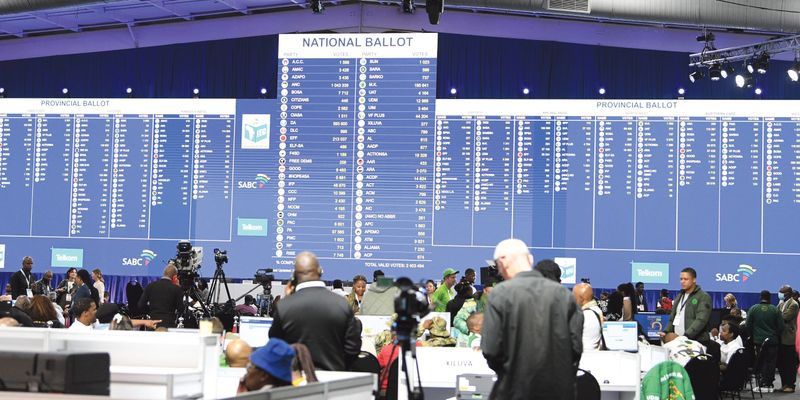
LOCAL ELECTIONS 2026: What happens after the vote? Councils, coalitions and (maybe) controversies

OUR CITY NEWS: Eighty-three parties contest crowded Joburg local government elections

Troubled port: Transnet and foreign operator face scrutiny over backlog at Durban Gateway Terminal

BUSINESS REFLECTION: Crossed Wires: The internet’s technical debt is due, and we can’t pay
Latest
Binance sees spike in withdrawals as exchange returns online after $6.3 billion heist
LOCAL ELECTIONS 2026: The top four parties’ final campaign pitches
Ukraine evacuates civilians from parts of Kherson region as expiry of Oleshky ceasefire nears
ARTIFICIAL INTELLIGENCE OP-ED: Forget future existential threats — AI is automating gendered violence and misogyny right now
LOCAL ELECTIONS 2026: What happens after the vote? Councils, coalitions and (maybe) controversies
OUR CITY NEWS: Eighty-three parties contest crowded Joburg local government elections
Troubled port: Transnet and foreign operator face scrutiny over backlog at Durban Gateway Terminal
BUSINESS REFLECTION: Crossed Wires: The internet’s technical debt is due, and we can’t pay