IOL CEO calls for Africa to shape the future of AI-driven global media at World Media Summit in Beijing
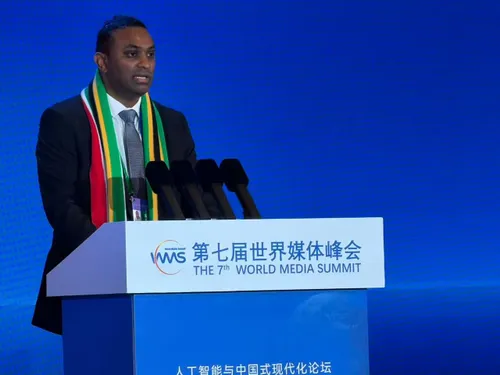
IOL Chief Executive Officer Viasen Soobramoney delivered a keynote address at the 2026 World Media Summit in Beijing, China on Thursday.
IOL Chief Executive Officer Viasen Soobramoney has called for a more inclusive global media landscape in which Africa and the Global South play a meaningful role in shaping the future of artificial intelligence, as he delivered a keynote address at the 2026 World Media Summit in Beijing, China on Thursday.
Addressing an international gathering of media leaders, journalists and technology experts, Soobramoney emphasised that while artificial intelligence is fundamentally transforming the media industry, its development must be guided by principles of inclusion, equitable access, responsible governance and the preservation of journalistic integrity.
The seventh World Media Summit, hosted by Xinhua News Agency in partnership with the Beijing Municipal Government, brings together nearly 500 delegates representing approximately 330 media organisations, think tanks, government institutions and international organisations from 112 countries and regions.
Held under the overarching theme, Media in the Intelligent Age: From Consensus to Action, the summit is providing a global platform for discussions on the impact of artificial intelligence, the transformation of newsrooms and the future of international communications.
Speaking during the session dedicated to “AI+ and the Future of Global Communication Governance”, Soobramoney challenged media leaders to look beyond the technological possibilities of artificial intelligence and confront the question of who ultimately controls, benefits from and shapes the emerging digital information ecosystem.
“AI is already reshaping how news is gathered, translated, verified, produced and distributed. It offers extraordinary opportunities to overcome language barriers, expand access to information and connect audiences with stories from across the world,” he said.
However, he cautioned that the rapid advancement of AI also presents significant challenges, including misinformation, deepfakes, algorithmic bias and the concentration of technological power among a relatively small number of global companies.
“Our responsibility is not to resist progress, but to ensure that progress serves humanity. The future of global communication must be intelligent, but above all, inclusive,” he told delegates.
The seventh World Media Summit, hosted by Xinhua News Agency in partnership with the Beijing Municipal Government, brings together nearly 500 delegates representing approximately 330 media organisations, think tanks, government institutions and international organisations from 112 countries and regions.
A central theme of Soobramoney’s address was the need to strengthen Africa’s position in the global technology and media ecosystem.
He argued that African stories, languages, cultures and lived experiences have historically been underrepresented in international information systems, often told through external perspectives rather than by the communities themselves.
Artificial intelligence, he said, presents an unprecedented opportunity to change this imbalance.
He highlighted the potential of AI to empower journalists in rural communities, improve investigative journalism, analyse complex datasets, strengthen verification processes and enable African newsrooms to produce multimedia content for international audiences.
The technology could also create opportunities for young African journalists to compete globally, regardless of their geographical location or access to expensive technological infrastructure.
But Soobramoney stressed that these opportunities would only be realised through sustained investment in skills development, infrastructure, partnerships and responsible governance.
“The Global South must not simply consume technologies developed elsewhere. We must participate meaningfully in their development, governance and ownership. We must help shape the rules of the digital future, not merely inherit decisions made elsewhere,” he said.
His remarks placed particular emphasis on the importance of ensuring that AI systems are trained on diverse languages, cultures and societies, rather than reproducing existing inequalities in global information and knowledge systems.
Keywords
Related Stories
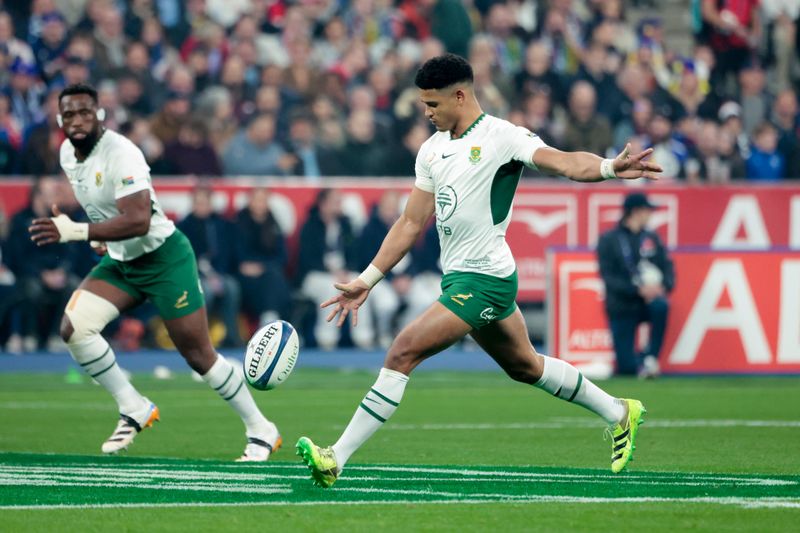
BATTLE PLAN: Erasmus unleashes full-strength Springboks to crush Italy in Nations Championship
Rassie Erasmus named a powerful team to face Italy in Turin on Saturday, which will be led by Siya Kolisi.
HERITAGE & IDENTITY OP-ED: Voices of Knoflokskraal — belonging and everyday survival on contested land
Legal disputes often obscure human realities. In Knoflokskraal near Grabouw, personal accounts of ancestral connection, practical care, and community building bring vital nuance to a complex land debate.

PAINT POWER: Gqeberha artist turns vandalised mural into an ocean-themed second chance
Gqeberha muralist Muneeb Wassin has answered the vandals who defaced his Bayworld mural in the language he knows best: paint.

REFUND WRANGLE: Hospitality agency enters business rescue amid R48m ticket claim scandal
After undelivered tickets for sporting events left it facing refund demands and significant financial pressure, Leisure Connexion has entered voluntary business rescue.
Top Stories
HERITAGE & IDENTITY OP-ED: Voices of Knoflokskraal — belonging and everyday survival on contested land
PAINT POWER: Gqeberha artist turns vandalised mural into an ocean-themed second chance
REFUND WRANGLE: Hospitality agency enters business rescue amid R48m ticket claim scandal
BATTLE PLAN: Erasmus unleashes full-strength Springboks to crush Italy in Nations Championship

Paraguay President Santiago Peña resigns after bank collapse

No budget resolution reached yet, says O'Neill
VIDEO: EFF looks to ward victories to rebuild trust in eThekwini

Greece: Students march in Athens demanding more education funding
Latest
HERITAGE & IDENTITY OP-ED: Voices of Knoflokskraal — belonging and everyday survival on contested land
PAINT POWER: Gqeberha artist turns vandalised mural into an ocean-themed second chance
REFUND WRANGLE: Hospitality agency enters business rescue amid R48m ticket claim scandal
BATTLE PLAN: Erasmus unleashes full-strength Springboks to crush Italy in Nations Championship
Paraguay President Santiago Peña resigns after bank collapse
No budget resolution reached yet, says O'Neill
VIDEO: EFF looks to ward victories to rebuild trust in eThekwini
Greece: Students march in Athens demanding more education funding