Israel is in a political deadlock. What comes next?
By
Itay Stern
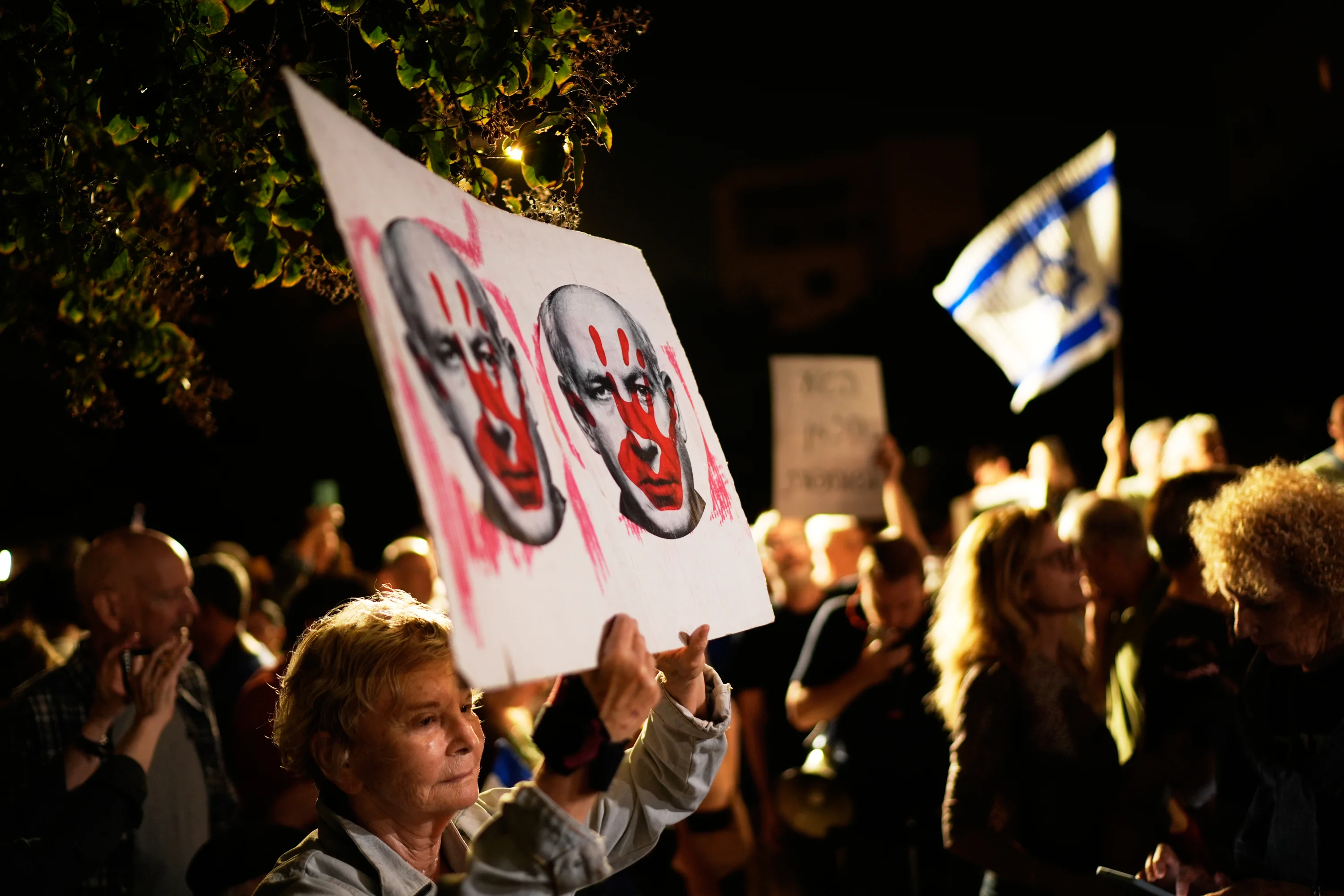
Israeli left-wing activists call for a government with Arab parties outside Yashar party leader Gadi Eisenkot's residence in Herzliya, Israel, Thursday. David Goldman/AP hide caption
TEL AVIV, Israel — Israel's election has produced a political deadlock, leaving neither Prime Minister Benjamin Netanyahu nor his main challenger, Gadi Eisenkot, with a clear path to forming a government.
The final results give opposition parties more seats than Netanyahu's right-wing bloc. But Eisenkot, a center-right former military chief of staff, cannot reach a governing majority without the support of predominantly Arab parties — an option Eisenkot's allies repeatedly ruled out during the campaign.
State of the World from NPR
The Israeli election is deadlocked
Netanyahu's Likud party received the most votes — winning 27 seats — but his bloc lost the majority it had prior to the vote. The coalition of right-wing, far-right and ultra-Orthodox parties that supported his previous government won a combined 53 seats. A party or coalition would need at least 61 seats for a majority in Israel's 120-seat parliament, known as the Knesset.
Here is what happens next and the possible paths to a new Israeli government.
How does Israel form a government?
In the next few days, Israel's president will consult with the leaders of every party elected to parliament. Each party will recommend the party leader it believes should be given the first opportunity to form a coalition.
The president is not required to choose the leader of the largest party. Instead, the president selects the candidate considered most likely to assemble a governing coalition.
That candidate is given 28 days to secure the support of at least 61 lawmakers. The president may grant an extension of up to 14 days. If the effort fails, the president can give another candidate an opportunity to form a government.
The process could take weeks, or months, or end without anyone assembling a majority.
Who is most likely to get the first opportunity to form a coalition?
Based on the election results, Eisenkot appears more likely than Netanyahu to receive the largest number of recommendations from newly elected lawmakers.
But that does not mean Eisenkot — a relative newcomer to politics — will be able to form a coalition. His political bloc lacks a majority without the Arab-led parties and he has repeatedly promised not to form a coalition that depends on their support. They represent 21% of the population, who generally refer to themselves as Palestinian citizens of Israel.
Middle East
With most votes counted, Israeli election reaches a stalemate
Eisenkot has said the Arab parties' positions on Hamas and the war in Gaza prevent him from governing with them — some have refused to endorse the military goal of eliminating Hamas, or condemning it as a terrorist organization. Other leaders in his bloc made similar statements before and after the election.
Netanyahu faces a different version of the same problem. His traditional coalition partners do not have enough seats to return him to power.
What are the possible outcomes?
One possibility is a unity government bringing together Netanyahu and Eisenkot.
Israeli and some U.S. media outlets have reported that President Trump may favor such an outcome — although NPR has not independently confirmed the reports. A unity government would likely include more moderate parties from Israel's political center and right.
President Trump endorsed Netanyahu in the lead-up to the election, and later boasted that he thought it turned the tide in the election.
Such a coalition could make it easier for Israel to work with the Trump administration on its regional priorities, including the reconstruction of Gaza and a potential normalization agreement with Saudi Arabia.
But Eisenkot has repeatedly pledged not to serve in a government led by Netanyahu. The two leaders would also have to resolve questions about who would serve as prime minister and whether the position would rotate between them.
A second possibility is an Eisenkot government supported by Arab parties.
Together, Eisenkot's bloc and the Arab parties would command a comfortable parliamentary majority of more than 67 seats. But such a coalition remains unlikely because Eisenkot and his allies have repeatedly rejected it.
Support from the Arab parties would not necessarily require them to join the government. They could support a minority government from outside the coalition. But that arrangement would still contradict the campaign promises made by Eisenkot and several of his potential partners.
A third possibility is another election.
Israel's president has urged political leaders to avoid sending the country back to the polls, particularly after an election that drew the highest turnout in decades. Israeli President Isaac Herzog said he expects party leaders "to come with an open mind" in their discussions with him.
But if no candidate can assemble a majority, another election remains possible.
Netanyahu may believe a repeat election could work in his favor. Arab turnout could decline if Arab voters conclude that the predominantly Jewish opposition parties will not allow their representatives to participate in government. Liberal Israelis who traveled from overseas to vote in this election may also be less likely to return for another vote.
A fourth possibility is that one bloc persuades lawmakers from the opposing camp to defect to their side.
That would be difficult under the current results. Netanyahu would need to attract roughly eight lawmakers from outside his bloc. Eisenkot would need approximately 13 defectors if he continued to exclude the Arab parties — a scenario that currently appears highly unlikely.
How can the opposition undermine Netanyahu during this stalemate?
A parliamentary majority opposed to Netanyahu could begin advancing legislation before a new government is formed, with support from Arab lawmakers.
Eisenkot's bloc is considering an effort to replace the speaker of the Knesset, a powerful position that helps determine parliament's legislative agenda.
The bloc also hopes to pass legislation establishing a state commission of inquiry into the political and security failures that preceded the Hamas-led attack on Israel on Oct. 7, 2023.
Eisenkot's allies could also try to reverse legislation advanced by Netanyahu's government that critics say weakened Israel's democratic institutions and judicial independence.
These steps would not, by themselves, establish a new government. But they would allow Netanyahu's opponents to exercise significant power in parliament while coalition negotiations continue.
Could a renewed war with Iran affect the political negotiations?
In his election night speech, Netanyahu said Israel still had to complete its mission against Iran and permanently remove what he described as an existential threat.
On the same night, Eisenkot warned Netanyahu not to use "Israel's security for your political needs."
A renewed war with Iran, particularly one involving the United States, could disrupt the opposition's planned legislative moves. It could also increase public and political pressure on Eisenkot to enter an emergency unity government with Netanyahu.
A similar dynamic followed the Oct. 7 attack. Eisenkot joined Netanyahu's emergency government and war Cabinet, before resigning eight months later. Eisenkot said Netanyahu was making decisions based on political considerations rather than Israel's national interests.
Danny Citrinowicz, an Israeli analyst on Iran, said Netanyahu has a political incentive to renew the fighting while negotiations over a new government are underway.
"Netanyahu definitely has an incentive to go to war," Citrinowicz said. "He understands that returning to war against Iran while a government is being formed would serve his interests. When you have an emergency in Israel, the pressure on Eisenkot to enter some sort of unity government would obviously mount."
Daniel Estrin in Tel Aviv contributed to this story
NPR does not offer or accept money for coverage or interviews.
Anyone who makes such an offer or request is not an NPR employee and does not represent NPR.
Related Topics
Keywords
Related Stories
How the downfall of Serbia's Vučiċ mirrored that of Hungary's Orbán
Defeat for Serbia's Aleksandar Vučiċ in last weekend's vote was a carbon copy of Viktor Orbán's fall in Hungary.

India's opposition set to hold mega rally seeking election chief's resignation
It comes amid growing protests over a voter roll revision exercise feared to leave 130 million voters off rolls.

I've been stuck on a tiny Pacific island for years and can't get a transit visa to fly home
Ruchira Ranasingha, 50, has been stranded in the Cook Islands since 2023 and wants to return to Sri Lanka.

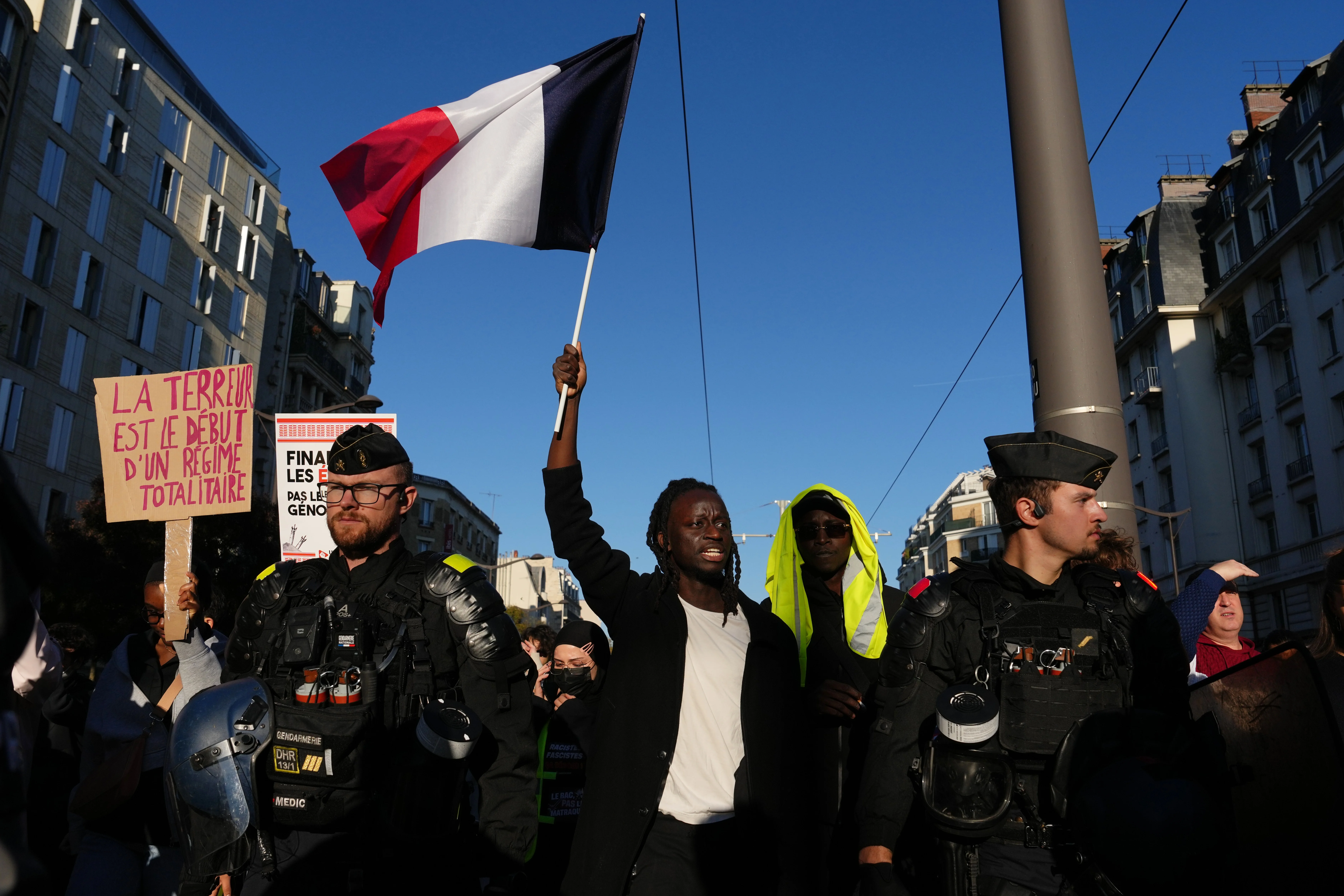
France seethes again as youth-led protests sweep Europe
French Interior Minister Laurent Nuñez warned of a "very high risk" of disorder, especially after dark on Halloween, as some 320,000 people nationwide took to the streets.
Top Stories

Hamilton takes first pole for Ferrari at Mexico City Grand Prix

These firms you've never heard of are feeding fears the AI bubble could burst
How the downfall of Serbia's Vučiċ mirrored that of Hungary's Orbán
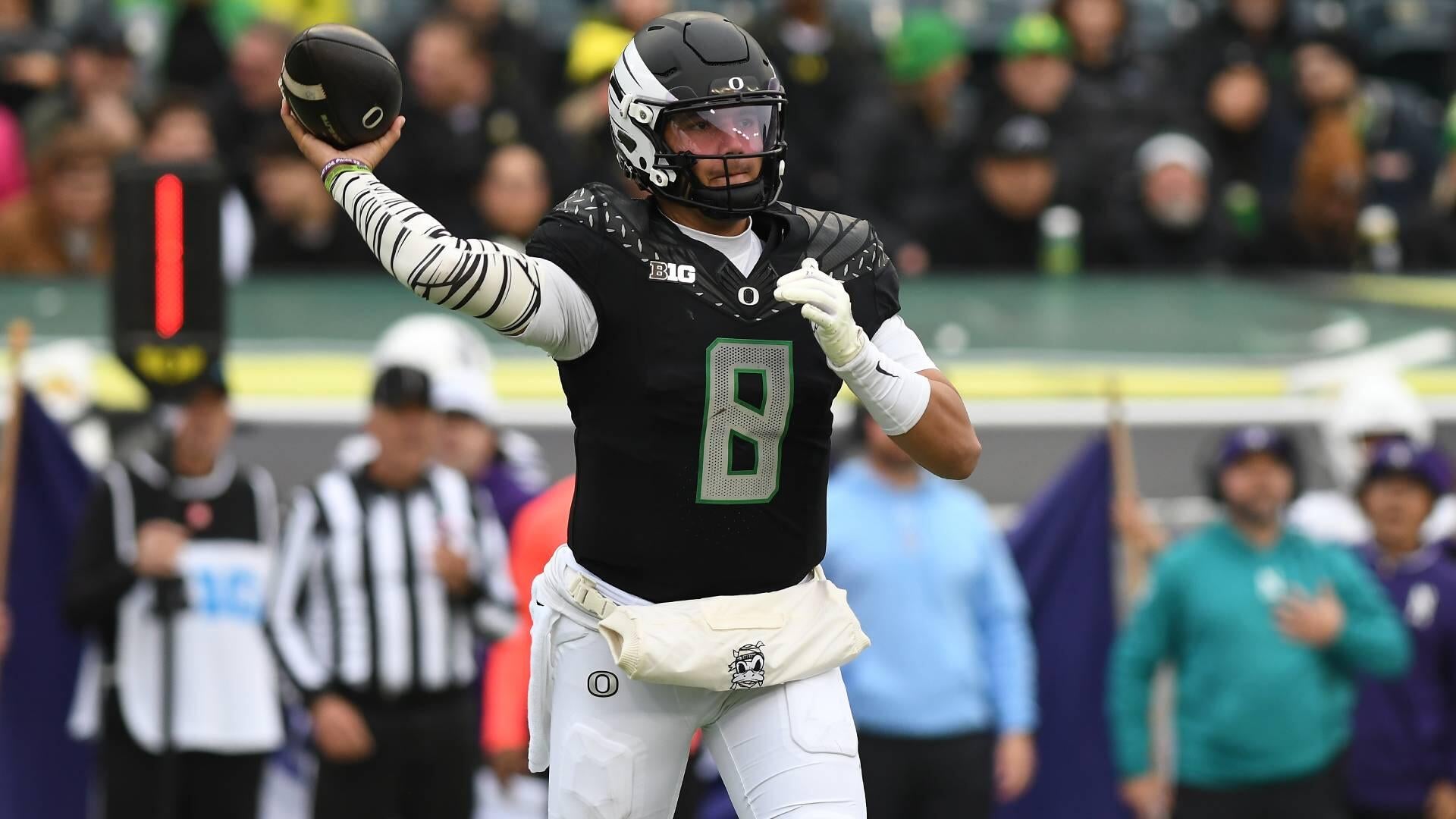
College football winners, losers: Oregon's Dylan Raiola bounces back, Wisconsin falls flat

On 'tense' Antonelli's big weekend, this was Hamilton's day

Thick fog to create hazardous driving conditions into next week
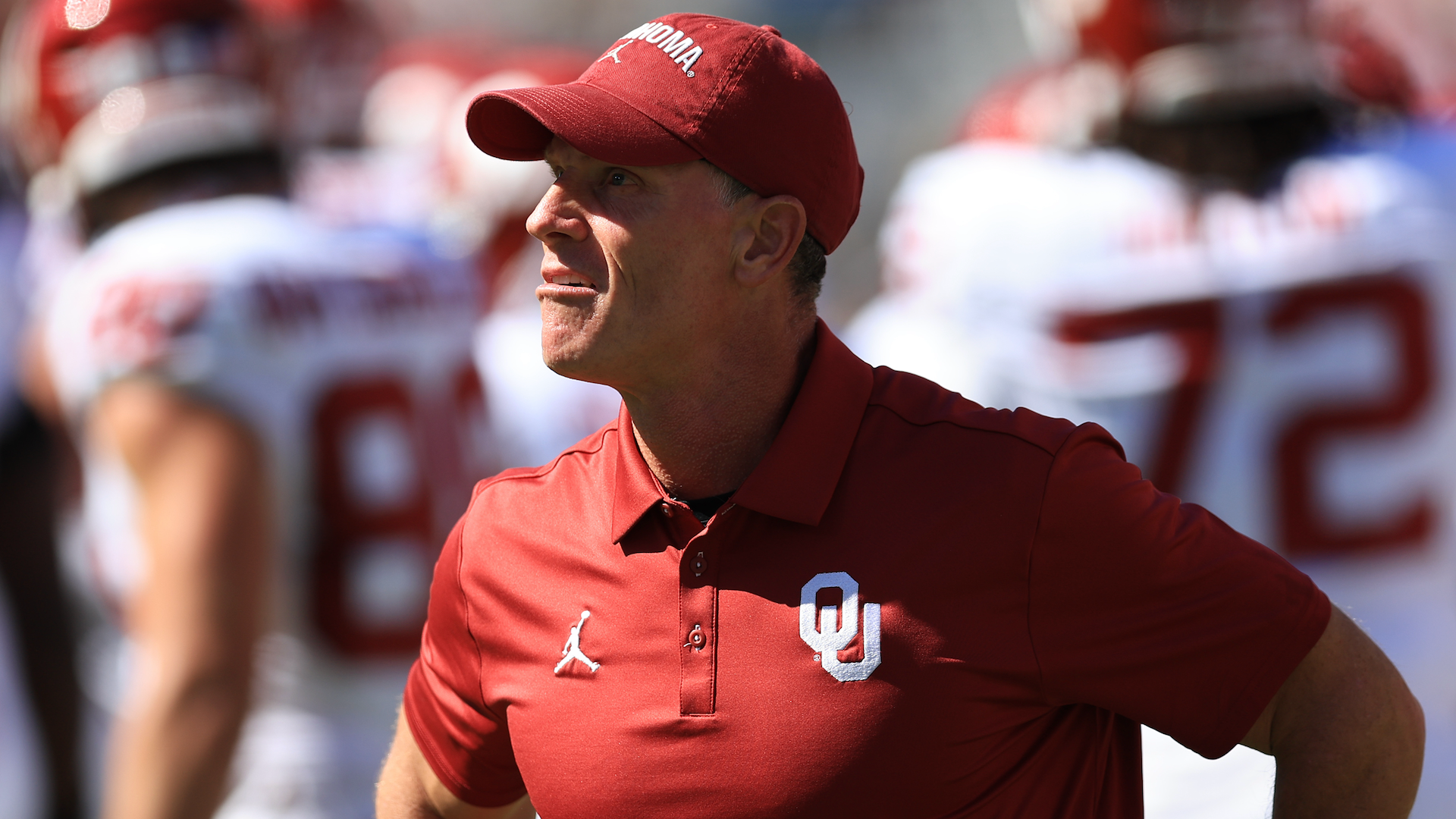
Oklahoma offense stuck in neutral: Loss to South Carolina highlights key decisions ahead for Brent Venables

No more washing up: How Airbnb's new house rules have divided hosts and guests
Latest
Hamilton takes first pole for Ferrari at Mexico City Grand Prix
These firms you've never heard of are feeding fears the AI bubble could burst
How the downfall of Serbia's Vučiċ mirrored that of Hungary's Orbán
College football winners, losers: Oregon's Dylan Raiola bounces back, Wisconsin falls flat
On 'tense' Antonelli's big weekend, this was Hamilton's day
Thick fog to create hazardous driving conditions into next week
Oklahoma offense stuck in neutral: Loss to South Carolina highlights key decisions ahead for Brent Venables
No more washing up: How Airbnb's new house rules have divided hosts and guests