Justice Madlanga calls for tougher fight against corruption
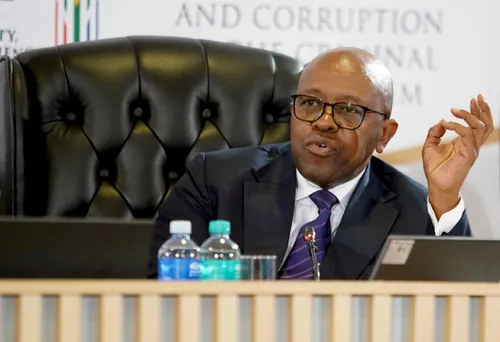
Justice Mbuyiseli Madlanga called for stronger action against corruption at the 2026 Oliver Tambo Memorial Lecture.
Corruption has become so deeply embedded in South Africa’s fabric that imagining the country without it is nearly impossible, according to Justice Mbuyiseli Madlanga.
Speaking at the 2026 Oliver Tambo Memorial Lecture, he warned that the billions lost annually to graft severely compromise socio-economic rights and directly harm the nation’s most vulnerable.
Hosted last Friday by the Gordon Institute of Business Science (GIBS), the Adelaide and Oliver Tambo Foundation, and Infinity Dynamic Strategy, the lecture’s theme was “The Mirror, Map and Compass”, reflecting on Tambo’s enduring leadership.
Madlanga chairs the Judicial Commission of Inquiry into criminality, political interference, and corruption in the Criminal Justice System, also known as the Madlanga Commission.
He stated that South Africa’s reality is that corruption is endemic and pervasive that it is woven into its fabric and deeply embedded into the country’s very being.
Highlighting the depth of corruption, Madlanga said its reach negatively impacts lives in general.
“The gluttonous theft of public funds results in the state not being able to deliver on its public obligations as well as it otherwise would,” Madlanga said.
“In a country like South Africa, whose GDP (gross domestic product) is relatively modest, the impact of corruption on fundamental rights is negatively affected by it. In particular, socio-economic rights are huge. On an annual basis, money lost to corruption in South Africa runs into billions of rand.
“If the promise of socio-economic rights and indeed of other fundamental rights is to be imperiled, law enforcement must step up a notch. In this, I include courts.”
Madlanga noted that depleting state resources through corruption jeopardises essential socio-economic rights, immediately harming the most vulnerable, the poor.
He said that while we must address state corruption, we must not ignore that private individuals and corporations are equally at the centre of these corrupt relationships.
“It takes people outside of government and people within public office to have corrupt relationships. If players in the public sector are treated only as victims, we ignore the active bribery that drives corruption, even resulting in state capture.”
He encouraged courts and other corruption-fighting entities to escalate and intensify the fight against corruption.
“To reduce if not optimistically remove profit in corrupt activity and thus to disincentivise participation in any corrupt activity. We often look at the systemic failures of our public institutions and feel an overwhelming sense of discouragement,” Madlanga said.
“We see consequences of corruption, the hollowing out of our state enterprises, and facets of bureaucratic paralysis, and we sink into despondency. Some may even conclude that our participation no longer matters and that withdrawing from the democratic process entirely is some sort of solution.”
Madlanga added that it was shameful that South Africa was in the tight clutches of corruption. It was one of the “worst kinds of betrayal of Tambo’s values one can think of”.
Political commentator Rebone Tau said that today we are confronted with the painful reality of public funds meant to uplift the poor being lost to corruption.
“The revelations at the Madlanga Commission have shocked many of us and highlighted how corruption undermines institutions, erodes public trust and delays service delivery,” Tau said.
“We desperately need leaders who understand that public office is a responsibility, not an opportunity for personal enrichment. We need selflessness, integrity and incorruptibility.”
Tau added that Tambo’s legacy must be more than a commemoration through annual lectures, but a standard by which we measure ourselves and those entrusted with leadership.
Political analyst Gideon Chitanga said Madlanga illustrates the painful depth and cost of corruption in the country.
“This calls for urgency without delays on the side of the government but also on the side of the private sector and civil society to really start focusing on how these key institutions can play a role in arresting corruption,” Chitanga said.
“The costs are evident. Everyone sees it. They are not only financial or economic. They are intersectional, extending to even issues of public safety and security and potentially national stability and national security.”
Related Topics
Keywords
Related Stories
Sanwo-Olu makes runaway appearance at Lagos Fashion Week (PHOTOS)
It is his second runway appearance. The post Sanwo-Olu makes runaway appearance at Lagos Fashion Week (PHOTOS) appeared first on Premium Times Nigeria.

EXCLUSIVE: Ebola: 34-year-old pilot, wife identified as suspected cases who tested negative in North-east Nigeria
The Nigeria Centre for Disease Control and Prevention (NCDC) on Saturday announced that two suspected Ebola cases had been identified in the North-east. The post EXCLUSIVE: Ebola: 34-year-old pilot, wife identified as suspected cases who tested negative in North-east Nigeria…

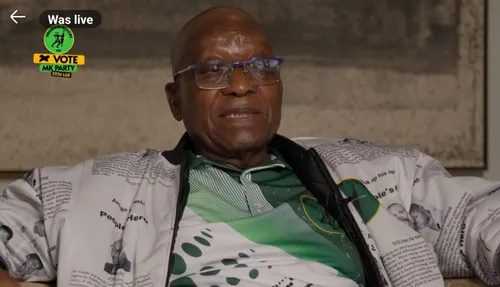
Zuma to make first public appearance since hospital discharge
Former president Jacob Zuma is expected to address an MK Party rally in KwaMashu, north of Durban, after his recent hospitalisation, while the EFF unveils mayoral candidates in Ekurhuleni and other municipalities.
When youths move, society changes: The 2026 barricades, By Owei Lakemfa
The ongoing mass protests in France were ignited and led by students. They are the segment of society to which all shades and classes of society belong. When such a class reaches consensus and hits the streets, as it has done in parts of Europe in the last few weeks, change in…

Top Stories
Sanwo-Olu makes runaway appearance at Lagos Fashion Week (PHOTOS)

Valkyries win WNBA title in their second season
EXCLUSIVE: Ebola: 34-year-old pilot, wife identified as suspected cases who tested negative in North-east Nigeria
Zuma to make first public appearance since hospital discharge
When youths move, society changes: The 2026 barricades, By Owei Lakemfa

Why war makes Ukraine media more determined than ever to hold power to account
New game puts players in charge of a South African municipality
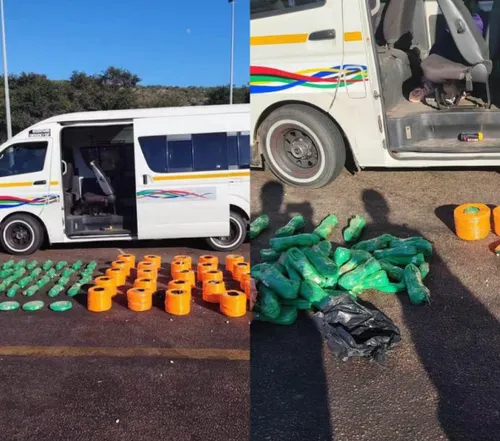
Two foreign nationals arrested after police seize explosives worth R975,000 on N1 in Limpopo

Latest
Sanwo-Olu makes runaway appearance at Lagos Fashion Week (PHOTOS)
Valkyries win WNBA title in their second season
EXCLUSIVE: Ebola: 34-year-old pilot, wife identified as suspected cases who tested negative in North-east Nigeria
Zuma to make first public appearance since hospital discharge
When youths move, society changes: The 2026 barricades, By Owei Lakemfa
Why war makes Ukraine media more determined than ever to hold power to account
New game puts players in charge of a South African municipality
Two foreign nationals arrested after police seize explosives worth R975,000 on N1 in Limpopo