King leads solemn Remembrance Sunday service at Cenotaph

King Charles III led the nation in a solemn two-minute silence on Remembrance Sunday in London to honour veterans who had died in conflict.
On a stone-grey autumn morning, he laid a wreath at the Cenotaph in Whitehall before a march-past by 10,000 armed forces veterans.
That included a shrinking number of World War Two veterans, with 12 taking part this year, including 103-year-old Annie Duplock, who described it as a "very emotional day".
Meanwhile, the number of former prime ministers reached a record high, with nine lined up to lay wreaths, while Andy Burnham attended for the first time as the current occupant of No 10 Downing Street.
And for the first time, the leader of Reform UK, Nigel Farage, had enough MPs in Parliament to qualify to lay a wreath alongside other major party leaders.
The Prince of Wales and the Princess Royal were among royals in attendance, along with military chiefs, senior politicians, diplomats and faith leaders, watched by big crowds squeezed behind railings along Whitehall.
Queen Camilla and the Princess of Wales watched from a balcony above the Cenotaph in the Foreign Office.
Among the flags on the roof of that Whitehall building was the Ukrainian blue and yellow. It went up when Russia invaded and four years later it is now visibly frayed - a reminder of the length of that war and of current threats.
At 11:00 GMT, as the first strike of Big Ben echoed from the nearby Houses of Parliament, the big two-minute silence filled the usually frenetic streets, before the playing of the Last Post.
The King had his eyes closed, the crowds in Whitehall stopped for their own thoughts, in a rare moment of calm in the capital.
The poignant parade past the Cenotaph included representatives of about 340 different military and civilian groups, from the Royal Naval Association and the Royal Marines Association to Transport for London and the Royal National Lifeboat Institute.
Alongside those marching were flotillas of disability scooters and families helping veterans in wheelchairs.
Those who took part in WW2 are now increasingly frail - and there were 12 participants in the march-past compared to 20 last year. The oldest participant this year was aged 105.
Taking part for the first time was 103-year-old Annie Duplock, who had been part of the Land Army that had helped to feed the country at war.
She had joined the Land Army in 1940 as a 16-year-old, having lied about her age, and worked on a farm in Leicestershire.
"I feel very honoured to be taking part in the parade and to represent the Land Girls. I'm very excited, although a little apprehensive as I don't quite know what to expect," she said.
"I think it will be a very emotional day, bringing back memories of all those who didn't return home. It will be lovely to be there and remember them."
Prime Minister Andy Burnham said the annual event was a time to "reflect on the selflessness and courage it takes to commit your life to protecting others".
He earlier announced that he wanted to tackle the problem of homelessness among ex-service personnel to "ensure that any veteran sleeping rough is offered appropriate accommodation before Christmas".
Mark Atkinson, the director general of the Royal British Legion, said: "As we come together on Remembrance Sunday, we pay tribute to all those who have served and sacrificed, from generations past to those still serving today."
For more than a century, this national Remembrance event has been held around the Cenotaph.
The monument was built as a focal point for honouring those who had fought and died in World War One, including those who had no grave, and as a place to mourn for those families who might not be able to visit war cemeteries overseas.
The word "cenotaph" means "empty tomb" in Greek and it was designed by the architect Sir Edwin Lutyens in a simple, austere style, with no sense of triumphalism and with almost no decoration.
The monument had been originally built in 1919 as a temporary, plaster and wood structure. But it proved so popular with the public that it was replaced in 1920 with a permanent version, in the same design but in stone.
It was opened at 11:00 on 11 November 1920 by King George V. His great-grandson, Charles, was there again, on an overcast morning 106 years later, to continue paying respect.
Related topics
Royals and veterans reflect at poignant Remembrance ceremony
- Published4 hours ago

Royals and veterans reflect at poignant Remembrance ceremony
Originally published and reported by BBC UK.
Read original coverage on BBC UKKeywords
Related Stories
'Time is up': Minister warns media industry to take abuse seriously in wake of Brand case
Lisa Nandy tells the BBC "many people" in the media industry have come forward to her.

Europe will take part in US-mediated Ukraine talks in Abu Dhabi, French FM says
France will participate in the upcoming Abu Dhabi peace talks on ending the Ukraine war, Foreign Minister Jean-Noël Barrot said Sunday, adding that Europeans will be represented at the summit. The talks will take place under US mediation on Tuesday and Wednesday.

Two arrested after police officers hurt in brawl outside bare-knuckle fighting event
Police Scotland said three officers were hurt as they responded to reports of a large disturbance in streets close to the Ovo Hydro venue in Glasgow.

Poland launches terrorism probe into mass shooting in Krakow
Poland on Sunday launched a terror probe into the mass shooting in Krakow the day before, in which six people were killed and many more were injured. Authorities have said that the 24-year-old suspect, who used a semi-automatic rifle in his killing spree, was “fascinated by…

Top Stories

Brobbey wins Colwill battle - player ratings for Sunderland's win over Chelsea

Who was back to his best? Player ratings for Crystal Palace v Liverpool

Apple’s M5 MacBook Air is down to its lowest price since July
WATCH: Seven North Coast communities oppose proposed cemetery and crematorium
PKTT arrests suspected hitman in Aubrey Tsengwa murder case

Bread shortage threatens to plunge more Sudanese into hunger
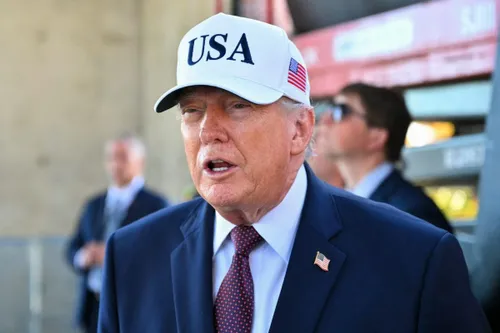
Donald Trump says elections were 'giant step back in history' for the US
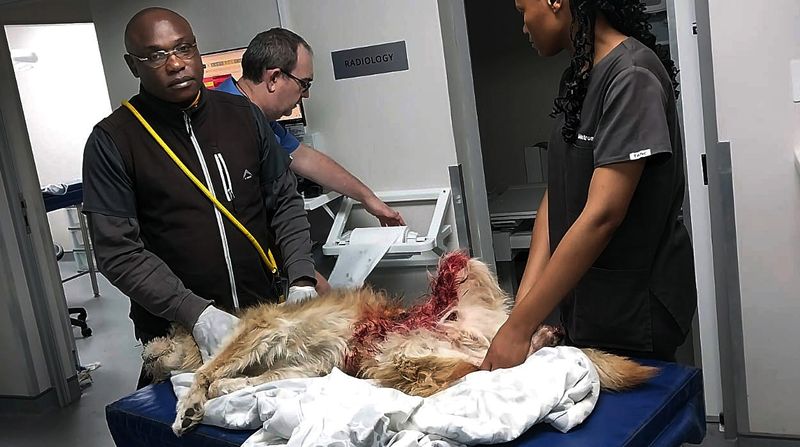
FIREWORKS RISKS: Guy Fawkes fireworks drive Delft dog Max to a horrific death

Latest
Brobbey wins Colwill battle - player ratings for Sunderland's win over Chelsea
Who was back to his best? Player ratings for Crystal Palace v Liverpool
Apple’s M5 MacBook Air is down to its lowest price since July
WATCH: Seven North Coast communities oppose proposed cemetery and crematorium
PKTT arrests suspected hitman in Aubrey Tsengwa murder case
Bread shortage threatens to plunge more Sudanese into hunger
Donald Trump says elections were 'giant step back in history' for the US
FIREWORKS RISKS: Guy Fawkes fireworks drive Delft dog Max to a horrific death