Lawmakers back push for tougher anti-LGBT laws after Ghana conference

Lawmakers from more than a dozen African countries have pledged to push new bills restricting rights, after a conference in Ghana that brought together self-described “pro-family” activists from across Africa and Europe, participants said.
The African Inter-Parliamentary Conference on Family Values and Sovereignty took place in Accra on June 3-6, a week after Ghana’s parliament passed one of the continent’s toughest-LGBT measures, a bill criminalising LGBT promotion.
Some attendees said they saw an opportunity to promote their agendas under Trump, whose administration unlike those of Barack Obama and Joe Biden – does not promote LGBT rights aspart of its foreign policy.
“When you return to your respective capitals, let the resolutions we adopt here not gather dust in the archives of our secretariats. Let them be translated into active bills, robust budgetary allocations, and rigorous oversight,” Ghana Parliament Speaker Alban Bagbin said in his opening remarks.
“Go home and tell your people that their representatives have resolved to protect the sanctuaries of their homes, the heritage of their ancestors, and the sovereignty of their nations.”
More than half of Africa’s 54 countries criminalise same-sex sexual acts. Several countries, including Uganda and Senegal, have recently gone a step further, adopting laws that criminalise LGBT “promotion” – something Ghana’s lawmakers approved in late May.
WEST ACCUSED OF ‘IDEOLOGICAL COLONISATION’
Organisers said lawmakers from 20 countries attended the conference held at Ghana’s parliament. It was unclear how many intend to introduce new legislation based on the discussions.
Reuters spoke to five participants and reviewed more than 100 pages of presentations given at the conference. It could not determine the role of foreign activists in shaping the agenda, nor find evidence of foreign funding.
Sharon Slater, president of the US-based conservative group Family Watch International, has attended previous editions of the conference in Uganda. She told Reuters she was invited this year but chose not to attend.
Speakers included Henk Jan van Schothorst, the Dutch executive director of the advocacy group Christian Council International. He urged African governments to resist pressure to ban so-called conversion therapy, which aims to make gay people straight.
“These policies are not only reserved for the Netherlands and for Europe. They are coming to Africa,” he said of the bans, describing them as “ideological colonisation” by Western powers.
In another presentation, Kenyan doctor Wahome Ngare defined homosexual as “the young man sexually molested by the father” and transgender as “the young lady sexually molested by strangers.”
The conference concluded with lawmakers approving an “African Charter on Family, Sovereignty and Values”, drafted at earlier meetings in Uganda.
The 32-page document urges governments to withdraw from treaties or agreements – including at the United Nations and with foreign donors – seen as promoting “the LGBT agenda”, abortion or sex education that is not abstinence-focused.
The charter also says signatories should work to enact national laws that “safeguard African culture and cultural values.” Lawmakers from 18 of the 20 represented countries approved the charter.
‘LET US FIRST THANK THE AMERICAN PEOPLE’
Health officials have highlighted the public health implications of anti-LGBT laws, which can push LGBT people into hiding, including men who have sex with men who face higher HIV prevalence than the general population.
Reuters reported in April that fewer HIV patients were visiting treatment centres in Senegal amid a wave of arrests coinciding with the debate over that country’s new law.
For LGBT people in Ghana, the same debate has already heightened fear.
“I constantly self-censor, hide, watch my back. That’s not safety, that’s survival,” said an African photographer and longtime resident of Accra. “So yes, leaving has crossed my mind. That breaks my heart because Ghana is my home.”
Reuters reported in March that the “pro-family” US group Mass Resistance had been in contact with activists in Ghana backing the bill, as well as Senegal’s new law.
Ghana’s bill is awaiting sign-off by President John Dramani Mahama, who has previously said he would sign such a measure into law but recently said there were procedural issues.
A coalition of more than 100 African civil society groups has urged Mahama to reject the bill, saying the government risked allowing “external actors with resources and reach to shape its domestic legislation.”
The US State Department has said Trump’s approach to foreign assistance ensures taxpayer dollars are not “wasted on divisive social and gender issues.”
At the Accra conference, Ugandan former lawmaker Sarah Opendi welcomed the shift. “Let us first thank the American people for voting for President Trump. The conversation in America today is different,” she said.
Keywords
Related Stories
CONGRESS IN THE BALANCE: A blue tsunami, a tide, or chaos as usual — the US midterm election
With just hours to go before the American midterm election takes place, the day before South Africa’s own local election, control of both houses of the American Congress hangs in the balance.
DIVISIVE WORDS: ‘We never called for literal killing’ — Malema appeals for farm killings to stop.
EFF leader Julius Malema says the chant “Kill the boer, kill the farmer” was never meant literally and has appealed for farm killings to stop.
TRC ROULETTE : Victims’ families place key hidden evidence before Khampepe inquiry
A physical inspection of old lever arch files by the legal team representing the families of apartheid victims at the Khampepe Commission strengthens Anton Ackermann’s claim that a disputed 2006 memo was forged, reshaping the Khampepe inquiry into delayed apartheid prosecutions.
REAL ESTATE & GOVERNANCE: How SA property prices reflect municipal service delivery
South Africa’s property prices broadly track municipal performance, with Cape Town leading and Buffalo City lagging, but several metros challenge the pattern.
Top Stories
CONGRESS IN THE BALANCE: A blue tsunami, a tide, or chaos as usual — the US midterm election

'We've got big problems' - Hamilton says Ferrari need 'serious talks'

Detroit linebacker Campbell taken to hospital with neck injury
DIVISIVE WORDS: ‘We never called for literal killing’ — Malema appeals for farm killings to stop.

Antonelli becomes world champion as Verstappen wins in Mexico
TRC ROULETTE : Victims’ families place key hidden evidence before Khampepe inquiry
REAL ESTATE & GOVERNANCE: How SA property prices reflect municipal service delivery
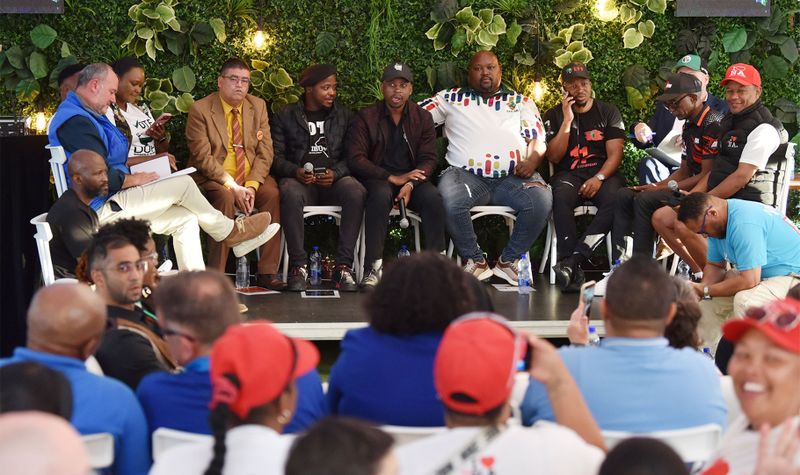
LOCAL ELECTIONS 2026: Thirteen mayoral candidates, plenty of blame and a crowd of fed-up residents
Latest
CONGRESS IN THE BALANCE: A blue tsunami, a tide, or chaos as usual — the US midterm election
'We've got big problems' - Hamilton says Ferrari need 'serious talks'
Detroit linebacker Campbell taken to hospital with neck injury
DIVISIVE WORDS: ‘We never called for literal killing’ — Malema appeals for farm killings to stop.
Antonelli becomes world champion as Verstappen wins in Mexico
TRC ROULETTE : Victims’ families place key hidden evidence before Khampepe inquiry
REAL ESTATE & GOVERNANCE: How SA property prices reflect municipal service delivery
LOCAL ELECTIONS 2026: Thirteen mayoral candidates, plenty of blame and a crowd of fed-up residents