Lessons from the 2023 presidential elections: Obi Vs Wike, By Sunday Adelaja

Tinubu’s political journey illustrates the importance of building these layers over a long period. Wike’s current Rainbow Coalition illustrates the power — and potential limits — of cross-party elite coordination. Obi’s 2023 campaign demonstrated how rapidly a candidate can mobilise millions of voters without initially possessing a comparable traditional party structure… The historical question now is whether either model can acquire the missing pieces.
Tinubu’s political journey illustrates the importance of building these layers over a long period. Wike’s current Rainbow Coalition illustrates the power — and potential limits — of cross-party elite coordination. Obi’s 2023 campaign demonstrated how rapidly a candidate can mobilise millions of voters without initially possessing a comparable traditional party structure… The historical question now is whether either model can acquire the missing pieces.
My goal in this article is to go beyond promoting a particular candidate like I did in the past. This time I am trying to dissect the intricacies of political science in Nigeria. I am trying to analyse and bring out nuggets that could benefit all political players in the future.
Join the Premium Times WhatsApp Community For Quick Access To News and Happenings Around You.
Unfortunately, from the comments I have seen so far, most people tend to be quick to judge the articles from the perspective of partisanship. Their view is often black and white. It is either the article is for their preferred candidate or they are against it. If you’re not for us, then you’re against us, they say.
That is unfortunate. Because these articles are all about hidden truths; secrets that are hidden to those directly involved in the politicking process in Nigeria. It will take someone detached from the realities on the ground to be able to see and pinpoint these facts. If taken seriously, these articles could help shape a better political future, especially for the opposition politicians and the future aspirants to the highest political posts in our beloved country.
In this particular article I’ll like to encourage my Obidient followers not to be in a hurry to condemn this piece, but be careful in analysing the facts I present, perhaps they will be able to learn a few things that might help their political future.
Now, let the journey begin
What Obi Could Have Done After 2023
The most consequential question is what could have happened immediately after the 2023 election.
Stay Ahead with Premium Times
Follow us on Google News and never miss breaking stories, investigations, and in-depth reporting.
Rather than allowing the Obidient phenomenon to remain primarily centered on the personality of Peter Obi, it could have been converted into a permanent civic-political organisation.
For example:
A national structure
Six geopolitical zones → State organisations → Local government chapters → Ward organisations → Polling-unit volunteers → Professional associations → Diaspora chapters → Policy and research institutions → Candidate development.
The movement could have recruited people not merely to support Obi, but to build a political philosophy around:
That would have transformed personal popularity into institutional capital.
The distinction is important because political movements survive leaders only when the institution becomes larger than the individual.
Wike’s Real Political Lesson
The most interesting lesson from Wike is therefore not necessarily that his policies or political choices are superior. It is his understanding of leverage.
Wike has repeatedly demonstrated a willingness to operate outside conventional political alignments.
In 2023, he remained a PDP governor while refusing to support the PDP presidential candidate.
In the current political environment, he remains associated with the PDP while serving in Tinubu’s APC-led government and organising a coalition supporting Tinubu’s presidential re-election.
This demonstrates a particular political philosophy: Party membership is one source of power; relationships are another.
Wike appears to place considerable emphasis on the second.
And that is where the Obi comparison becomes powerful. Obi’s political capital was largely horizontal: Millions of people who felt connected to a national idea.
Wike’s capital has been more vertical: Political leaders connected to political structures.
Tinubu’s capital is both: vertical organisation + horizontal alliances.
The strongest political architecture generally requires both. That is why I am not going to focus on Tinubu in this article. From my calculations, the incumbent president is going to easily win the 2027 election. However I focus on Obi and Wike because they are for the future of Nigerian politics as individuals. What they do after the 2027 elections will determine their places in history of Nigerian politics.
A politician needs people who love the message and people who can organise the machinery.
The Critical Lesson from 2023
The 2023 election should therefore be studied not only as an election that Obi lost, but an extraordinary demonstration of political market demand.
INEC recorded more than six million votes for Obi.
The subsequent collapse of Labour Party’s electoral performance in many governorship contests showed that presidential popularity did not automatically translate into a durable statewide political organisation.
That gap between electoral enthusiasm and organisational infrastructure is perhaps the most important lesson.
What does this mean for Obi and Wike’s future?
Rather than predicting who will become Nigeria’s president, the more useful question is: What would each man have to demonstrate to become a viable national presidential contender?
For Obi, the critical question is whether his enormous personal following can become a durable national organisation capable of recruiting political leaders, winning legislative and governorship contests, building structures across the North and South, and maintaining unity beyond the presidential campaign.
Obi’s political trajectory has already changed significantly: he moved from the Labour Party into the broader opposition realignment.
For Wike, the question is different. His strength is political organisation and elite relationships. The unresolved question is whether the Rainbow Coalition can develop broad, durable popular legitimacy across Nigeria, rather than functioning primarily as a network of political actors supporting a particular presidential candidate.
Those are fundamentally different challenges.
The Real Contest in 2027 and Beyond: Popularity Versus Organisation
Nigeria’s political history suggests that neither mass popularity nor elite organisations alone are sufficient.
A candidate needs:
Tinubu’s political journey illustrates the importance of building these layers over a long period. Wike’s current Rainbow Coalition illustrates the power — and potential limits — of cross-party elite coordination. Obi’s 2023 campaign demonstrated how rapidly a candidate can mobilise millions of voters without initially possessing a comparable traditional party structure.
The historical question now is whether either model can acquire the missing pieces.
Conclusion: The Lesson is Bigger than Obi, Wike or Tinubu
The deepest lesson from these three political careers is that political capital has different forms.
Peter Obi demonstrated the extraordinary power of mass mobilisation.
Nyesom Wike has demonstrated the importance of political leverage, coalition-building and relationships across party boundaries.
Bola Tinubu demonstrated the value of long-term institution-building, succession planning and political alliances.
The most consequential political organisation would theoretically combine the strengths represented by all three models: Obi’s ability to inspire millions + Wike’s ability to negotiate across political structures + Tinubu’s long-term capacity to build and maintain a political machinery.
Whether Nigeria’s future political actors can create such a synthesis will be more consequential than the personality of any single politician.
And that may be the most important lesson of the 2023 election: Winning millions of votes is political capital; converting those votes into institutions, leaders, structures and enduring alliances is political power.
These articles are not for the masses, they are not for popularity contests. But like they say, a word is enough for the wise. If these four series articles helps some future generations of Nigerian politicians even if only one person, then it would have been worth the efforts.
Sunday Adelaja is a Nigerian born leader, transformation strategist, pastor and innovator. He was based in Ukraine.
Share this:
Discover more from Premium Times Nigeria
Subscribe to get the latest posts sent to your email.
Type your email…
Subscribe
ADC rejects judgement sacking Mark, Atiku, blames APC
Why Nigerians trust Prestmit with their gift cards
Premium Times
More News
From the Strait of Hormuz to the strait of midterm, Trump pays heavy price, By Azu Ishiekwene
Being responsible when being irresponsible seems convenient, By Yemi Adetayo
How Sundiata Post is redefining African media’s role in global research, By Max Amuchie
The war on survival: How Tinubu’s elite economy is suffocating Nigeria’s majority, By Ayodele Adio
“Ba A Gudu Ba A Bar Gida”: Fifth Chukker, photography, cultural memory, and the responsibility of belonging, By Mudi Yahaya
Afrilition: Race and the false flag operation of creating difference, By Adéwálé Àjàdí
Related Topics
Keywords
Related Stories
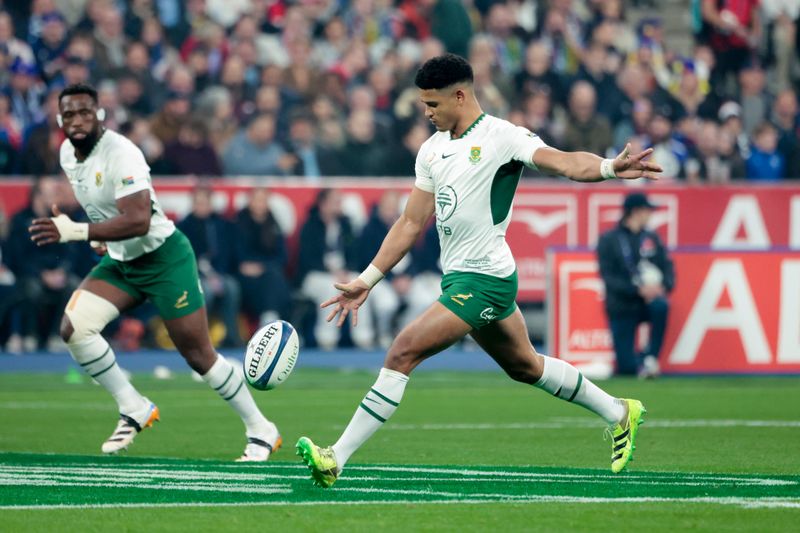
BATTLE PLAN: Erasmus unleashes full-strength Springboks to crush Italy in Nations Championship
Rassie Erasmus named a powerful team to face Italy in Turin on Saturday, which will be led by Siya Kolisi.
HERITAGE & IDENTITY OP-ED: Voices of Knoflokskraal — belonging and everyday survival on contested land
Legal disputes often obscure human realities. In Knoflokskraal near Grabouw, personal accounts of ancestral connection, practical care, and community building bring vital nuance to a complex land debate.

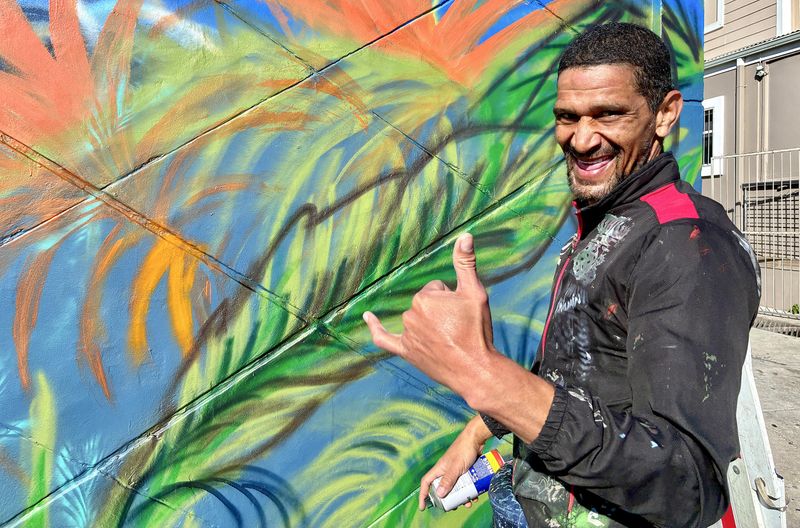
PAINT POWER: Gqeberha artist turns vandalised mural into an ocean-themed second chance
Gqeberha muralist Muneeb Wassin has answered the vandals who defaced his Bayworld mural in the language he knows best: paint.
REFUND WRANGLE: Hospitality agency enters business rescue amid R48m ticket claim scandal
After undelivered tickets for sporting events left it facing refund demands and significant financial pressure, Leisure Connexion has entered voluntary business rescue.
Top Stories
HERITAGE & IDENTITY OP-ED: Voices of Knoflokskraal — belonging and everyday survival on contested land
PAINT POWER: Gqeberha artist turns vandalised mural into an ocean-themed second chance
REFUND WRANGLE: Hospitality agency enters business rescue amid R48m ticket claim scandal
BATTLE PLAN: Erasmus unleashes full-strength Springboks to crush Italy in Nations Championship

Paraguay President Santiago Peña resigns after bank collapse

No budget resolution reached yet, says O'Neill
VIDEO: EFF looks to ward victories to rebuild trust in eThekwini

Greece: Students march in Athens demanding more education funding
Latest
HERITAGE & IDENTITY OP-ED: Voices of Knoflokskraal — belonging and everyday survival on contested land
PAINT POWER: Gqeberha artist turns vandalised mural into an ocean-themed second chance
REFUND WRANGLE: Hospitality agency enters business rescue amid R48m ticket claim scandal
BATTLE PLAN: Erasmus unleashes full-strength Springboks to crush Italy in Nations Championship
Paraguay President Santiago Peña resigns after bank collapse
No budget resolution reached yet, says O'Neill
VIDEO: EFF looks to ward victories to rebuild trust in eThekwini
Greece: Students march in Athens demanding more education funding