LOCAL ELECTIONS 2026: From ActionSA to MK, what Gauteng’s top parties will demand in coalition talks
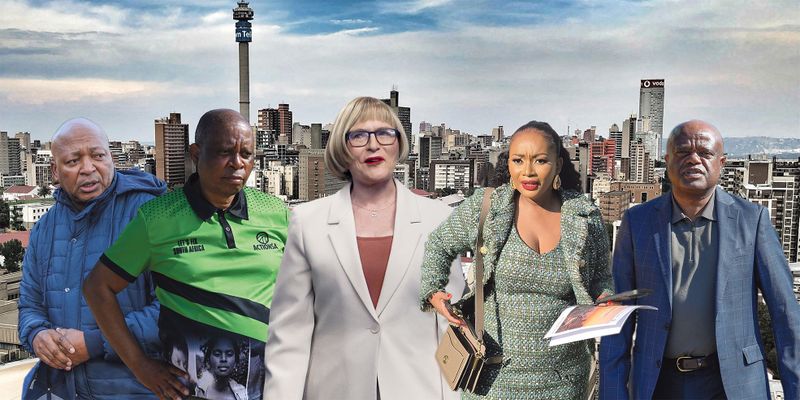
With outright majorities out of reach across Gauteng’s metros, the province’s top six parties are outlining their non-negotiables for coalition agreements.
Coalitions talks are on the agenda in Gauteng – as results continue to trickle in for the local government elections and with 70% of ballots counted in the province by 6pm on Friday, 6 November, no party is set to win a majority in the metros of Ekurhuleni, Johannesburg and Tshwane.
The top six parties emerging in Gauteng are the African National Congress (ANC), the Democratic Alliance (DA), ActionSA, the Economic Freedom Fighters (EFF), the uMkhonto weSizwe party (MK) and the Freedom Front Plus (FF+).
After the official declaration of the results this weekend, parties have 14 days to negotiate coalitions. That means there could be two frantic weeks of horse-trading.
Here’s what representatives from the top six parties (by alphabetical order) had to say about potential coalition partners and conditions they would set in negotiations.
ActionSA
ActionSA has seen notable gains across Gauteng, particularly in Tshwane, where it was so far leading 26 wards, most previously held by the ANC. The party is projected to climb to second place in the metro, nearly quadrupling its vote share from 2021.
The party will play a kingmaker role in Ekurhuleni, Johannesburg and Tshwane.
ActionSA leader Herman Mashaba had stated that the party would be open to negotiating with anyone, including the MK party, but expressed concern about Jacob Zuma’s party, stating: “I am worried about MK because before we go to council at least half of the people will be out.”
The party has also been critical of the DA, but national chairperson Michael Beaumont has clarified the party’s stance, saying: “Action SA has committed itself that we will negotiate with any political party across the political spectrum. We will negotiate with all of them.”
However, he said the party would only negotiate coalitions with parties that abided by the following conditions:
A “programmatic level of commitment” to service delivery for all;
A “programmatic level of commitment” to service delivery for all;
A programme to fight corruption;
A programme to fight corruption;
Stability to end the “revolving door” of mayors; and
Stability to end the “revolving door” of mayors; and
Government programmes to address illegal immigration;
Government programmes to address illegal immigration;
“Political parties that will work together with us on that agenda, we are available to negotiate working with them,” Beaumont said.
He said the party had already engaged in talks with others but would wait until the final results to ensure any coalition arrangements reflected the will of the people.
The Council for Scientific and Industrial Research (CSIR), which forecasts final results based on provisional data, projects ActionSA will come second in Tshwane with 22.7%, third in Ekurhuleni with 18.40%, and third in Johannesburg with 16.76%.
African National Congress
The ANC is an old hat at coalition governments, having led Gauteng’s three metros through coalitions at various times over the past decade, as well as the Government of National Unity. However, it is projected to come second in the City of Johannesburg and Ekurhuleni and third in the City of Tshwane.
While speaking to media at the national results operation centre (ROC) at the Gallagher Centre in Midrand, ANC deputy secretary-general Nomvula Mokonyane said the ANC had a “rich history” of working with other parties and had previously worked well in coalition governments in KwaZulu-Natal. She did not rule out any parties as potential coalition partners.
“It is premature for us to start talking because the ANC is open to talk to everyone and work with everyone as long as we ensure there’s stability,” she said.
She added that the party would ensure that any coalition partner reflected the “six pillars” highlighted in the ANC manifesto. Those pillars include:
Providing affordable basic services;
Providing affordable basic services;
Creating more work and investments within municipalities;
Creating more work and investments within municipalities;
Promoting community safety, cleanliness, and health;
Promoting community safety, cleanliness, and health;
Ensuring healthy municipal finances; and
Ensuring healthy municipal finances; and
Building accountable municipalities.
Building accountable municipalities.
The CSIR projects the ANC is likely to come second in Ekurhuleni with 21.7%, second in Johannesburg with 20.16%, and third in Tshwane with 20.07%.
Democratic Alliance
Previously, DA Johannesburg mayoral candidate Helen Zille had indicated that the party would be unwilling to enter any coalitions with the EFF, describing the option as “unworkable”. The DA has also ruled out the MK party as a coalition partner in eThekwini, making it likely the party may do the same in Gauteng metros.
However, while speaking to media at the ROC on Friday, DA leader Geordin Hill-Lewis approached the topic far more cautiously, describing the moment as a “potentially significant” turning point for South Africa. Rather than ruling out any potential coalition partners outright, he stated that the party was already in talks with several political parties, including the ANC.
“We will definitely be talking to many, many political parties. We will not be having these discussions via the media. I want to make that clear,” he said.
He said the DA would prioritise building a coalition government based on:
Integrity;
Integrity;
Accountability, which he described as a “non-negotiable”;
Accountability, which he described as a “non-negotiable”;
Merit-based appointments;
Merit-based appointments;
With a zero-tolerance approach to corruption.
With a zero-tolerance approach to corruption.
The CSIR projects that the DA is likely to lead in all Gauteng metros, but without an outright majority. The party is projected to take Ekurhuleni with 29.48%, the City of Johannesburg 33.94%, and the City of Tshwane 31.77%.
Economic Freedom Fighters
The EFF’s support in the province is projected to slide from the third it achieved in 2021 to fourth in 2026. EFF treasurer-general Omphile Maotwe confirmed it would not exclude any potential coalition partners based on principle, but said it would only enter coalitions with parties that agreed to a “socialist programme”.
“If we agree on a socialist programme, which says, ‘Let’s give our people free water, free sanitation, free electricity, let’s fix our roads and build infrastructure for our people’, I don’t think there will be a difficult choice to make,” she said in an interview with Newzroom Afrika.
In particular, the EFF is looking for a coalition partner that will agree to give basic services to all.
In 2024, the EFF refused to join the Government of National Unity, with party leader Julius Malema stating that the party would never work with the DA or the FF+ in a coalition government. However, the party has since stated that it will not rule out other parties on principle.
The CSIR projects EFF will come fourth in Johannesburg with 6.47% and fifth in both Ekurhuleni with 5.96% and in Tshwane with 5.43%.
uMkhonto weSizwe party
The MK party is likely to finish its first local government election in third place nationally and fifth in Gauteng. Acting deputy secretary-general Sifiso Mahlangu has previously ruled out entering a coalition with the DA.
While speaking at the ROC, Mahlangu did not explicitly rule out any party. Instead, he said that the MK party would wait until after results were in to enter coalition talks and would speak only with others that were “ideologically aligned” with the MK party. In particular, he highlighted the EFF and the African Transformation Movement as parties theMK party has previously worked well with in KwaZulu-Natal.
“[We can only talk] to people who share our sentiments on colour and race. It’s important to identify that as a starting point, because it’s going to be difficult to talk to people who are at the opposite end of the transformation debate,” Mahlangu said.
“For us, it will be an election that outlines the issue of land return and the amendment of section 25 of the Constitution. We have maintained that we want protection of religious communities. That churches must have land, we must appreciate and respect culture, we must also appreciate and respect tribal authority.”
He added that the party would be unwilling to enter coalitions with parties that did not recognise the genocide of Palestinians by the state of Israel. While the issue was not directly related to running municipalities, it was an indicator of which parties the MK party was “ideologically in sync” with.
“We’re not looking for cult partners. We’re not looking for people we agree with on everything,” he cautioned.
The CSIR projects MK will come fourth in Ekurhuleni with 6.62% and fifth in Johannesburg with 5.05%.
Freedom Front Plus
The FF+ is projected to come sixth overall in the province but may emerge as a key political actor in Tshwane, where it has gained support since the last local government election.
National spokesperson Wouter Wessels told Daily Maverick that the results would determine who the party would partner with. He hinted that there would be parties the FF+ would be unwilling to partner with on principle.
“There are parties and policies that are detrimental to those issues that we identify as the solutions [for fixing] the economy. There are parties that are opposed to the rule of law, constitutionalism, and it will be very difficult to really work in a coalition with such parties,” he said.
Wessels added that the FF+ would go to the negotiation table to argue for a “shared programme of governance” that would focus on building the economy, maintaining the rule of law and looking into how tenders are managed.
The CSIR projects the FF+ will come fourth in Tshwane with 7.49%. DM
Keywords
Related Stories
LOCAL ELECTIONS 2026: MK party takes four KZN municipalities from ANC as governance test looms
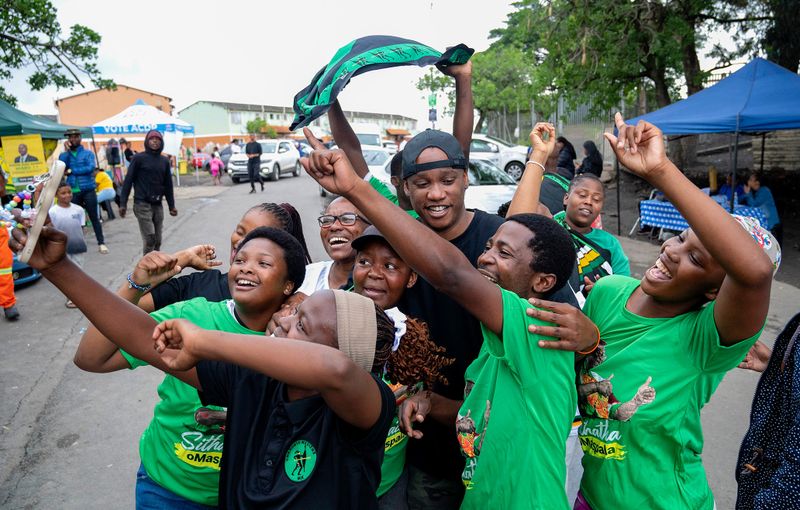
The people of KwaZulu-Natal will get the first real taste of the uMkhonto Wesizwe party’s leadership as it looks set to govern a number of municipalities for the first time.
Election fraud case lodged, party demands all Western Cape votes be recounted
A former rugby boss has gone to the police claiming the candidate he voted for was wrongly recorded as getting zero votes, while a political party is demanding a Western Cape-wide recount.
LOCAL ELECTIONS 2026: ActionSA surges in Gauteng metros, taking ANC wards — see where
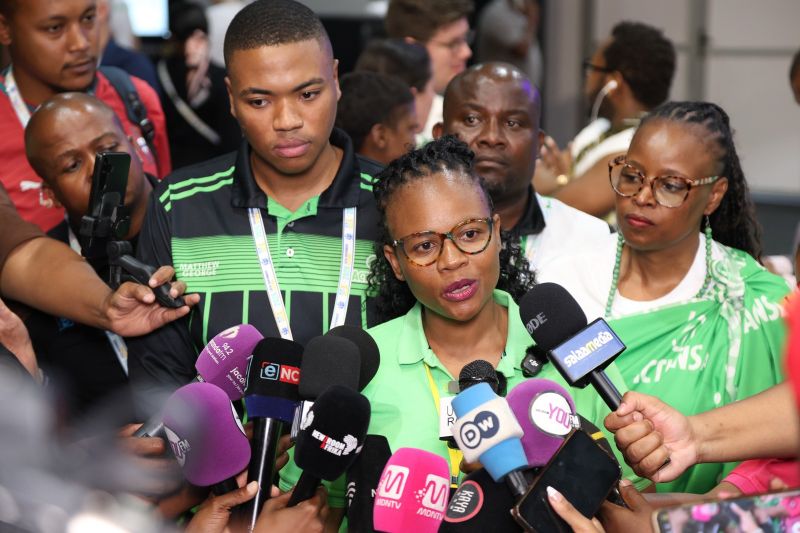
ActionSA will likely merge as the second-largest party in Tshwane and the third-largest in Johannesburg and Ekurhuleni. See where they’ve grown since 2021.
10 key things to know about Justice Lifu’s judgment affecting ADC, Atiku, By Abdulrahman Abdulaziz
The Atiku camp caused the ADC's current misfortune by treating the party's internal democracy with impunity and hijacking its leadership structures. The post 10 key things to know about Justice Lifu’s judgment affecting ADC, Atiku, By Abdulrahman Abdulaziz appeared first on…

Top Stories
LOCAL ELECTIONS 2026: MK party takes four KZN municipalities from ANC as governance test looms
Election fraud case lodged, party demands all Western Cape votes be recounted

All the latest updates on AI data centers

Shure’s popular podcasting and streaming mic is almost $50 off
LOCAL ELECTIONS 2026: ActionSA surges in Gauteng metros, taking ANC wards — see where
Myles Garrett on track to be activated ahead of Rams Week 9 matchup vs. Commanders

AI stocks climb after trillions wiped from market values
How to watch Serie A: Inter face Como at San Siro after disappointing defeat against AC Milan
Latest
LOCAL ELECTIONS 2026: MK party takes four KZN municipalities from ANC as governance test looms
Election fraud case lodged, party demands all Western Cape votes be recounted
All the latest updates on AI data centers
Shure’s popular podcasting and streaming mic is almost $50 off
LOCAL ELECTIONS 2026: ActionSA surges in Gauteng metros, taking ANC wards — see where
Myles Garrett on track to be activated ahead of Rams Week 9 matchup vs. Commanders
AI stocks climb after trillions wiped from market values
How to watch Serie A: Inter face Como at San Siro after disappointing defeat against AC Milan