Nelson Mandela’s challenge to a world divided by conflict
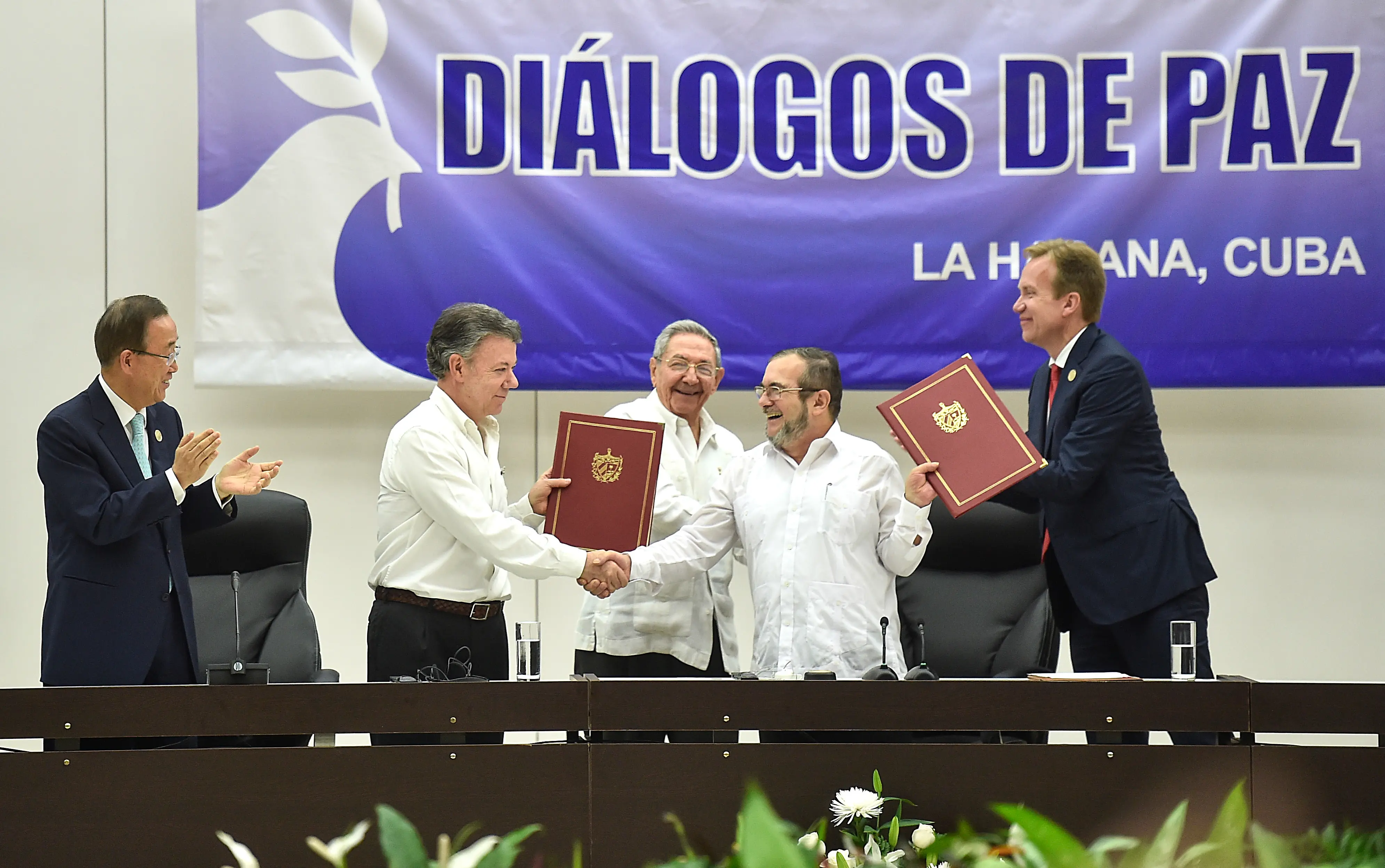
This November marks the 10th anniversary of the 2016 Colombian Peace Agreement, which our government reached with the Revolutionary Armed Forces of Colombia (FARC), the most powerful guerrilla in the Western Hemisphere. It was a defining moment for our nation, demonstrating what diplomacy and dialogue can achieve, even in times of conflict and uncertainty.
However, it was a conversation I had with President Nelson Mandela 30 years ago that shaped what I came to regard as my port of destination: a Colombia at peace.
In 1996, during a visit to South Africa, I met Madiba before handing over the chairmanship of the 9th UN Conference of Trade and Development. That morning, I had watched television footage of victims and perpetrators of apartheid confronting one another through the TRC. I remember how deeply those hearings impressed me. I asked Mandela: “Could you tell me more about the purpose of all this?” He explained: “The path to reconciliation is to bring victims and perpetrators together, to create a space for forgiveness and to enable them to work together to heal the wounds of the past.”
Former Archbishop Emeritus Desmond Tutu later said victims wanted something more fundamental than compensation: an understanding of why the perpetrators did what they did.
Mandela told me that Colombia and South Africa shared similarities but that, without peace, Colombia would never take off. The conversation transformed my understanding of leadership and the difficult but crucial work required in restoring human dignity.
Thirty years later, that lesson carries renewed urgency. And one I lean on as I prepare to deliver the 24th Nelson Mandela Annual Lecture on 6 November.
According to the 2026 Global Peace Index, 119 countries are less peaceful than they were in 2008. Twenty countries recorded at least 1 000 conflict deaths in 2025. The figures reflect an alarming deterioration in global peace and security at a time when the international rule of law is under threat.
Against this backdrop, we must ask: When does silence become complicity? Tutu warned that neutrality in situations of injustice favours the oppressor. His words challenge the assumption that standing aside is a morally neutral position. Yet moral responsibility must not be confused with an unrestricted right to intervene. The challenge for leaders is therefore to determine what responsible action should look like.
Sometimes it means speaking against injustice when silence would be politically convenient. Other times intervention calls on humanitarian assistance, international mediation or sustained diplomatic pressure.
More often, it means embracing what Mandela described as “the most powerful weapon”: sitting down and talking. The latter is one learnt from the negotiation efforts with the FARC to bring the country’s more than 50-year-long civil war to an end. A war whose true cost was ultimately human life — leaving more than 450 000 Colombians dead and 10 million victims.
Signing a peace agreement is only the first step. The real challenge lies in building a lasting peace. Due to a lack of political will and the failure of successive governments to demonstrate the skills needed to implement the agreement, Colombia continues to confront violence and inequality. We have the unfinished task of fulfilling the commitments made to the communities devastated by conflict.
This is why Mandela’s understanding of reconciliation remains important. Peace cannot be imposed from above, nor sustained through political declarations alone. It must be experienced by the people through justice, security and the restoration of dignity. Every conflict holds the potential for resolution and transformation, provided we create the conditions for negotiations to succeed.
But that possibility requires patience, compromise and a willingness to recognise the humanity of those we oppose.
As the world confronts deepening divisions and conflict, Mandela’s legacy challenges us to reconsider what courageous leadership calls for today.
Non-interference must never become a convenient justification for indifference. Equally, the desire to act must be guided by conscience, strategy, humility, and the respect for international law.
Silence becomes complicity when we recognise injustice, possess meaningful opportunities to respond and choose the comfort of inaction over the difficult responsibility of pursuing peace.
That is the lesson Mandela entrusted to me. Ten years after Colombia’s historic peace agreement, it remains a responsibility no leader can afford to ignore.
Juan Manuel Santos is a former Colombian President, 2016 Nobel Peace Prize laureate and Chair of The Elders.
Keywords
Related Stories
LOCAL ELECTIONS 2026: DA draws coalition red lines as Nelson Mandela Bay results take shape
With the DA leading the vote count in Nelson Mandela Bay, provincial leader Andrew Whitfield says the party is open to coalition negotiations but will not work with the EFF or MK party. He says good governance and service delivery, rather than positions and power, must guide any…
Gov Abiodun declares Ogun ready for state police
The governor described the establishment of state police as a critical step towards strengthening security, protecting investments and sustaining the state’s growing economic activities The post Gov Abiodun declares Ogun ready for state police appeared first on Premium Times…

Former Cross River PDP chair doubts party’s 2027 chances
Former Cross River PDP chairman Venatius Ikem questions the party’s ability to challenge the APC in 2027, describing its structures as fragmented and its Wike-backed presidential candidate, Sandy Onor, as politically invisible. The post Former Cross River PDP chair doubts…

Türkiye and SA look to a bigger future together
The Embassy of the Republic of Türkiye in Pretoria celebrated the 103rd anniversary of the proclamation of the Republic, spotlighting growing diplomatic and economic ties with South Africa.
Top Stories
LOCAL ELECTIONS 2026: DA draws coalition red lines as Nelson Mandela Bay results take shape

USMNT's Gold Cup path to look different as Concacaf unveils revamped group-stage format

Best horse racing betting sites: Where to bet on horse racing
Gov Abiodun declares Ogun ready for state police
Former Cross River PDP chair doubts party’s 2027 chances
Cowboys stars reject George Pickens trade talk ahead of NFL deadline
Türkiye and SA look to a bigger future together

Firms told to publish salaries in job adverts ahead of new law
Latest
LOCAL ELECTIONS 2026: DA draws coalition red lines as Nelson Mandela Bay results take shape
USMNT's Gold Cup path to look different as Concacaf unveils revamped group-stage format
Best horse racing betting sites: Where to bet on horse racing
Gov Abiodun declares Ogun ready for state police
Former Cross River PDP chair doubts party’s 2027 chances
Cowboys stars reject George Pickens trade talk ahead of NFL deadline
Türkiye and SA look to a bigger future together
Firms told to publish salaries in job adverts ahead of new law