Nick Evans tackles Boomslang rescue high in Mariannhill mango tree
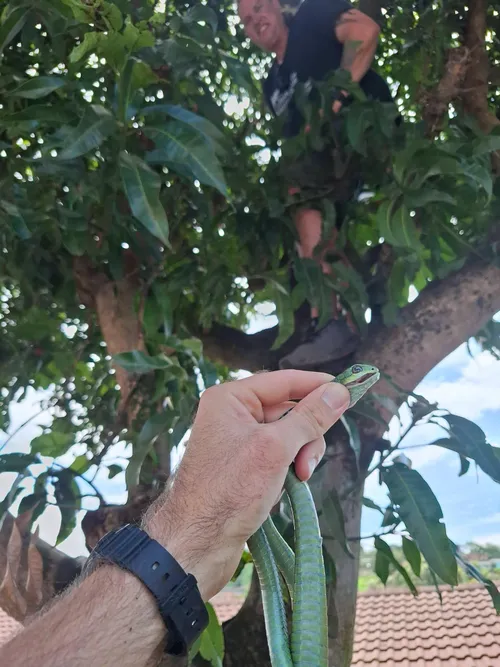
Snake rescuer Nick Evans had an eventful day after responding to two call-outs in KwaZulu-Natal. A suspected Green Mamba turned out to be a heavily pregnant Eastern Natal Green Snake, while a second rescue involved a Boomslang high up in a mango tree.
Snake rescuer Nick Evans has been kept busy after responding to two snake emergencies in Durban.
The call-outs involved a suspected Green Mamba hiding in a drainpipe on the Bluff and a Boomslang trapped high in a mango tree near Mariannhill.
The first rescue began after Evans and fellow rescuer Carla were called to investigate a snake believed to be a Green Mamba.
It had disappeared into a drainpipe that was largely blocked by rubble.
With Green Mambas beginning to move towards nesting sites as the breeding season approaches, the rescuers knew they could be dealing with a potentially dangerous snake.
They could not see anything inside the pipe. They then tried flushing it out with water.
However, the snake that emerged was not a Green Mamba.
It was an Eastern Natal Green Snake. Carla was able to catch it by hand.
The discovery brought another surprise. The female snake was heavily pregnant and expected to lay eggs soon.
Evans plans to give her a safe, dark space to lay before releasing her and her babies. The hatchlings will also form part of a study into Durban's snake-breeding behaviour.
“Excitingly though, this Natal Green is heavily gravid, and should pop any day now,” Evans said.
Green snakes are often mistaken for Green Mambas. However, there are differences between the species.
The Eastern Natal Green Snake is generally smaller and more slender. It has a bright green body and a yellowish underside.
A Green Mamba is much larger. It can grow to around 2.5 metres. It also has a longer, more prominent head and a thicker body.
Green Mambas are highly venomous. Eastern Natal Green Snakes are not considered dangerous to humans.
However, identifying snakes can be difficult. Members of the public should never attempt to catch or handle an unfamiliar snake. They should contact a trained snake remover.
The second rescue took Evans near Mariannhill. Grant from Durban South Snake Rescue had been called to remove a Boomslang from a mango tree.
Boomslangs are difficult to catch in trees. They are excellent climbers and can move quickly between branches.
When Evans arrived, Grant had secured the snake's tail with his tongs. However, the Boomslang had wrapped its body around several branches.
Evans climbed the tree and used his 1.8-metre African Snakebite Institute tongs to get a better grip.
He then managed to bring the snake within reach of his shorter 1.1-metre tongs.
Both rescuers secured their grip and worked together to restrain its head.
The rescue was particularly challenging because they were high up in the tree. They had to maintain their balance while handling the snake.
“We were quite high up the tree, so our balance needed to be perfect when restraining the snake,” Evans said.
Once the head was secured, Evans managed to climb down with the Boomslang.
Related Topics
Keywords
Related Stories
ADMINISTRATIVE CHAOS: Athletics SA moves rapidly to implement World Athletics leadership overhaul directive
After being mandated to overhaul its leadership and constitution by World Athletics, South Africa’s custodian of athletics has provided an update on the next steps as it chips away at compliance.

Bangladesh garment workers stage fourth day of wage protests
Garment workers in Bangladesh staged a fourth day of wage protests on Tuesday, with police firing tear gas to disperse demonstrators as unrest disrupted factory operations and transport links in the country's vital export sector.

Iran-US deal still out of reach despite heightened diplomatic efforts
Iran and the United States are far from reaching a deal to end the war, a senior Iranian official told Reuters on Tuesday, despite heightened diplomatic efforts to prevent a potential return to active conflict after the US midterm elections.
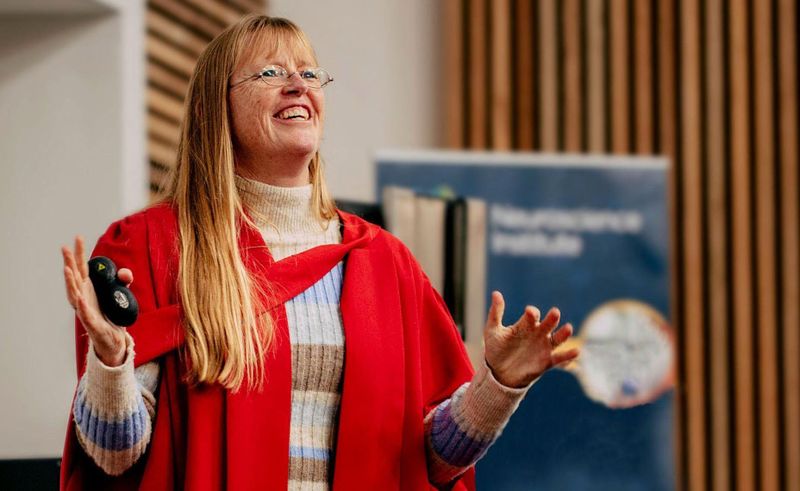
BHEKISISA: Meet the ‘matriarch of pain’ who wants to change how SA treats patients
Pain is one of the primary reasons people seek medical care. Yet it’s barely taught and poorly treated. Physiotherapist Romy Parker has spent two decades trying to change that.
Top Stories
ADMINISTRATIVE CHAOS: Athletics SA moves rapidly to implement World Athletics leadership overhaul directive
Bangladesh garment workers stage fourth day of wage protests
Iran-US deal still out of reach despite heightened diplomatic efforts
BHEKISISA: Meet the ‘matriarch of pain’ who wants to change how SA treats patients
Service delivery gripes set to dominate 2026 LGE voters’ choices

West Ham sack head coach Nuno Espirito Santo
Mkhwanazi warns police against political bias ahead of KZN local government elections

Jet may have broken apart before Florida crash, officials say, as family named among victims

Latest
ADMINISTRATIVE CHAOS: Athletics SA moves rapidly to implement World Athletics leadership overhaul directive
Bangladesh garment workers stage fourth day of wage protests
Iran-US deal still out of reach despite heightened diplomatic efforts
BHEKISISA: Meet the ‘matriarch of pain’ who wants to change how SA treats patients
Service delivery gripes set to dominate 2026 LGE voters’ choices
West Ham sack head coach Nuno Espirito Santo
Mkhwanazi warns police against political bias ahead of KZN local government elections
Jet may have broken apart before Florida crash, officials say, as family named among victims