No talks with US, Iran declares as supreme leader warns of devastating retaliation
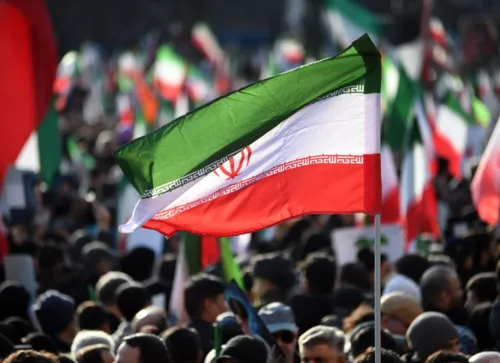
Iran rules out immediate talks with Washington despite receiving a message from US Vice President JD Vance amid renewed fears of conflict.
Iran's top diplomat on Saturday said there were no plans to hold talks with the United States despite growing concerns over a return to war.
"Currently, there are no plans for meetings with American officials, and any speculation to the contrary is merely media assumption," Foreign Minister Abbas Araghchi said in an interview with Al Jazeera, according to the state news agency IRNA.
"Under current circumstances, Iran sees no necessity for a meeting with the Americans; Iran's conditions are clear, and consultations regarding them are ongoing among mediators," he said.
Araghchi confirmed that Iran received a letter from US Vice President JD Vance, following days of diplomatic efforts to head off a return to violence.
"The message from American Vice President JD Vance has been carefully reviewed and discussed in high-level meetings," he said.
"If Washington's objective in sending the message is to sow discord, this would be yet another misstep, adding to America's previous errors."
But Araghchi added: "The American side's effort to open a dialogue and reach a broader understanding is viewed as a positive step."
Iran's supreme leader on Saturday warned the United States and Israel against launching new attacks following their threats to resume strikes after crucial elections.
President Donald Trump has warned of fresh military action after the US holds midterm elections on Tuesday, saying last weekend he was weighing up whether to "finish them off".
In Israel, Prime Minister Benjamin Netanyahu has spoken of a "historic, one-time opportunity" to topple the Iranian government.
Both countries are holding legislative polls that could determine the direction of the conflict, with Israel having voted on Tuesday and the US midterms set for next week.
"If the enemies once again launch military or terrorist attacks, it is the armed forces of the Islamic Republic and the Iranian nation that will determine the time and conditions for ending them," Iran's supreme leader Mojtaba Khamenei said Saturday in a statement.
"Any level or type of threat must be met with an immediate, impactful and geographically unrestricted response," he is said to have told top military commanders in a meeting.
The encounter was the first reported between Khamenei and military top brass and included armed forces chief of staff Ali Abdollahi, army chief Amir Hatami and Revolutionary Guards commander Ahmad Vahidi.
The supreme leader has not been seen publicly since he took the helm in March after the killing of his father Ayatollah Ali Khamenei in US-Israeli strikes at the outset of the war.
Khamenei also ordered commanders to update Iran's target list to include "all types of tangible and intangible assets belonging to the American-Zionist enemy".
Iran has previously warned it would consider severing undersea cables in the Strait of Hormuz.
Since the outbreak of the war, Tehran has restricted shipping traffic through the strategic waterway, which normally carries around one-fifth of global oil consumption.
The blockade has caused a spike in global energy prices, making the war unpopular among the American public ahead of the midterms this Tuesday.
Trump's approval ratings are already at a record low and gains for the opposition Democrats would restrict his ability to enact policy.
Voting in Israel has left Netanyahu's political camp with the most seats in parliament but short of a majority to form a government, leaving the make-up of the next administration unclear.
Under Netanyahu, who has vowed to topple Iran's government, Israel and Iran have engaged in direct military confrontations for the first time after decades of shadow war.
The war began on February 28 with US-Israeli strikes on Iran. The Islamic Republic swiftly responded with attacks on American assets in countries around the region.
Fresh diplomatic efforts are underway to avert any resumption of fighting, with Qatari mediators in Tehran, and US Vice President JD Vance reportedly sending a letter to Iran's security chief Mohsen Rezaei.
On Friday, a Qatari delegation arrived in the Iranian capital for talks with senior Iranian officials.
Qatar and Pakistan have been mediating between the warring parties, but the talks have yet to produce a lasting agreement.
The Wall Street Journal reported on Wednesday that Vance had sent his letter to Iran's security chief at the direction of President Donald Trump in a bid to revive negotiations and avert further US strikes.
Earlier on Saturday, Iranian army spokesman Mohammad Akaraminia warned that any resumption of hostilities would only expand the scope of the war.
"If the US president once again embarks on more regional adventurism under pressure from, and in an attempt to appease, the Zionists, the flames of war will undoubtedly engulf a much wider geographical area," he said in a post on X, without elaborating.
Iranian Foreign Minister Abbas Araghchi warned Saturday of an "Earth-shattering blow Iran's Powerful Armed Forces will deal against those who dare harm our people".
He said there will no longer be any "red lines".
Related Topics
Keywords
Related Stories
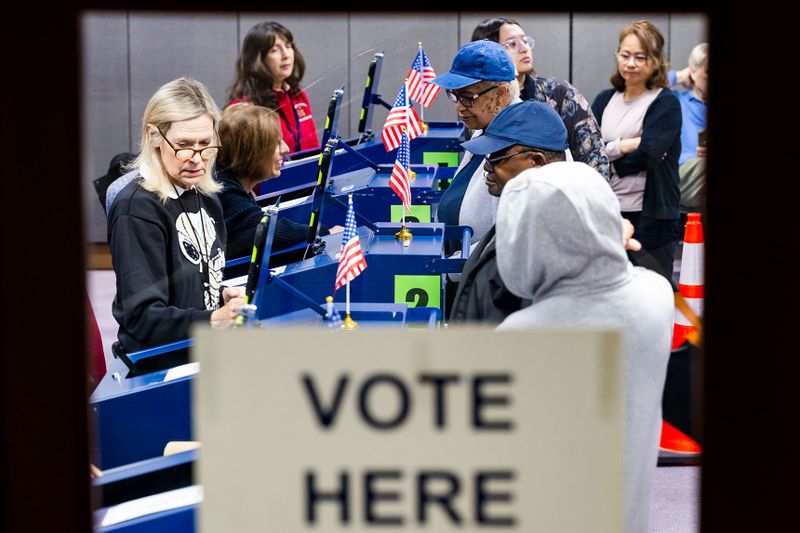
CONGRESS IN THE BALANCE: A blue tsunami, a tide, or chaos as usual — the US midterm election
With just hours to go before the American midterm election takes place, the day before South Africa’s own local election, control of both houses of the American Congress hangs in the balance.
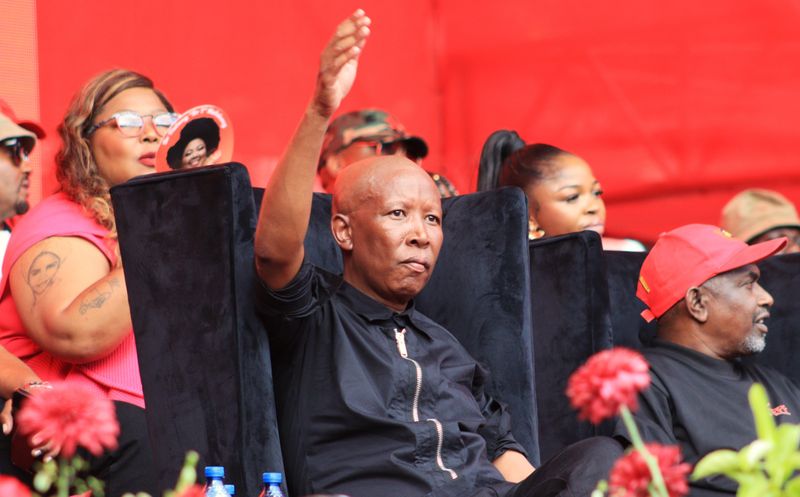
DIVISIVE WORDS: ‘We never called for literal killing’ — Malema appeals for farm killings to stop.
EFF leader Julius Malema says the chant “Kill the boer, kill the farmer” was never meant literally and has appealed for farm killings to stop.
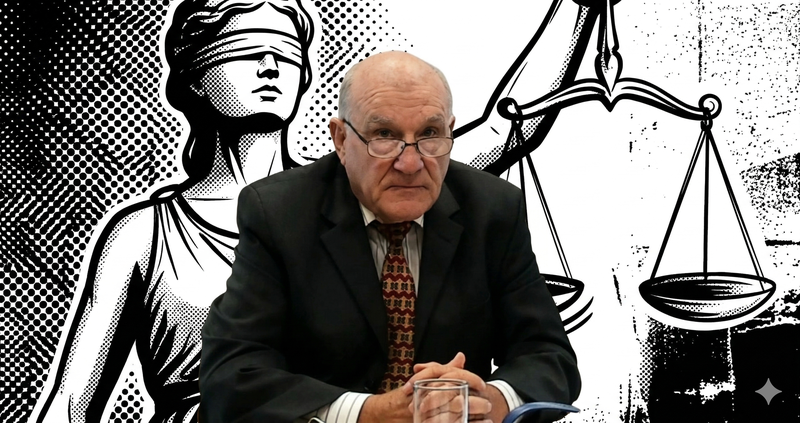
TRC ROULETTE : Victims’ families place key hidden evidence before Khampepe inquiry
A physical inspection of old lever arch files by the legal team representing the families of apartheid victims at the Khampepe Commission strengthens Anton Ackermann’s claim that a disputed 2006 memo was forged, reshaping the Khampepe inquiry into delayed apartheid prosecutions.
REAL ESTATE & GOVERNANCE: How SA property prices reflect municipal service delivery
South Africa’s property prices broadly track municipal performance, with Cape Town leading and Buffalo City lagging, but several metros challenge the pattern.
Top Stories
CONGRESS IN THE BALANCE: A blue tsunami, a tide, or chaos as usual — the US midterm election

'We've got big problems' - Hamilton says Ferrari need 'serious talks'

Detroit linebacker Campbell taken to hospital with neck injury
DIVISIVE WORDS: ‘We never called for literal killing’ — Malema appeals for farm killings to stop.

Antonelli becomes world champion as Verstappen wins in Mexico
TRC ROULETTE : Victims’ families place key hidden evidence before Khampepe inquiry
REAL ESTATE & GOVERNANCE: How SA property prices reflect municipal service delivery
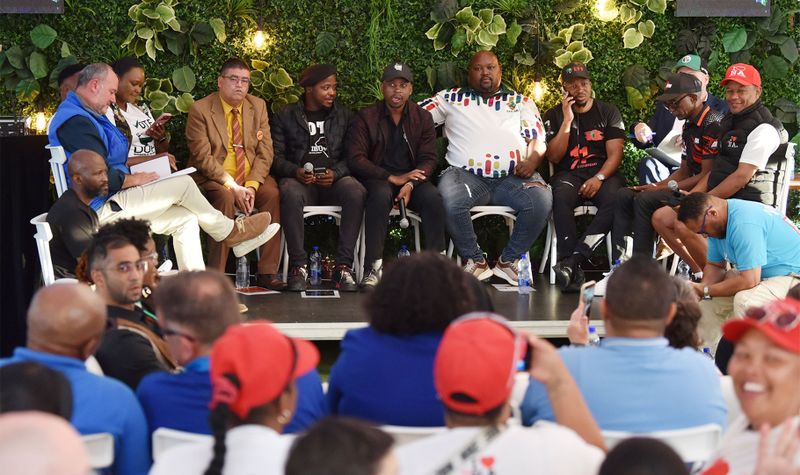
LOCAL ELECTIONS 2026: Thirteen mayoral candidates, plenty of blame and a crowd of fed-up residents
Latest
CONGRESS IN THE BALANCE: A blue tsunami, a tide, or chaos as usual — the US midterm election
'We've got big problems' - Hamilton says Ferrari need 'serious talks'
Detroit linebacker Campbell taken to hospital with neck injury
DIVISIVE WORDS: ‘We never called for literal killing’ — Malema appeals for farm killings to stop.
Antonelli becomes world champion as Verstappen wins in Mexico
TRC ROULETTE : Victims’ families place key hidden evidence before Khampepe inquiry
REAL ESTATE & GOVERNANCE: How SA property prices reflect municipal service delivery
LOCAL ELECTIONS 2026: Thirteen mayoral candidates, plenty of blame and a crowd of fed-up residents