OBITUARY: Paris Mashile — regulator who fought to make SA’s phone calls cheaper
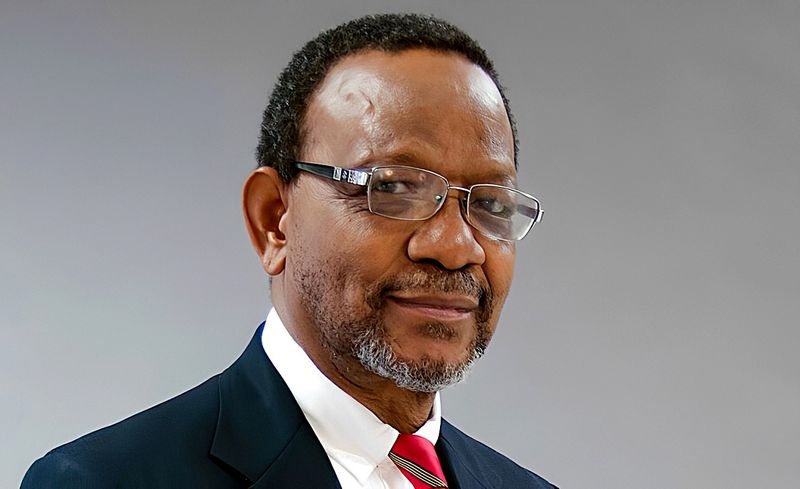
The engineer, political activist and Shakespeare lover turned the technical machinery of communications into a public argument about power, access and accountability.
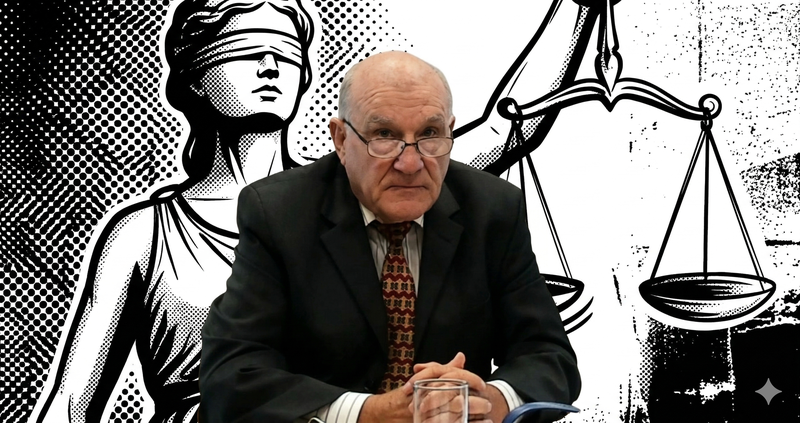
Paris Mashile, the former chairperson of the Independent Communications Authority of South Africa (Icasa), who fought to lower mobile call costs and open the country’s communications markets to competition, died on 21 October 2026 at the age of 77.
A family statement said he “departed quietly” after a long illness and hospitalisation. Tributes have not named a spouse or children.
For much of his working life Mashile occupied the ground between technology and politics. He had the training to discuss fibre-optic communications and semiconductor lasers, and the instincts of an activist who distrusted concentrated power.
Mashile chaired Icasa from 1 July 2005 to 30 June 2010. President Thabo Mbeki appointed him on the advice of Communications Minister Ivy Matsepe-Casaburri, and he succeeded the authority’s founding chairperson, Mandla Langa.
Mobile number portability was introduced during his term, allowing customers to change networks and keep their numbers, and geographic number portability followed in phases. Icasa also licensed prospective competitors to MultiChoice in pay television and began converting older licences under the Electronic Communications Act, legislation intended to open a market that Telkom had long dominated.
His most visible fight was over mobile termination rates, the wholesale fees that operators charged one another to carry calls on their networks. The fees were blamed for keeping retail prices high and making it harder for smaller competitors to enter the market.
In March 2010 the peak rate fell from R1.25 a minute to 89c, and Icasa then proposed a staged reduction to 40c by July 2012. TechCentral quoted Mashile warning the operators: “They can run but they can’t hide.” The cut was inevitable, he said, as death and taxes are.
His career was not without setbacks. The most damaging episode of his term came in 2009, in the run-up to Vodacom’s listing on the Johannesburg Stock Exchange. Icasa reversed its approval of Telkom’s sale of 15% of Vodacom to Vodafone and sided with the Congress of South African Trade Unions (Cosatu) in trying to stop the transaction in court. The move came close to derailing the deal.
When Icasa withdrew it, and then took the side of Cosatu in a court bid to halt the transaction, the regulator was in effect attacking a deal it had itself waved through. The consequences reached well beyond a single stake: a reversal at that stage threatened to unravel a carefully sequenced restructuring, and it handed the unions a legal foothold at the moment the parties could least afford delay.
Mashile, who was abroad at the time, was not on hand to steady the ship. He later apologised unreservedly, a gesture that suggests he understood how close his institution had come to wrecking one of the largest listings the exchange had seen.
In his final speech to the industry, in May 2010, he accepted responsibility in terms unusually direct for a departing public official. “I concede we have failed you,” he said, adding that he was accountable. TechCentral reported that he also complained that Icasa was underfunded and forced to go “cap in hand” to the government. In the same interview he said the authority needed a chairperson with energy and industry knowledge and, above all, courage, because staying independent of the government would be difficult.
Anarchist and political activist
Born on 30 December 1948, Mashile was educated under the previous Bantu education system. He completed a combined bachelor of science honours degree in physics and electronic engineering at the University of Leeds in 1981, followed by a master’s degree in physics focused on semiconductor laser physics. From 1986 to 1988 he studied electrical engineering at Washington University in St Louis, specialising in fibre-optic communications, according to MyBroadband and ITWeb.
He lectured in physics at the University of Botswana from 1983 to 1985 and worked as a research engineer at Amoco Technology Company in Illinois from 1990 to 1994. Back in South Africa he held engineering posts at Reutech, Siemens and Rand Water. MyBroadband reported that from 2002 to 2004 he was director of infrastructure development and management at Rustenburg Local Municipality.
His politics predated his public appointments. A 2010 profile described him as a self-proclaimed anarchist and political activist who had been tortured by apartheid security police. TechCentral wrote that the man who defended institutional independence knew what it meant when institutions served power.
After leaving Icasa he moved into the private sector. He became chairperson of Vunani Technology Ventures and chief executive of Vunani Electronic Communications. He served on the board of Sentech, the state-owned signal distributor, chaired the mobile software company ComUnity, and directed a programme in digital multimedia management and regulation at the Gordon Institute of Business Science.
Mashile returned to Icasa as a councillor in April 2016 and was acting chairperson from September to November 2017. In this second period he worked on spectrum policy, including plans for 4G and 5G. In 2018 he described a “hybrid model” in which spectrum would be divided between a planned wholesale open-access network and commercial operators, with an auction run alongside a “beauty contest” for smaller operators. His aim was to stop a scarce public resource going mainly to the largest companies.
Icasa’s chairperson, Mothibi Ramusi, said Mashile had advanced competition in telecommunications, broadcasting and postal services, promoted consumer choice and universal access, and helped prepare South Africa for a digital future. Parliament described him as a distinguished engineer, academic, regulator and public servant.
He also had a theatrical side. His favourite Shakespeare play was Julius Caesar, and he could quote it from memory. TechCentral reported that, over a glass of Pinotage at a restaurant, he recited Brutus’s lines: “Men at some time are masters of their fates: the fault, dear Brutus, is not in our stars, but in ourselves, that we are underlings.” DM
Related Topics
Keywords
Related Stories
UN peacekeeping mission in Western Sahara ends after 35 years, UN chief says
Nov 1 (Reuters) - The 35-year-old UN peacekeeping mission in the Western Sahara region will come to an end after the Security Council failed to renew its mandate, the UN chief said on Sunday.
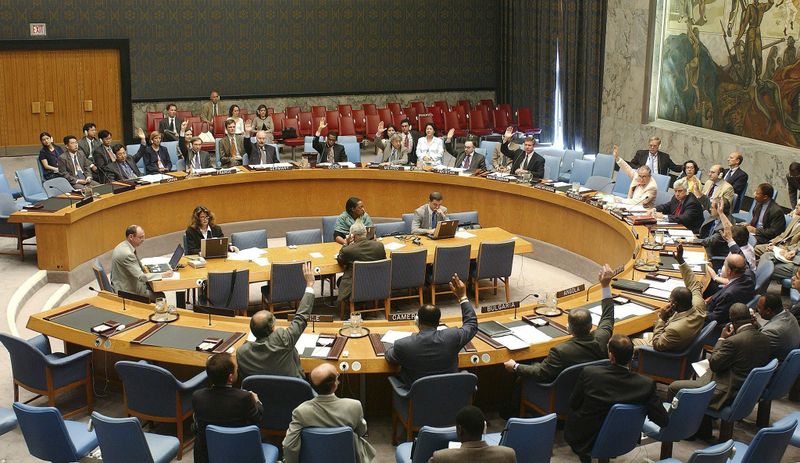
CONGRESS IN THE BALANCE: A blue tsunami, a tide, or chaos as usual — the US midterm election
With just hours to go before the American midterm election takes place, the day before South Africa’s own local election, control of both houses of the American Congress hangs in the balance.
DIVISIVE WORDS: ‘We never called for literal killing’ — Malema appeals for farm killings to stop.
EFF leader Julius Malema says the chant “Kill the boer, kill the farmer” was never meant literally and has appealed for farm killings to stop.
TRC ROULETTE : Victims’ families place key hidden evidence before Khampepe inquiry
A physical inspection of old lever arch files by the legal team representing the families of apartheid victims at the Khampepe Commission strengthens Anton Ackermann’s claim that a disputed 2006 memo was forged, reshaping the Khampepe inquiry into delayed apartheid prosecutions.
Top Stories
UN peacekeeping mission in Western Sahara ends after 35 years, UN chief says

Week 8 overreactions: Time for Vikings to bench Kyler Murray? Colts should fire Steichen?

NFL Week 8 winners and losers: Cowboys suffer epic collapse, Joe Burrow delivers historic heroics

How Antonelli 'blew everyone away' to make Formula 1 history

Why is Ashton Jeanty not getting carries? Another Raider emerges as Vegas' top RB in Week 8

Russia and Ukraine accuse each other of hacking emergency alert apps

NFL Week 8 grades for every team: Cowboys get an 'F' for choking, Steelers surge to 'A+'

Ukraine air raid app apparently hacked as users receive false radiation threat, Air Force says
Latest
UN peacekeeping mission in Western Sahara ends after 35 years, UN chief says
Week 8 overreactions: Time for Vikings to bench Kyler Murray? Colts should fire Steichen?
NFL Week 8 winners and losers: Cowboys suffer epic collapse, Joe Burrow delivers historic heroics
How Antonelli 'blew everyone away' to make Formula 1 history
Why is Ashton Jeanty not getting carries? Another Raider emerges as Vegas' top RB in Week 8
Russia and Ukraine accuse each other of hacking emergency alert apps
NFL Week 8 grades for every team: Cowboys get an 'F' for choking, Steelers surge to 'A+'
Ukraine air raid app apparently hacked as users receive false radiation threat, Air Force says