One Young World Summit brings more than 2,200 young leaders to Cape Town
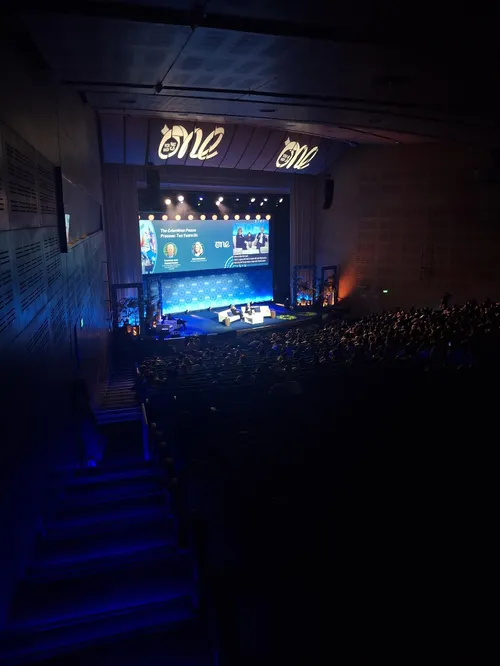
The main presentation stage at the Cape Town International Convention Centre during the 2026 One Young World Summit.
From November 3 to 6, 2026, Cape Town has served as the host city for the One Young World Summit, gathering more than 2,200 youth leaders from over 190 nations.
Against the backdrop of South Africa marking the 50th anniversary of the 1976 Soweto uprising, the summit takes on an added focus on youth activism and structural change.
The Cape Town International Convention Centre is hosting the main summit programme, while the opening ceremony took place at Green Point Athletic Stadium on November 3.
For Cape Town, the summit has offered an opportunity to host an international audience of delegates, partners, and speakers, while highlighting the city’s role as a destination for conferences, innovation, and entrepreneurship.
Its longer-term local value, however, will depend on whether the summit creates practical opportunities for South African young leaders, community organisations, and youth-led projects.
One Young World refers to its senior public figures, campaigners, business leaders and policymakers as “counsellors”.
The opening ceremony featured Graça Machel, Professor Muhammad Yunus, Queen Rania Al Abdullah of Jordan and Filipino journalist Maria Ressa, who received the 2021 Nobel Peace Prize for her work defending freedom of expression.
The broader programme included figures from politics, human rights, business, sport, entertainment and international development.
Among those highlighted were UNESCO Special Envoy for Peace and Reconciliation Forest Whitaker; actor and campaigner Gillian Anderson; presenter and human-rights advocate Terry Crews; and actor, playwright and UN Women Goodwill Ambassador Danai Gurira.
Other listed counsellors included Nobel Peace Prize laureates Juan Manuel Santos, the former president of Colombia, and Yemeni journalist Tawakkol Karman.
South African participants included former Constitutional Court Justices Albie Sachs and Edwin Cameron. Sachs is an anti-apartheid campaigner and human rights lawyer.
Cameron has been a prominent advocate for constitutional rights, HIV/AIDS awareness and LGBTQ+ equality.
The sporting and cultural line-up included former Springbok captain Francois Pienaar, former Springbok prop Tendai Mtawarira, Proteas captain Temba Bavuma, Olympic champion Tatjana Smith, sprinter Akani Simbine and actor and UNHCR Goodwill Ambassador Nomzamo Mbatha.
Even though high-profile speakers help elevate the event's prominence, the summit primarily centres on the delegates—young leaders who gather to share insights, establish networks, and initiate collaborative efforts upon returning to their local communities.
One Young World describes its approach as a “theory of change” centred on identifying, connecting and supporting young leaders from different countries, sectors and communities.
One Young World says that participants become One Young World Ambassadors after the event, joining a global community of change makers. The summit is therefore presented as an entry point to a longer-term network.
According to One Young World, ambassadors may access mentoring, community events, speaking opportunities, partnerships and selected funding opportunities.
The organisation offers leadership programmes, workshops and community events, as well as access to external opportunities.
Its initiatives include Lead2030, which supports youth-led projects linked to the UN Sustainable Development Goals, and the Action Accelerator, which is intended to help ambassadors strengthen projects and develop plans for impact.
One Young World says these programmes can help participants refine project ideas, identify partners and seek funding or institutional support.
It also says its communications platforms and external events can give ambassadors opportunities to share their work with potential funders, collaborators and wider audiences.
Access to prominent speakers and international networks may be valuable, but it cannot on its own address barriers such as funding constraints, political conditions, unequal access to technology and the limited inclusion of young people in decision-making.
The lasting measure of the Cape Town summit will be independently verifiable outcomes: whether youth-led initiatives expand, projects secure funding, social enterprises are established, jobs are created, or policy and community-level change can be demonstrated.
For Cape Town and South Africa, the key question is whether international attention will translate into sustained opportunities for local leaders after the delegates leave. Ensuring this momentum sparks long-term structural development is the ultimate test.
The 2026 One Young World Summit is structured around five plenary challenges identified through youth consultation: agriculture and the global food crisis; the circular economy; anti-hate; responsible technology; and peace and security.
The agriculture and food-security discussions examine sustainable farming, climate-related shocks and the unequal impact of food insecurity, particularly in parts of Africa
The circular-economy challenge considers how governments, businesses and communities can move away from “take, make, dispose” production models and reduce waste.
The anti-hate strand addresses social polarisation, hate crimes and the role of online platforms in amplifying division.
Responsible technology focuses on the ethical use of artificial intelligence and automation, including concerns about jobs, digital access and the readiness of communities to benefit from technological change.
The peace-and-security discussions consider international co-operation, geopolitical instability and regional conflict, with an emphasis on the role young people can play in dialogue, social cohesion and community resilience.
These themes give the summit a more defined policy focus than a conventional networking event.
The summit’s focus on innovation, entrepreneurship and responsible technology also creates an opening to connect global debates to South Africa’s youth-employment challenges.
For South Africa, hosting the summit during the 50th anniversary year of the 1976 Soweto uprising carries particular significance. Honouring South Africa's history requires more than speeches and symbolism.
It requires turning the tables, making more seats available for those who would not h energy, ideas and connections generated in Cape Town into practical opportunities and measurable change for young people and their communities.
Queen Rania Al Abdullah of Jordan speaking at the opening ceremony of the 2026 One Young World Summit at the Green Point Athletic Stadium in Cape Town.
The summit’s mission legacy should be measured not by the prominence of its speakers, but by whether it leads to lasting partnerships, funding for youth-led projects, sustainable jobs and greater youth participation in decision-making.
Related Topics
Keywords
Related Stories
I have a picture for you! 01 November-06 November
The First Thing newsletter's Ever-lasting Subscriber Photo Gallery.
ENVIRONMENTAL JUSTICE: African climate voices demand fair funding and influence before COP31
The winds, drought and excessive rains of climate change are blowing in Africa and it’s time for the Global North to listen and deliver on its climate finance promises. At COP31 in Turkey, which runs from 9-20 November, African countries will need greater weight in…

Diwali lamingtons with jam and coconut
These soft cake squares are coated in raspberry jam and desiccated coconut for a simple twist on the classic lamington.

ActionSA to negotiate for Nasiphi Moya to serve another five years as Tshwane mayor
ActionSA National Chairperson Michael Beaumont has thrown his weight behind Dr Nasiphi Moya serving another term as Tshwane mayor, saying the party will negotiate to ensure she remains at the helm of the metro for five more years.
Top Stories
I have a picture for you! 01 November-06 November
ENVIRONMENTAL JUSTICE: African climate voices demand fair funding and influence before COP31

Met chief says he wouldn't be surprised if more allegations made about Brand after rape conviction
Diwali lamingtons with jam and coconut

Train worker recalls repelling attacker with frying pan
ActionSA to negotiate for Nasiphi Moya to serve another five years as Tshwane mayor

Katherine Ryan says she feels 'grief and relief' after Russell Brand conviction

Two Gloucester schools in lockdown after boy hurt in incident
Latest
I have a picture for you! 01 November-06 November
ENVIRONMENTAL JUSTICE: African climate voices demand fair funding and influence before COP31
Met chief says he wouldn't be surprised if more allegations made about Brand after rape conviction
Diwali lamingtons with jam and coconut
Train worker recalls repelling attacker with frying pan
ActionSA to negotiate for Nasiphi Moya to serve another five years as Tshwane mayor
Katherine Ryan says she feels 'grief and relief' after Russell Brand conviction
Two Gloucester schools in lockdown after boy hurt in incident