Predictive Modelling: One million simulations reveal the 2026 World Cup favourites
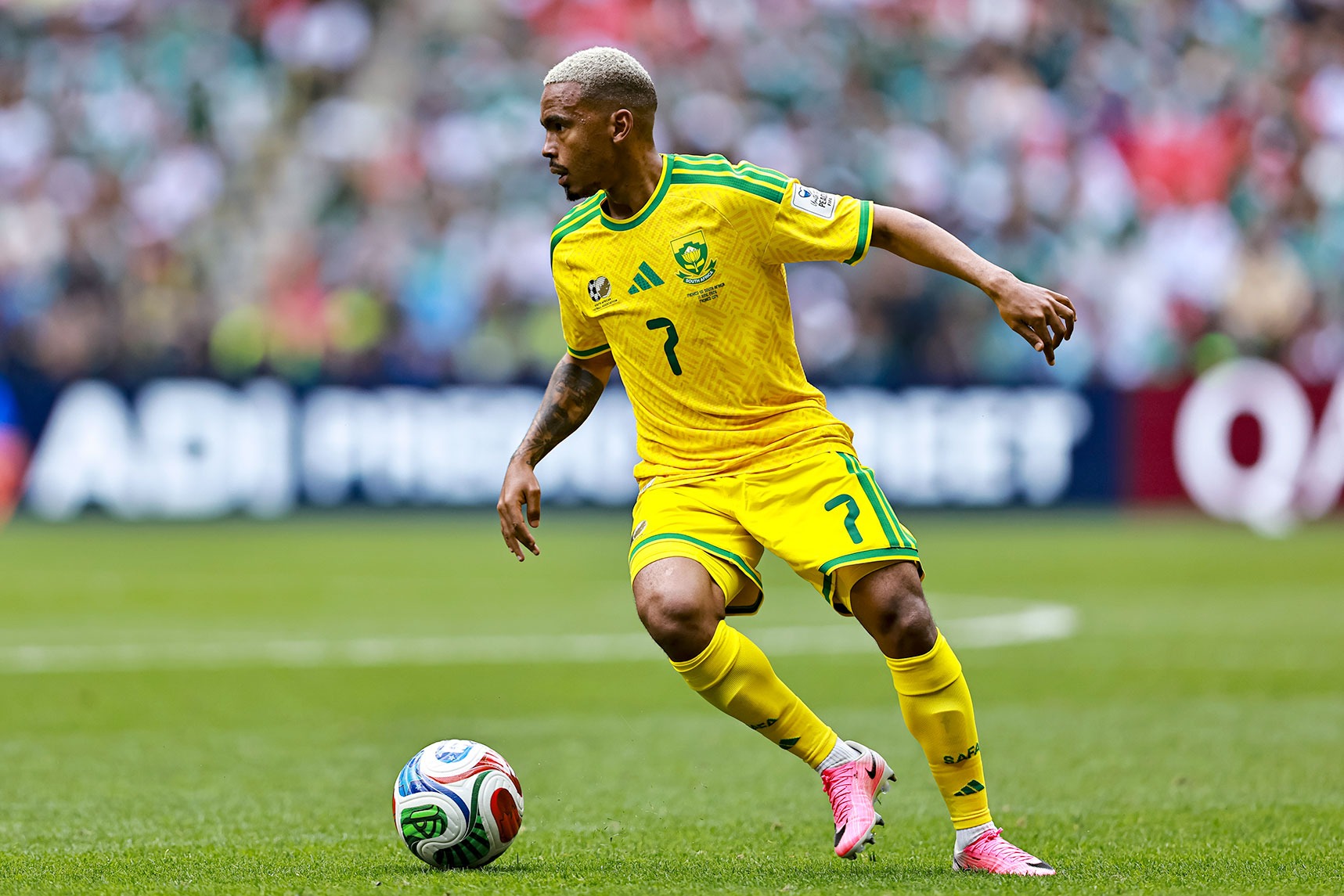
Data scientist Steven Stern has built a maths model to simulate teams’ chances of winning the tournament.
The 2026 Fifa World Cup is one of the most watched events of the international sports calendar, and fans from around the globe will be trying to predict how far their team will go.
I’m a data scientist and in an attempt to forecast the eventual tournament winner, semifinalists and teams’ chances of progressing through the group stages, I built a model to predict how the 2026 World Cup may unfold. Here’s how I did it and what my model predicted.
Lessons from recent history
For this World Cup, the traditional 32-team tournament structure (eight groups of four) has been expanded to a bulging 48 teams (12 groups of four) and there are new progression rules, an extra knockout round and a rise in total matches from 64 to 104.
The changes were designed by Fifa primarily to increase global participation, maximise revenue through more matches and boost the popularity of soccer in new markets. In trying to predict the 2026 event, what can recent history teach us?
Looking back to the seven 32-team tournaments since 1998, the 28 semifinal spots have been dominated by six nations who reached this stage more than once: Argentina (2), the Netherlands (3), Brazil (3), Croatia (3), France (4) and Germany (4). If we include previous tournament winners England, Italy and Spain, 78.6% of the modern semifinalists have come from nine nations. Further, all 14 finalists were from this group – the last finalist from outside these nine came in 1962 (Czechoslovakia); the last winner was in 1950 (Uruguay).
This is an amazing degree of dominance given the number of international teams playing the game – official Fifa rankings list 211 nations at present. More teams at the 2026 event, though, means it is harder to accurately assess the likelihood of the results. For this, we need analytics, and I have undertaken a simulation study designed to calculate the progression chances of all 48 teams in the field.
Although the obvious outcome of such a study is to assess who the likely winners are, we can also gain insight from how the new format spreads these chances across the teams and how it affects the chances of the top sides raising the trophy.
What did it predict?
Each team’s chances of reaching each round, based on one million simulations, are shown in the table on this page. It predicts that Australia has a 67.1% chance of getting out of their group, a 31.3% chance of getting past their first knockout match, but just a 1.0% chance of making the final and 0.3% chance of winning.
Canada’s chances are quite similar: a 78.9% chance of making it out of their group (thanks to being a host nation), a 37.9% chance of getting past their first knockout, but just a 1.0% chance of making the final and 0.3% chance of winning. New Zealand, on the other hand, has basically no chance of winning and only a 19.5% chance of making it out of their group. Although England has the fourth-highest overall chance of winning, their chance is notably lower than the other three favourites.
This is at least in part due to their recent drop in rating after a loss to Japan in March. The only teams with more than 10% chance of winning the trophy are Spain (15.8%), France (15.6%), Argentina (15.3%) and England (11.0%) – all members of the “group of nine” and the top four rated sides at the moment.
But the estimated proportion of semifinal spots taken by these nine nations is 54.2% – notably lower than the historical 78.6%. Further, the estimated proportion of finalists to come from these nine nations is 63.6%, while there is a 72.6% chance the champion comes from this group, both down from the historical 100% values.
Of course, this is partly due to Italy’s failure to make it to the World Cup. So, Fifa’s new format does reduce the chances of the historically strong nations progressing far into the tournament, but not as much as it may have hoped.
Had Fifa increased the size of the groups to six teams instead of increasing the number of groups, the new format would have done more to spread the chances – but doing so would have required at least 136 matches. DM
First published by The Conversation.
Steven Stern is a professor of data science at Bond University in Queensland, Australia.
Related Topics
Keywords
Related Stories
UN peacekeeping mission in Western Sahara ends after 35 years, UN chief says
Nov 1 (Reuters) - The 35-year-old UN peacekeeping mission in the Western Sahara region will come to an end after the Security Council failed to renew its mandate, the UN chief said on Sunday.
CONGRESS IN THE BALANCE: A blue tsunami, a tide, or chaos as usual — the US midterm election
With just hours to go before the American midterm election takes place, the day before South Africa’s own local election, control of both houses of the American Congress hangs in the balance.
DIVISIVE WORDS: ‘We never called for literal killing’ — Malema appeals for farm killings to stop.
EFF leader Julius Malema says the chant “Kill the boer, kill the farmer” was never meant literally and has appealed for farm killings to stop.

TRC ROULETTE : Victims’ families place key hidden evidence before Khampepe inquiry
A physical inspection of old lever arch files by the legal team representing the families of apartheid victims at the Khampepe Commission strengthens Anton Ackermann’s claim that a disputed 2006 memo was forged, reshaping the Khampepe inquiry into delayed apartheid prosecutions.
Top Stories
UN peacekeeping mission in Western Sahara ends after 35 years, UN chief says

Week 8 overreactions: Time for Vikings to bench Kyler Murray? Colts should fire Steichen?

NFL Week 8 winners and losers: Cowboys suffer epic collapse, Joe Burrow delivers historic heroics

How Antonelli 'blew everyone away' to make Formula 1 history

Why is Ashton Jeanty not getting carries? Another Raider emerges as Vegas' top RB in Week 8

Russia and Ukraine accuse each other of hacking emergency alert apps

NFL Week 8 grades for every team: Cowboys get an 'F' for choking, Steelers surge to 'A+'

Ukraine air raid app apparently hacked as users receive false radiation threat, Air Force says
Latest
UN peacekeeping mission in Western Sahara ends after 35 years, UN chief says
Week 8 overreactions: Time for Vikings to bench Kyler Murray? Colts should fire Steichen?
NFL Week 8 winners and losers: Cowboys suffer epic collapse, Joe Burrow delivers historic heroics
How Antonelli 'blew everyone away' to make Formula 1 history
Why is Ashton Jeanty not getting carries? Another Raider emerges as Vegas' top RB in Week 8
Russia and Ukraine accuse each other of hacking emergency alert apps
NFL Week 8 grades for every team: Cowboys get an 'F' for choking, Steelers surge to 'A+'
Ukraine air raid app apparently hacked as users receive false radiation threat, Air Force says