Rocket Report: Artemis II literally tore through the atmosphere; New Glenn delay
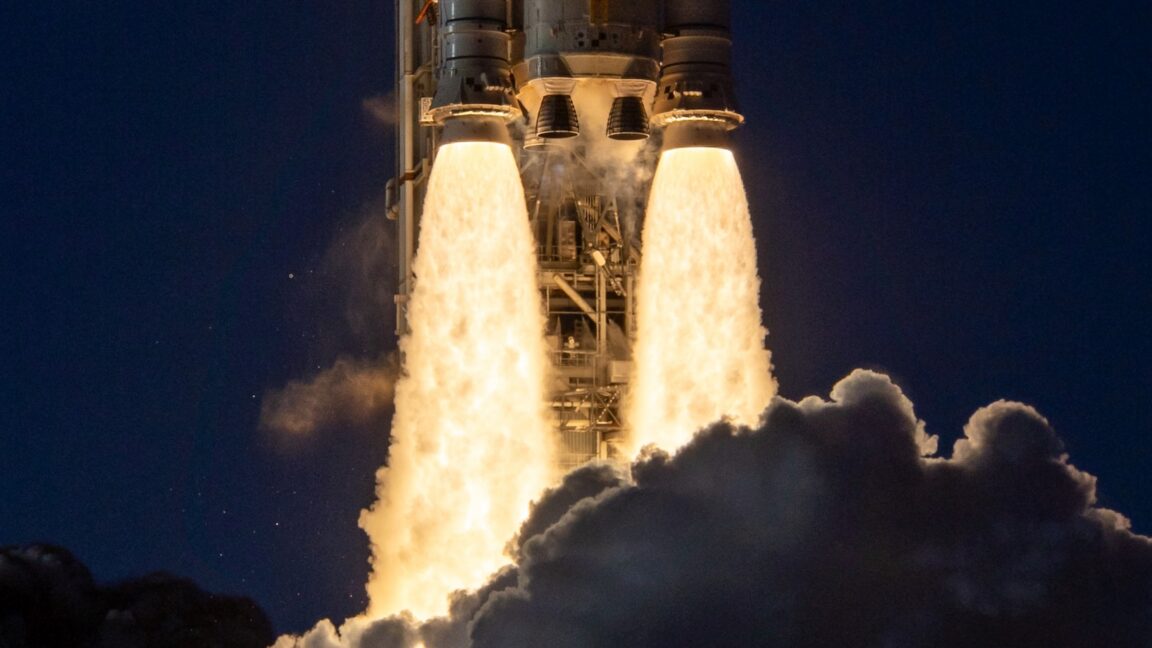
Welcome to Edition 9.18 of the Rocket Report! Blue Origin packed a lot of news into one afternoon Thursday with the reveal of a new kick stage for the New Glenn rocket, a new rocket engine design, and the minor and widely expected delay for New Glenn’s return-to-flight mission from December until January. The reconstruction of Blue Origin’s wrecked launch pad at Cape Canaveral, Florida, continues apace after a catastrophic explosion nearly six months ago. There’s a lot of pent-up demand from NASA, Amazon, and the Space Force for Blue Origin to get New Glenn back in action.
As always, we welcome reader submissions, and if you don’t want to miss an issue, please subscribe using the box below (the form will not appear on AMP-enabled versions of the site). Each report will include information on small-, medium-, and heavy-lift rockets as well as a quick look ahead at the next three launches on the calendar.
SpaceX vets work on water-fed propulsion. Three brothers who worked at SpaceX in the Falcon 9 era are now building satellites that run on water, a potentially harvestable resource on the Moon and found all over the Solar System, Ars reports. In late 2022, the three Carlisle brothers founded Argo Space to build infrastructure in space. Their vision was not just in-space transportation but also removing the need to use propellants from Earth to move around the heavens. Argo Space’s satellites will use water not only as a propellant, but also as a coolant and radiation shield.
How does this work? … Argo Space flew its first mission in July, but the spacecraft failed after one of its solar arrays didn’t deploy, and there wasn’t enough time to test the propulsion system. Two more missions are on Argo Space’s schedule for 2027 to demonstrate the company’s water-based thrusters. The propulsion system is basically a small rocket that uses hydrogen and oxygen as propellants. However, instead of launching with separate tanks of liquid hydrogen and liquid oxygen, the satellite carries a reservoir of liquid water. In space, the vehicle uses solar power to split water into hydrogen and oxygen gases and burns them to generate thrust.
JAXA backs small satellite launcher. Japanese launcher startup Interstellar Technologies has secured the backing of the Japan Aerospace Exploration Agency (JAXA) for its Zero rocket program, Aviation Week & Space Technology reports. The company said JAXA selected it for its Acceleration of Commercial Rocket Launch Demonstration program under the Space Strategic Fund. The government-funded program supports development and flight demonstrations of private launch companies with grants of up to $76 million per company, with the goal of fostering a growing commercial launch industry in Japan. Interstellar previously raised more than $250 million, with roughly equivalent funds from government and private capital.
Zeroing in … Interstellar is using the money to complete development of its Zero rocket, a two-stage launcher designed to carry up to 1 metric ton (2,200 pounds) of payload to low-Earth orbit. “We have achieved critical technical milestones, including Japan’s first successful firing test of an orbital-class methane engine,” said Satoshi Nakayama, director of the board and president of Interstellar. “We have now reached the stage where we must swiftly turn these proven development results into operational commercial services.” The most recent update from Interstellar indicated a first launch of Zero in 2027.
Launch demand outpacing supply. A new report from analytics firm Quilty Space confirms that, outside of China, the world faces a significant shortage of rockets over the next five years, Ars reports. The firm estimates that between now and 2030, there will be a shortfall of about 150 launches compared to demand from satellite operators and civil space agencies. If demand from the US military is added in—and SpaceX does not extend the Falcon 9 and Falcon Heavy program to accommodate increased national security needs—the shortage could be doubled.
Worse than we thought … “What we wanted to get at is to understand how severe this launch crisis is and when will it be resolved,” said Caleb Henry, director of research at Quilty Space. “What we learned is that the launch crisis is more severe than we thought and that it will not go away this decade for sure, and it might not abate until sometime late in the 2030s.” Why is this happening? Quilty puts the blame on several factors: the war in Ukraine taking Russian rockets off the Western market; Amazon Leo demand; developmental delays in a new generation of rockets, from New Glenn and Vulcan to Neutron, Terran R, and Nova; and more recently, the retirement of the Falcon 9 as a rocket for commercial service.
China continues launching mega-constellation. Another 18 satellites for China’s SpaceSail Internet network launched Tuesday (Monday, US time) from a spaceport in the country’s northwestern desert. The mission marked the second launch—and first operational flight—of the Kinetica 2 rocket developed by a Chinese startup known as CAS Space. The SpaceSail constellation, also known as Qianfan, now consists of some 275 flat-panel satellites from a series of launches that began in August 2024. The network’s first phase will number 1,296 satellites.
A mini-Falcon Heavy … The Kinetica 2 is an interesting launch vehicle, with three side-by-side boosters arranged in a manner similar to SpaceX’s Falcon Heavy. But the Kinetica 2 is a much smaller rocket, with three kerosene-fueled engines on each booster instead of nine. Its lift performance to low-Earth orbit is about 12 metric tons (26,000 pounds). CAS Space plans to eventually recover and reuse the Kinetica 2 boosters.
India launches strategic navigation satellite. A Geosynchronous Satellite Launch Vehicle (GSLV) rocket launched on October 30 with a satellite to restore India’s regional navigation system, NDTV reports. The NVS-03 satellite is the third spacecraft in India’s second-generation navigation network. Some of the fleet’s older satellites suffered from atomic clock failures, rendering them partially or totally unusable. NVS-03 carries multiple clocks of different designs in an attempt to overcome the system’s reliability problems.
A “naughty boy” … India’s medium-lift GSLV has now launched 20 times since debuting in 2001. The rocket doesn’t fly as often as India’s smaller launcher, the PSLV, and hasn’t always performed well when it has. Six of the 20 flights ended in total or partial failures, but most of the mishaps occurred early in the rocket’s history. GSLV’s track record earned it the title “naughty boy” from Indian space officials. The most recent launch was a different story. The head of India’s space agency, V. Narayanan, declared that the GSLV’s recent flight was the “most precise launch of any rocket in the world.” We’re not sure what metric Narayanan used to make that claim, but the launch was, indeed, a success.
China reveals roadmap to lunar landing. Chinese space officials confirmed that the Asian nation plans to land its astronauts on the Moon within three years, Ars reports. At the Seventh Manned Spaceflight Conference in Beijing, officials, including Wang Xiang, chief designer for the lunar exploration program, laid out the country’s most publicly detailed plans yet for a series of missions leading up to a crewed lunar landing “before 2030.” China’s lunar landings will involve a lunar-orbit rendezvous similar to what NASA did in the 1960s and early 1970s with the Apollo program. However, lacking a rocket as powerful as the Saturn V vehicle, the crew and lunar lander will launch separately to the Moon.
These are the rockets … China’s Long March 10 rocket family will be the workhorse for the country’s initial crew missions to the Moon. The next big test will be the demonstration flight of a Long March 10A rocket, which flies with a single core booster, and China’s new Mengzhou Moon ship to low-Earth orbit in early 2027. The larger Long March 10, with three boosters connected together, will launch China’s Lanyue lunar lander on an uncrewed test flight to the Moon in 2028. The next year, a follow-up mission will involve the concurrent launch of two Long March 10s, one with an uncrewed Mengzhou spacecraft and the other with a Lanyue lander that will dock together in lunar orbit. Then, before 2030, another dual launch of Long March 10s will occur, this time with crew on the Mengzhou spacecraft, leading to the crewed landing mission.
Blue Origin’s big reveals. Blue Origin announced two significant upgrades to its New Glenn rocket on Thursday, reducing the cost of manufacturing the vehicle and expanding its capacity for payload delivery to geostationary orbit and the Moon, Ars reports. With these upgrades, the company aims to eventually position New Glenn to launch more than 1,000 times a year. One of the announcements involved a new engine, called Northstar, that will eventually replace the BE-4 engine that powers the first stage of New Glenn. The other piece of news was that Blue Origin is developing a hydrogen-oxygen third stage for the rocket to give it an extra kick for high-energy missions.
Blue’s Northstar … The Northstar engine is a simplified but more powerful version of the BE-4 engine. It has half the number of parts and 30 percent less mass, and about 65 percent can be 3D-printed, all while providing a thrust increase over the BE-4. Blue Origin believes it can manufacture the engine at 25 percent the cost of a BE-4 engine. The kick stage is somewhat of an engineering marvel in itself. The stage will use a lightweight composite fuel tank, but officials were not sure the structure could contain leak-prone hydrogen at high pressure. The company recently had a breakthrough at Launch Site One in Texas, when it completed its first composite liquid hydrogen tanking test, giving engineers confidence to move forward with the design.
New Glenn won’t return to flight this year. Blue Origin now plans to resume launches of its New Glenn rocket in January, delaying the much-anticipated flight of the vehicle after a destructive launch pad explosion in May, Bloomberg reports. The Jeff Bezos-backed company had been driving to launch New Glenn again before the end of the year in its quest to challenge SpaceX. But Blue Origin Chief Executive Officer Dave Limp told employees on Wednesday that they are now targeting a flight early in 2027.
What’s a month? … The slight delay is unsurprising, and a January launch would still put Blue Origin well head of initial fears of how long it would take to rebuild its launch pad in Florida. New Glenn has a busy launch manifest after the return-to-flight mission, including a crucial launch in the spring of Blue Origin’s Blue Moon Mark 1 lander, an uncrewed precursor to the company’s future human-rated lander for NASA’s Artemis missions.
Artemis II tore through the atmosphere. The launch of NASA’s Artemis II mission in April caused significant disturbances in Earth’s ionosphere that could have triggered temporary, localized errors in GPS positioning, a new study has found, Space.com reports. The study by a team of researchers from National Cheng Kung University in Taiwan analyzed data from high-precision networks of fixed, ground-based GPS receivers. The researchers used the GPS measurements to reconstruct how the passage of the Artemis II mission’s Space Launch System rocket changed the concentrations of free electrons in the upper atmosphere.
Disturbing the peace … The measurements found that the ionospheric disturbances resulting from the Artemis II launch were more significant than any caused by other rocket launches to date. Curiously, they were up to 10 times more intense than those observed following the test launches of SpaceX’s Starship, which is twice as powerful as the SLS based on liftoff thrust.
Next three launches
November 6: Ceres 2 | Unknown Payload | Jiuquan Satellite Launch Center, China | 23:35 UTC
November 7: Falcon 9 | USSF-432 | Vandenberg Space Force Base, California | 00:46 UTC
November 8: Long March 12 | SatNet LEO Group | Wenchang Space Launch Site, China | 20:25 UTC
 1.
Meet *sshole, the vulnerability that lets hackers SSH into Linux devices
Related Topics
Keywords
Related Stories
All the latest updates on AI data centers
Massive new data centers are the physical foundation for tech companies’ hopes and dreams for AI. But the rush to expand warehouses full of energy-hungry servers has also kicked up fights across the world over their impact on power grids, utility bills, nearby communities, and…

Shure’s popular podcasting and streaming mic is almost $50 off
Shure’s MV7 Plus is a popular podcasting and streaming mic. | Image: Shure While the Shure Mv7 Plus is popular with streamers and podcasters, it’s equally good at impressing your friends and coworkers on meetings and Discord calls. It’s currently marked down to $255 at various…

Lame-duck Congress might actually do something: speed up energy projects
A massive permitting bill that could help energy projects come online much quicker and potentially lower utility bills for Americans is advancing with bipartisan support. And while it could be a catalyst for lots of clean energy, it could also speed up polluting projects and…

The folks behind John Wick are back with Karōshi trailer
Stuntman/director Chad Stahelski and 87Eleven bring us an action-packed dystopian, futuristic thriller.

Top Stories

LOCAL ELECTIONS 2026: MK party takes four KZN municipalities from ANC as governance test looms
Election fraud case lodged, party demands all Western Cape votes be recounted
All the latest updates on AI data centers
Shure’s popular podcasting and streaming mic is almost $50 off
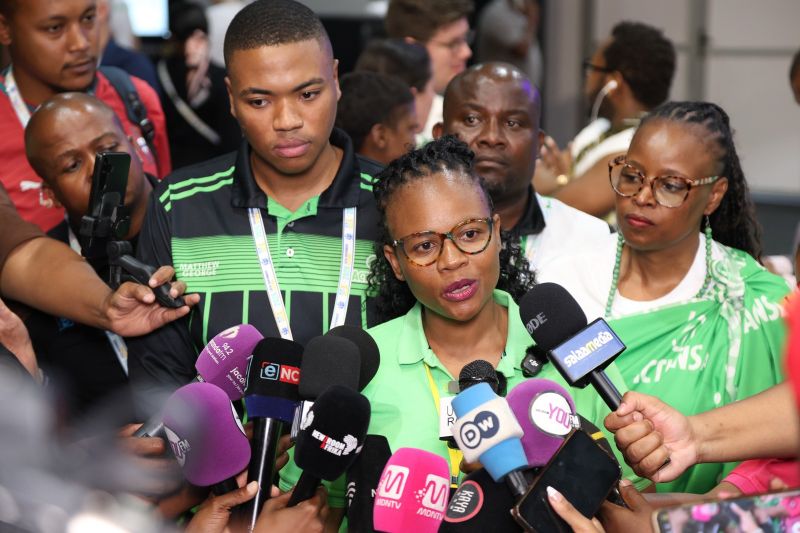
LOCAL ELECTIONS 2026: ActionSA surges in Gauteng metros, taking ANC wards — see where

Myles Garrett on track to be activated ahead of Rams Week 9 matchup vs. Commanders

AI stocks climb after trillions wiped from market values

How to watch Serie A: Inter face Como at San Siro after disappointing defeat against AC Milan
Latest
LOCAL ELECTIONS 2026: MK party takes four KZN municipalities from ANC as governance test looms
Election fraud case lodged, party demands all Western Cape votes be recounted
All the latest updates on AI data centers
Shure’s popular podcasting and streaming mic is almost $50 off
LOCAL ELECTIONS 2026: ActionSA surges in Gauteng metros, taking ANC wards — see where
Myles Garrett on track to be activated ahead of Rams Week 9 matchup vs. Commanders
AI stocks climb after trillions wiped from market values
How to watch Serie A: Inter face Como at San Siro after disappointing defeat against AC Milan