SASSA: R1.28bn in social grants paid to qualifying foreign nationals in 2025/26
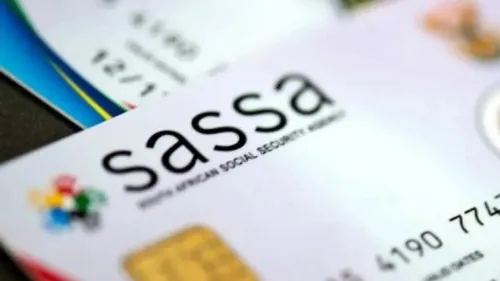
Permanent residents accounted for most of the estimated R1.28bn paid to qualifying foreign nationals in 2025/26, according to a parliamentary reply.
The South African Social Security Agency (SASSA) has revealed that an estimated R1.27 billion in social grants - less than 1% of South Africa’s Social Assistance budget - was allocated to qualifying foreign nationals during the 2025/26 financial year, with permanent residents receiving the largest share of the funding.
The figures were disclosed in a written parliamentary reply to a question by African Transformation Movement (ATM) MP Vuyo Zungula, who sought clarity on how much government funding was paid to foreign nationals.
According to the Department of Social Development's response, an estimated R1.12 billion was allocated to permanent residents, while recognised refugees accounted for approximately R150.8 million.
A further R10.6 million was allocated to qualifying foreign nationals through the R370 Social Relief of Distress (SRD) grant.
The combined estimated expenditure across the three categories amounts to approximately R1.28 billion.
The parliamentary response revealed that permanent residents accounted for R1,116,540,950 in estimated social grant expenditure during the 2025/26 financial year.
The Old Age Grant accounted for the largest portion, at R931.5 million, followed by the Child Support Grant at R134.5 million and the Disability Grant at R31.7 million.
Other allocations included R8.4 million for the Care Dependency Grant, R6.6 million for Grant-in-Aid and R3.8 million for the Foster Child Grant.
The department said expenditure on permanent residents represented just 0.45% of the country's social assistance budget.
"In terms of the 2025/2026 Social Assistance budget, SASSA spent 0.45% of the Social Assistance Budget on permanent residents," the parliamentary response stated.
Recognised refugees residing in South Africa accounted for an additional R150,843,110 in estimated social grant expenditure.
Of this amount, R105,8 million was allocated to Child Support Grants, while R32,7 million went towards Old Age Grants.
Disability Grants accounted for R6 million, followed by R5,9 million for Care Dependency Grants.
Smaller allocations were recorded for Grant-in-Aid and Foster Child Grants, amounting to R271,600 and R198,750 respectively.
According to the department, expenditure on recognised refugees represented 0.06% of the social assistance budget.
The parliamentary response also provided a breakdown of the estimated R10,617,150 in SRD grant expenditure allocated to qualifying foreign nationals during the 2025/26 financial year.
Lesotho Exemption Permit holders accounted for the largest share, receiving approximately R9,18 million.
General asylum seekers accounted for R962,370, while Zimbabwean Exemption Permit holders received R448,810.
Angolan Special Permit holders accounted for the smallest allocation, at R24,420.
The department indicated that the total expenditure represented 0.03% of the allocated R370 SRD grant budget.
"In terms of the 2025/2026 Covid Social Relief of Distress (SRD 370) budget, SASSA spent 0.03% of the allocated SRD 370 budget on Foreign Nationals," SASSA said.
The department maintained that social assistance is restricted to individuals who meet the eligibility requirements prescribed by South African legislation.
It explained that the Constitution and the Social Assistance Act allow qualifying South African citizens, permanent residents and recognised refugees to receive social grants.
However, individuals unlawfully living in the country are excluded from receiving such assistance.
"SASSA does not provide social grants or SRD benefits to illegal immigrants or any person unlawfully present in the Republic," the parliamentary response stated.
The department further explained that certain categories of asylum seekers and special permit holders may qualify for the SRD grant, provided they meet the relevant requirements.
These include having insufficient financial means, holding valid documentation, living in South Africa and meeting the prescribed age and eligibility criteria.
The disclosure comes amid scrutiny of the social grant system following reports that approximately 400,000 beneficiaries had been flagged for assessment and review.
Zungula's parliamentary question specifically sought a breakdown of payments to foreign nationals according to grant type, country of origin and residency status.
In its response, the department emphasised that the amounts disclosed related exclusively to foreign nationals legally entitled to receive social assistance.
"According to the 2025/2026 estimates, less than 1% of South Africa’s Social Assistance budget were paid to foreign nationals," SASSA said.
The department also defended SASSA's verification procedures, saying checks against Department of Home Affairs records were intended to ensure that beneficiaries met the legal requirements.
"The Agency's eligibility verification processes, including verification against Department of Home Affairs records, are designed to ensure compliance with the legislative framework governing social assistance."
The department maintained that the social grant system does not provide benefits to people unlawfully present in South Africa.
Related Topics
Keywords
Related Stories
CONGRESS IN THE BALANCE: A blue tsunami, a tide, or chaos as usual — the US midterm election
With just hours to go before the American midterm election takes place, the day before South Africa’s own local election, control of both houses of the American Congress hangs in the balance.
DIVISIVE WORDS: ‘We never called for literal killing’ — Malema appeals for farm killings to stop.
EFF leader Julius Malema says the chant “Kill the boer, kill the farmer” was never meant literally and has appealed for farm killings to stop.
TRC ROULETTE : Victims’ families place key hidden evidence before Khampepe inquiry
A physical inspection of old lever arch files by the legal team representing the families of apartheid victims at the Khampepe Commission strengthens Anton Ackermann’s claim that a disputed 2006 memo was forged, reshaping the Khampepe inquiry into delayed apartheid prosecutions.
REAL ESTATE & GOVERNANCE: How SA property prices reflect municipal service delivery
South Africa’s property prices broadly track municipal performance, with Cape Town leading and Buffalo City lagging, but several metros challenge the pattern.
Top Stories
CONGRESS IN THE BALANCE: A blue tsunami, a tide, or chaos as usual — the US midterm election

'We've got big problems' - Hamilton says Ferrari need 'serious talks'

Detroit linebacker Campbell taken to hospital with neck injury
DIVISIVE WORDS: ‘We never called for literal killing’ — Malema appeals for farm killings to stop.

Antonelli becomes world champion as Verstappen wins in Mexico
TRC ROULETTE : Victims’ families place key hidden evidence before Khampepe inquiry
REAL ESTATE & GOVERNANCE: How SA property prices reflect municipal service delivery

LOCAL ELECTIONS 2026: Thirteen mayoral candidates, plenty of blame and a crowd of fed-up residents
Latest
CONGRESS IN THE BALANCE: A blue tsunami, a tide, or chaos as usual — the US midterm election
'We've got big problems' - Hamilton says Ferrari need 'serious talks'
Detroit linebacker Campbell taken to hospital with neck injury
DIVISIVE WORDS: ‘We never called for literal killing’ — Malema appeals for farm killings to stop.
Antonelli becomes world champion as Verstappen wins in Mexico
TRC ROULETTE : Victims’ families place key hidden evidence before Khampepe inquiry
REAL ESTATE & GOVERNANCE: How SA property prices reflect municipal service delivery
LOCAL ELECTIONS 2026: Thirteen mayoral candidates, plenty of blame and a crowd of fed-up residents