Seacom launches high-capacity network to boost East African connectivity
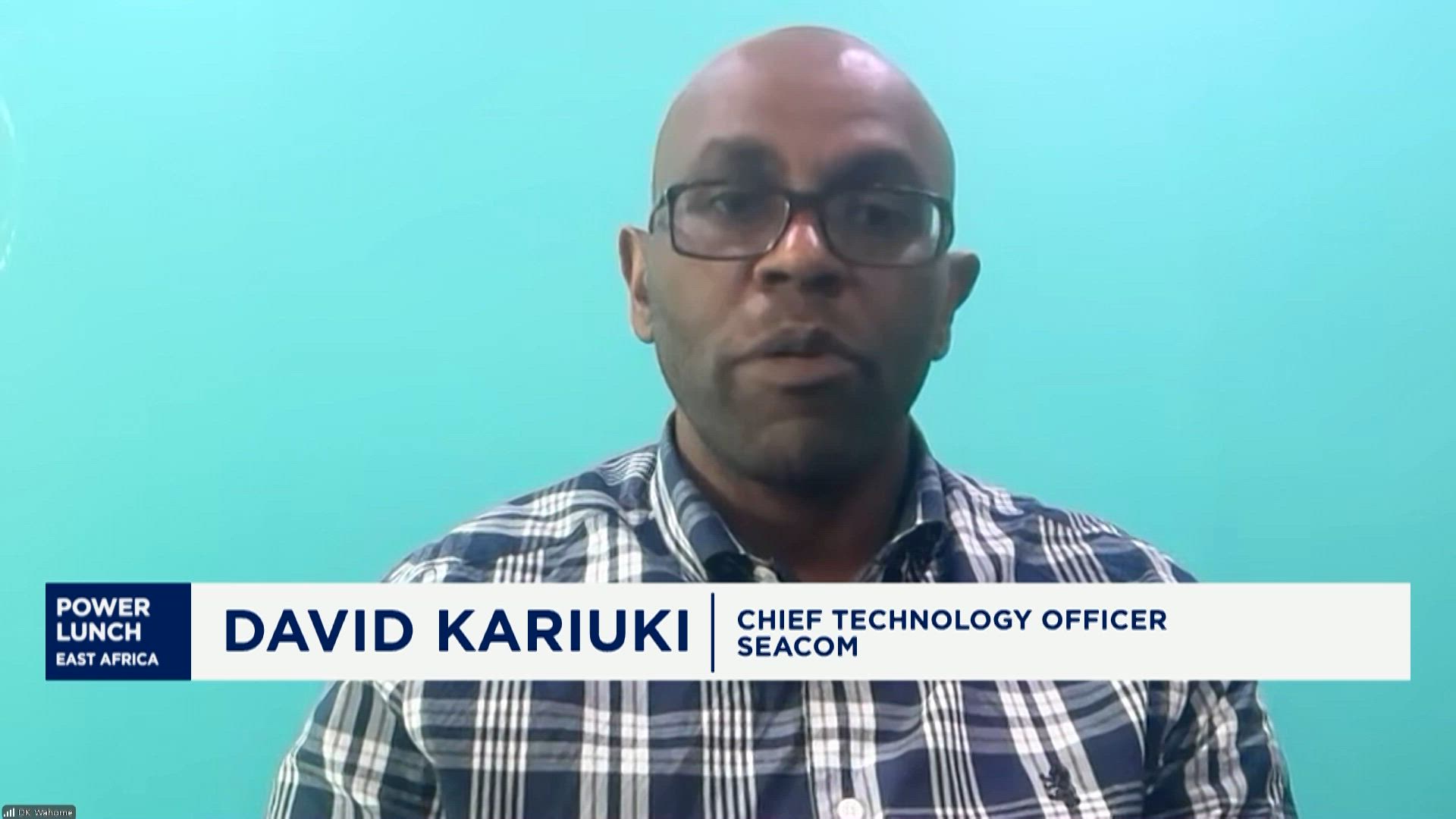
 Seacom launches high-capacity network to boost East African connectivityEast Africa's digital corridor is getting a massive upgrade today. Subsea cable operator and digital infrastructure giant, Seacom, has officially launched a brand-new, high-capacity terrestrial network route linking Nairobi and Kampala. Joining CNBC Africa to discuss what this means for businesses, cloud platforms, and cross-border trade in the region is David Kariuki, Chief Technology Officer at Seacom.Thu, 18 Jun 2026 15:15:21 GMTAI SummaryDisclaimer: The following content is generated automatically by a GPT AI and may not be accurate. To verify the details, please watch the videoAI Generated SummaryKey Points:
- Seacom has launched a high-capacity terrestrial network route linking Nairobi and Kampala.
- The company says the corridor has been underserved for years despite rapid growth in East Africa’s internet economy.
- The upgraded route delivers 10 times more capacity than the earlier build on the corridor.
- Seacom expects demand for additional capacity to keep rising, potentially requiring another major jump within five years.
- Financial services, cloud platforms, content delivery and education are among the sectors expected to benefit most.
- The route is expected to improve cross-border trade and digital transactions between Kenya and Uganda.
- Neighboring markets including Rwanda, South Sudan, Burundi and the DRC could also benefit from stronger regional connectivity.
- Seacom says AI adoption is increasing the need for scalable, resilient, high-capacity network infrastructure.
- The company sees further expansion opportunities from Uganda into regional markets and from Kenya into Ethiopia, Somalia and South Sudan.
Seacom has officially launched a new high-capacity terrestrial network route linking Nairobi and Kampala, a move the company says will strengthen East Africa’s digital backbone at a time of surging demand from cloud services, financial platforms, artificial intelligence applications and cross-border trade.
Speaking in a television interview, Seacom Chief Technology Officer David Kariuki described digital networks as critical infrastructure that should be viewed in much the same way as roads, ports and other economic enablers. The new route, he said, is designed to address long-standing capacity constraints on the Nairobi-Kampala corridor while laying the groundwork for the next phase of internet-driven growth across the region.
“Digital highways” are becoming increasingly central to modern economies, Kariuki said, arguing that internet infrastructure should be treated as a strategic national and regional asset. That framing is significant for East Africa, where governments and private investors are trying to accelerate digital transformation, deepen financial inclusion and improve connectivity between major commercial hubs and landlocked neighboring markets.
The Nairobi-Kampala corridor is one of the region’s most important connectivity routes, linking Kenya’s role as a coastal gateway and technology center with Uganda’s growing position in regional trade and services. According to Kariuki, the route has been critically underserved for years, even as the internet economy in East Africa has expanded rapidly.
The timing of the new build is tied closely to that growth. Businesses across the region are increasing their dependence on cloud-hosted applications, digital payments, data-intensive services and real-time transactions. At the same time, the emergence of AI workloads is placing new pressure on networks to deliver higher bandwidth, lower latency and greater scalability.
Kariuki said Seacom’s latest investment is aimed at meeting those needs with infrastructure that can handle both current demand and future expansion. He noted that the upgraded route offers 10 times more capacity than what was deployed on the corridor roughly 16 years ago, underscoring just how sharply demand has risen.
If historical growth rates are any guide, that capacity could come under pressure sooner than expected. Kariuki said another major jump in demand could emerge within about five years, highlighting the importance of building networks that can scale quickly as internet usage and enterprise requirements continue to climb.
While faster internet speeds are an obvious benefit, Kariuki emphasized the wider economic impact of stronger digital infrastructure. One of the clearest beneficiaries, he said, will be trade. By improving the reliability and capacity of connectivity between Kenya and Uganda, the corridor can support smoother cross-border financial transactions, better access to online services and more efficient digital commerce.
The financial sector stands out as one of the biggest winners. Banks and financial institutions are increasingly moving platforms and services to the cloud, making network resiliency and speed more important to day-to-day operations. Improved capacity can support transaction-heavy systems, customer access to financial services and the growing digital payments ecosystem that underpins commerce across East Africa.
Content delivery and broader internet access are also expected to improve. Kariuki pointed to demand for services from major global platforms, as well as the broader digital ecosystem that relies on stable, high-capacity links. Educational institutions may also benefit, especially as learning, research and administrative tools become more dependent on digital platforms and cloud connectivity.
Beyond Kenya and Uganda, Seacom sees the new route as part of a broader regional connectivity strategy. Kariuki likened the Nairobi-Kampala link to a digital motorway: once capacity is strengthened into Uganda, neighboring countries connected to that market can also benefit. He specifically cited Rwanda, South Sudan, Burundi and the Democratic Republic of Congo as markets that stand to gain from improved regional internet access.
That has implications not only for consumers and businesses, but also for regional integration. Better connectivity can help lower digital barriers between markets, improve the flow of information and support everything from e-commerce and banking to public services and governance. In practical terms, stronger terrestrial links may become increasingly important as East African economies seek to trade more seamlessly across borders.
AI is another major driver of future demand. Kariuki said the technology is creating a need for greater network capacity as businesses adopt AI tools to improve efficiency, access information more quickly and optimize operations. A stronger digital corridor could therefore help enable a broader AI ecosystem, from enterprise software and analytics platforms to data-heavy applications running across cloud environments.
Looking ahead, Seacom indicated that the Nairobi-Kampala route is only an initial step in a wider buildout strategy. Kariuki said the company sees further opportunities to extend connectivity deeper into Rwanda, the DRC and South Sudan through Uganda, while additional expansion from Kenya into Ethiopia, Somalia and South Sudan also presents a significant investment opportunity.
Those comments point to a larger trend taking shape across East Africa: digital infrastructure is no longer a secondary utility but a core input for growth. As enterprises digitize operations, banks push further into cloud-based services and AI begins to reshape corporate and consumer demand, network capacity is becoming a competitive advantage for countries as well as companies.
For Seacom, the launch positions the company to capture a larger share of that demand while reinforcing its role in the region’s digital infrastructure ecosystem. For East Africa, the investment reflects a broader recognition that the next phase of trade, productivity and innovation will depend not just on physical logistics corridors, but on high-capacity digital ones as well.
Kariuki’s message was clear: if the region wants to support the fast-growing internet economy, it will need to keep investing in scalable, resilient and interconnected networks. The Nairobi-Kampala route is a step in that direction, and potentially a template for how East Africa builds its next generation of economic infrastructure.
Choose CNBC Africa as your preferred source on Google and never miss a moment from the most trusted name in business news.SIGN UP FOR OUR NEWSLETTER
DAILY UPDATE
Get the best of CNBC Africa sent straight to your inbox with breaking business news, insights and updates from experts across the continent.
Subscribe
Get this delivered to your inbox, and more info about our products and services. By signing up for newsletters, you are agreeing to our Terms of Use and Privacy Policy.
Latest Videos
Related Topics
Keywords
Related Stories
TRADE (DIS)AGREEMENT: What now? — Experts weigh in after Trump boots SA from Agoa
South Africa will, from next year, be removed from the duty-free benefits of the African Growth and Opportunity Act (Agoa), the US government announced. This was after the SA government had “constructively responded” to US concerns.
BOOK EXCERPT: The Devil Wears Sneakers — Epstein and the network that allowed him to flourish
The media played a paradoxical role in the Jeffrey Epstein saga, writes investigative journalist Hazel Friedman. ‘At its best, journalism accomplished what prosecutors, politicians and regulators repeatedly failed to do: prise open a case powerful people had spent years trying…

APC Rally: Hard part of our economic reset over; next term is pure harvest – VP Shettima
Mr Shettima said the toughest phases of Nigeria’s aggressive economic reset undertaken by the administration of President Bola Tinubu are officially over, clearing the runway for an era of pure harvest, nationwide growth and prosperity. The post APC Rally: Hard part of our…

STOLEN STASH: Phala Phala: Two convicted despite ‘poor’ probe into $580,000 theft
No fingerprints, no usable footage and a criminal case opened two years later. Yet six years after $580,000 was stolen from President Cyril Ramaphosa’s farm, two accused have been found guilty and one walks free.

Top Stories

UK and EU agree draft deal to scrap Brexit red tape over food exports

No. 1 Florida opens season with convincing victory vs. Miami: Gators show why they deserve No. 1 ranking

Man and boy arrested after allegedly attacking One Nation volunteer with baseball bat in Australia

European force to hold first Ukraine support exercise in Poland

North Korea denies being behind record $6.3bn Binance hack

Missouri's CJ Gunn ruled ineligble by SEC, Tigers starting C Jaylen Carey indefinitely suspended

Russian strikes kill 26 in Ukraine after longest ceasefire ends

NFL reinstates James Pearce Jr. after eight-game suspension: Why EDGE returns at critical time for Falcons
Latest
UK and EU agree draft deal to scrap Brexit red tape over food exports
No. 1 Florida opens season with convincing victory vs. Miami: Gators show why they deserve No. 1 ranking
Man and boy arrested after allegedly attacking One Nation volunteer with baseball bat in Australia
European force to hold first Ukraine support exercise in Poland
North Korea denies being behind record $6.3bn Binance hack
Missouri's CJ Gunn ruled ineligble by SEC, Tigers starting C Jaylen Carey indefinitely suspended
Russian strikes kill 26 in Ukraine after longest ceasefire ends
NFL reinstates James Pearce Jr. after eight-game suspension: Why EDGE returns at critical time for Falcons