Shorter queues, high satisfaction — but voter trust in IEC slips
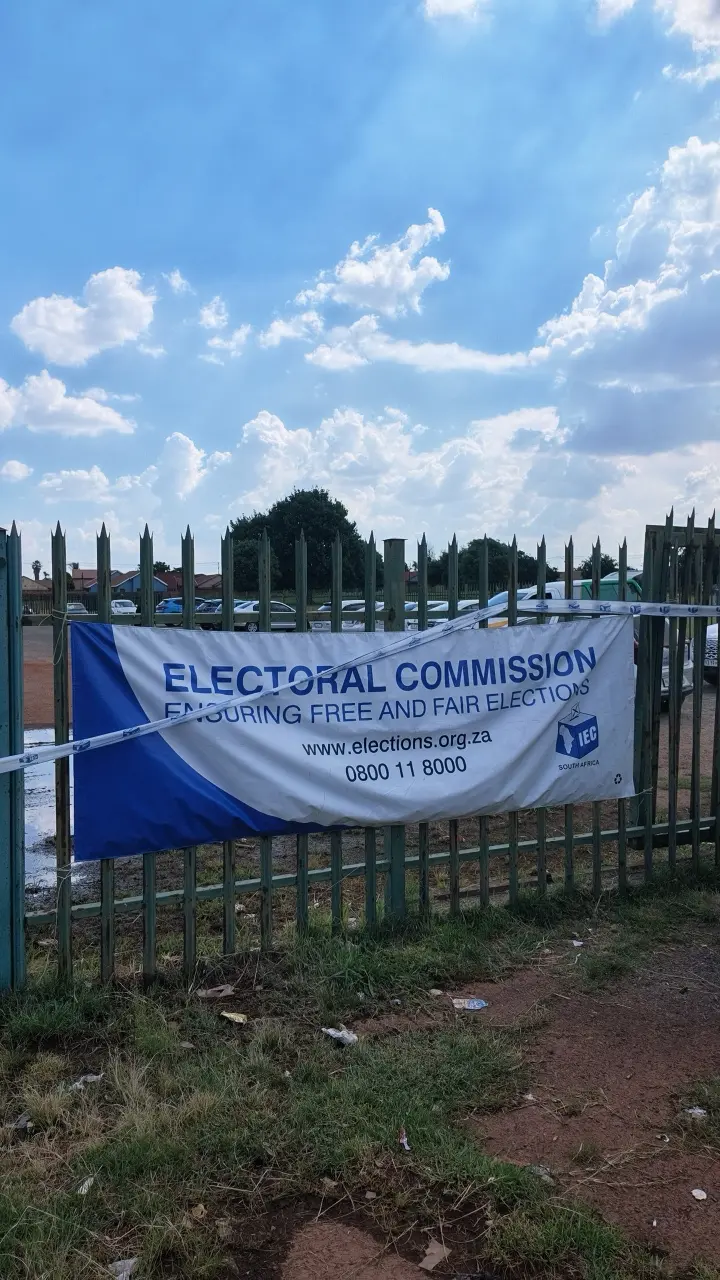
South African voters were overwhelmingly satisfied with the conduct of the 2026 local government elections (LGE) but trust in the Electoral Commission of South Africa (IEC) has continued to decline, according to a preliminary survey by the Human Sciences Research Council (HSRC).
The Election Satisfaction Survey 2026, conducted among 13 198 people who voted on 4 November, found that 81% trusted or strongly trusted the IEC. This was down from 85% in the 2024 national and provincial elections, 89% in the 2021 local government elections and 91% in 2016.
The HSRC noted that while trust in the IEC remained high, it has gradually declined since 2016 “in a general context of declining institutional trust in the country”.
Among the 81% of voters expressing trust, the emphasis was primarily on the IEC’s professionalism and competence in managing elections, the fairness, impartiality and independence of its operations and confidence in the accurate counting of votes and the integrity of electoral procedures, the HSRC said.
It said positive experiences of previous elections and the IEC’s established track record also featured prominently, alongside appreciation for the helpfulness, courtesy and professionalism of electoral officials.
“Other considerations included the orderly and efficient conduct of voting, confidence in ballot secrecy, safety and transparency and the absence of personal experiences or evidence that would give respondents reason to question the Commission’s integrity.”
The HSRC, which was commissioned by the IEC to conduct the survey, said 90% of voters considered the election procedures free and 91% considered them fair. About 95% were satisfied that their votes had remained secret, while 83% were completely or very confident that their votes would be counted accurately.
The survey sampled 300 voting stations across the country and interviewed voters at, and in the vicinity of, the stations. The 13 198 completed interviews represented 88% of the target of 15 000. The report is preliminary, with a fuller version due to be released later.
The most positive assessments concerned the practical experience of voting. Almost all respondents (96%) said voting procedures were easy to understand, while 94% were satisfied with the ballot papers and 96% with the service provided by IEC officials.
Voting was also generally convenient. Most of the respondents (90%) said that it took them about half an hour or less to reach their voting station, including 66% who travelled for no more than 15 minutes.
The remainder either said that it took them between 30 and 60 minutes (8%), or more than an hour (3%). “This is an improvement over earlier major elections, especially the 2009 LGE, when average travel time was significantly higher,” the HSRC noted.
Queue times improved markedly compared with the 2024 elections. More than three-quarters of voters (78%) said they waited no longer than 15 minutes to vote, compared with 60% in 2024. The proportion who waited more than an hour fell from about 11% to 4%.
But the survey found a weaker assessment of officials’ impartiality than of their helpfulness. Although 79% said officials were helpful to a great extent, 65% said they were impartial to that extent. Seven percent said officials were not impartial.
Voters were generally positive about arrangements for people with special needs, although there was greater uncertainty about provisions for some groups.
While 67% believed voting procedures accommodated older people to a great extent, the figure was 53% for partially sighted and blind people, 52% for pregnant women and 50% for voters with babies. Between 16% and 17% of respondents were unsure how well these groups had been accommodated.
Information gaps remained. About 13% of voters said they had too little information about the procedures and a further 13% said they had far too little. Eastern Cape voters were most likely to report insufficient information, while those in the Northern Cape were least likely to do so.
The survey also found that perceptions of political tolerance during election campaigns remained positive. About 86% of voters considered political parties and candidates either very tolerant (63%) or somewhat tolerant (23%), up from 81% in 2011. The proportion who perceived political intolerance fell from 13% to 7% over the same period.
Among the small proportion of respondents who expressed distrust in the IEC, recurring explanations included perceptions of corruption or dishonesty, doubts about vote counting and results, perceived political bias, past controversies and broader distrust of political institutions.
The HSRC stressed that these were voters’ perceptions and allegations, not independently established facts.
The survey also offered a glimpse of what drove voters to the polls. The most frequently cited reason was the belief that their vote made a difference, mentioned by 59% of respondents.
But concerns about the performance of the government were also prominent: 39% cited the need for reliable public services, 38% wanted to improve the economy and 36% said fighting corruption had influenced their decision. Support for a particular political leader or candidate was cited by 22% of voters.
The HSRC said the results showed that confidence in the administration of elections remained resilient, even as trust in the commission had declined over successive elections. The survey found that 96% of those interviewed said they were likely to vote in future elections.
The HSRC cautioned, however, that this reflected the intentions of people who had voted and could not be taken as representative of the wider adult population, including those who did not participate.
Related Topics
Keywords
Related Stories
LOCAL ELECTIONS 2026: MK party takes four KZN municipalities from ANC as governance test looms
The people of KwaZulu-Natal will get the first real taste of the uMkhonto Wesizwe party’s leadership as it looks set to govern a number of municipalities for the first time.

Election fraud case lodged, party demands all Western Cape votes be recounted
A former rugby boss has gone to the police claiming the candidate he voted for was wrongly recorded as getting zero votes, while a political party is demanding a Western Cape-wide recount.
LOCAL ELECTIONS 2026: ActionSA surges in Gauteng metros, taking ANC wards — see where
ActionSA will likely merge as the second-largest party in Tshwane and the third-largest in Johannesburg and Ekurhuleni. See where they’ve grown since 2021.
10 key things to know about Justice Lifu’s judgment affecting ADC, Atiku, By Abdulrahman Abdulaziz
The Atiku camp caused the ADC's current misfortune by treating the party's internal democracy with impunity and hijacking its leadership structures. The post 10 key things to know about Justice Lifu’s judgment affecting ADC, Atiku, By Abdulrahman Abdulaziz appeared first on…

Top Stories
LOCAL ELECTIONS 2026: MK party takes four KZN municipalities from ANC as governance test looms
Election fraud case lodged, party demands all Western Cape votes be recounted

All the latest updates on AI data centers

Shure’s popular podcasting and streaming mic is almost $50 off
LOCAL ELECTIONS 2026: ActionSA surges in Gauteng metros, taking ANC wards — see where

Myles Garrett on track to be activated ahead of Rams Week 9 matchup vs. Commanders

AI stocks climb after trillions wiped from market values

How to watch Serie A: Inter face Como at San Siro after disappointing defeat against AC Milan
Latest
LOCAL ELECTIONS 2026: MK party takes four KZN municipalities from ANC as governance test looms
Election fraud case lodged, party demands all Western Cape votes be recounted
All the latest updates on AI data centers
Shure’s popular podcasting and streaming mic is almost $50 off
LOCAL ELECTIONS 2026: ActionSA surges in Gauteng metros, taking ANC wards — see where
Myles Garrett on track to be activated ahead of Rams Week 9 matchup vs. Commanders
AI stocks climb after trillions wiped from market values
How to watch Serie A: Inter face Como at San Siro after disappointing defeat against AC Milan