Six climate measures could save 1.6 million lives yearly – WHO

Six proven climate and health interventions could prevent 1.6 million deaths annually and generate trillions of dollars in economic benefits if implemented globally, the World Health Organisation (WHO) has revealed.
Join the Premium Times WhatsApp Community For Quick Access To News and Happenings Around You.
The measures, which include heat-health warning systems, access to safe water and sanitation, cleaner household energy and more efficient fossil fuel pricing policies, could generate $3.9 trillion in annual economic welfare benefits and a further $5.4 trillion in fiscal gains.
The WHO disclosed this in a new report titled ‘Global benefits and costs of prioritised actions on climate change and health’, released ahead of the 31st United Nations Climate Change Conference (COP31), where countries are expected to present their climate commitments.
According to the report, the six interventions could prevent one in every 40 deaths globally, based on modelled projections, while avoiding 16.7 billion tonnes of carbon dioxide emissions annually.
The estimated emissions reduction is equivalent to 31 per cent of global annual greenhouse gas emissions, excluding emissions from land use, land-use change and forestry.
The report, which the WHO described as its first comprehensive assessment of the economic and fiscal returns from scaling up the six recommended interventions, highlights the potential health and financial gains of integrating public health considerations into climate policies.
It argues that many health consequences of climate change are preventable through existing solutions, but governments must implement them across health and other sectors that determine people’s health.
Stay Ahead with Premium Times
Follow us on Google News and never miss breaking stories, investigations, and in-depth reporting.
Six interventions
The report identifies six interventions: heat-health warning systems, climate-resilient drinking-water services, basic sanitation services, hygiene and handwashing facilities, cleaner household fuels and technologies for cooking and heating, and efficient fossil fuel pricing policies.
The WHO estimates that five of the interventions could generate $24 in benefits for every $1 invested, with returns expected to be greater in low- and middle-income countries.
Heat-health warning systems are projected to deliver particularly high returns, generating an estimated $835 in benefits for every $1 invested.
The report attributes the high returns to the relatively low cost of expanding existing warning systems and their potential to prevent heat-related illnesses.
Efficient fossil fuel pricing policies, however, are projected to deliver the largest overall gains.
Such policies, including removing inefficient fossil fuel subsidies and appropriately taxing fossil fuels, could prevent 1.2 million deaths annually while generating $3 trillion in economic welfare benefits and $5.4 trillion in fiscal gains.
Health at the centre of climate action
Commenting on the findings, WHO Director-General Tedros Ghebreyesus said the climate crisis was also a health crisis, but many of its consequences could be prevented using existing interventions.
READ ALSO: WHO raises alarm as 75% of diabetes cases in Africa remain undiagnosed
He said expanding proven and affordable interventions could save millions of lives, particularly in countries with the greatest need.
“The climate crisis is a health crisis, but much of the harm it causes can be prevented with tools we already have,” he said.
Mr Ghebreyesus urged governments to place health considerations at the centre of climate action as they prepare for the next round of international climate negotiations.
The WHO said countries were already experiencing record-breaking climate shocks in 2026, investing in measures that protect human health and the environment increasingly urgent.
The health body called on governments, development partners and financing institutions to use the economic evidence to scale up the interventions, noting that they could deliver simultaneous benefits for public health, climate mitigation and national economies.
Share this:
Discover more from Premium Times Nigeria
Subscribe to get the latest posts sent to your email.
Type your email…
Subscribe
Abiodun orders immediate reconstruction of Saje-Elega-Adedotun Road
Fortune Eromonsele
More News
Nigerian lawmakers propose six-month jail term for doctors, nurses who delay emergency treatment
Reps propose fines, licence withdrawal for hospitals that delay emergency treatment
Coalition threatens mass action over Lagos govt’s planned crackdown regarding unlicensed borehole
2027: Makinde unveils presidential manifesto, faults leaders over failures
Many injured, missing as Nasarawa APC presidential rally turns bloody
Nigeria back from brink, but human cost of reforms must be addressed — Sanusi
Related Topics
Keywords
Related Stories
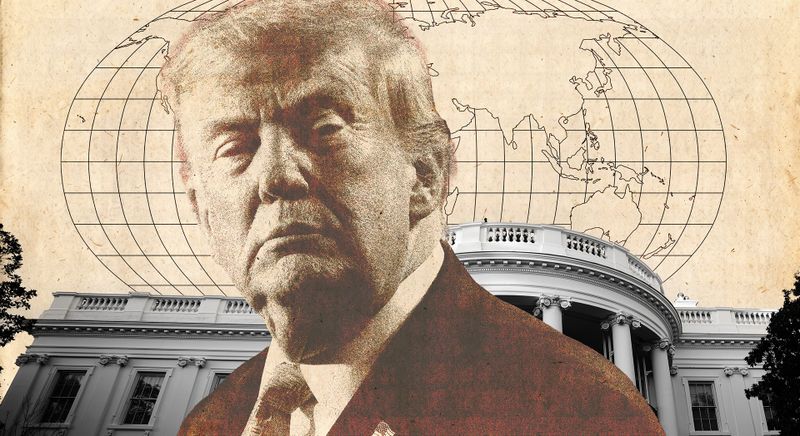
CRACKS IN THE EDIFICE: The night the Maga fever broke and the moral arc bent back towards justice
From Mississippi to Texas, voters rejected Trump’s racial politics, immigration crackdown and billionaire-backed Republicans, reshaping the American political landscape ahead of the 2028 presidential election.
LAW AND DISORDER: Slain Joburg attorney represented PA councillor linked to disputed gang claims
Attorney Nadine Meintjes was shot dead near Eldorado Park alongside a passenger. Police are investigating, while her links to a controversial PA councillor emerge.

Abiodun orders immediate reconstruction of Saje-Elega-Adedotun Road
The governor said the reconstruction was part of his administration’s commitment to upgrading infrastructure and giving Abeokuta, the state capital, a befitting facelift. The post Abiodun orders immediate reconstruction of Saje-Elega-Adedotun Road appeared first on Premium Times…

2027: APC flags off Enugu campaign in Nsukka, vows to deliver Mbah, Tinubu, others
Governor Mbah highlighted his administration's investments in security, infrastructure, education, healthcare, economic development, and revival of moribund assets The post 2027: APC flags off Enugu campaign in Nsukka, vows to deliver Mbah, Tinubu, others appeared first on…

Top Stories

Champions League Power Rankings: PSG hold top spot as Como surge under Cesc Fabregas

Fantasy football Week 9 Start 'Em & Sit 'Em: Jonah Coleman is the talk of the town as his Fantasy stock soars

NFL Week 9 injury report: Micah Parsons returns to Packers practice, Rams lose Jaylen Watson for season

Australia's oldest department store David Jones collapses after 188 years

Como scored nine at Lens, and it's no accident: Inside the project powering Serie A's Champions League stars
CRACKS IN THE EDIFICE: The night the Maga fever broke and the moral arc bent back towards justice

X says its updated web app is way faster

Fantasy football Start 'Em, Sit 'Em WR in Week 9: Luther Burden III, Rome Odunze make a sweet Fantasy duo
Latest
Champions League Power Rankings: PSG hold top spot as Como surge under Cesc Fabregas
Fantasy football Week 9 Start 'Em & Sit 'Em: Jonah Coleman is the talk of the town as his Fantasy stock soars
NFL Week 9 injury report: Micah Parsons returns to Packers practice, Rams lose Jaylen Watson for season
Australia's oldest department store David Jones collapses after 188 years
Como scored nine at Lens, and it's no accident: Inside the project powering Serie A's Champions League stars
CRACKS IN THE EDIFICE: The night the Maga fever broke and the moral arc bent back towards justice
X says its updated web app is way faster
Fantasy football Start 'Em, Sit 'Em WR in Week 9: Luther Burden III, Rome Odunze make a sweet Fantasy duo