SOUTH AFRICAN CONNECTION: How an anglophone education in Durban shaped Fernando Pessoa, giant of European literature
In a world of rising nationalism and narrow identity politics, the writings of the late 19th-century ‘multifaceted giant of European modernism’ Fernando Pessoa and his belief in finding the plurality of self in the plurality of world is a balm for troubled times.
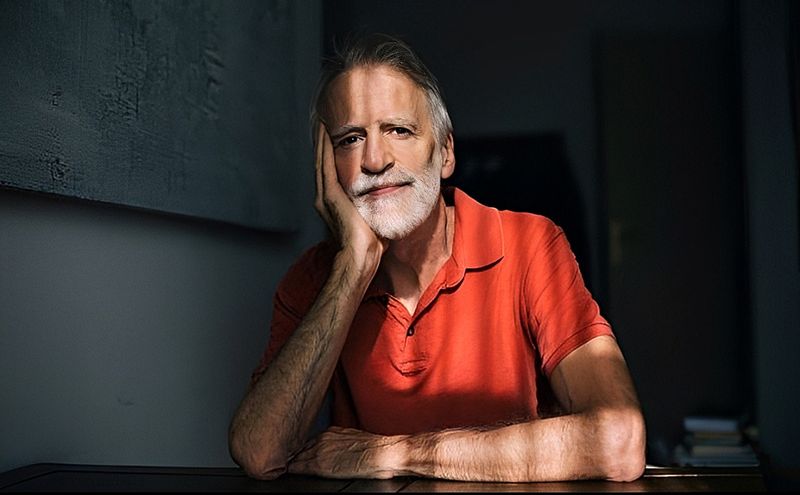
Richard Zenith, author of the monumental Pessoa, a 1,055-page biography of one of Portugal’s most significant poets, writers, thinkers and philosophers, Fernando Pessoa, visited South Africa recently for a local launch of this celebrated work.
Washington-born Zenith, now 70, has lived in Colombia, Brazil, France and, for the past four decades, in Lisbon, as a naturalised, polylingual Portuguese citizen and has dedicated much of his life’s work researching, writing and translating Pessoa.
Zenith is not the only translator, writer or literary critic to grapple with the complexity and legacy of Pessoa (1888-1935), his voluminous, scattered and fragmented writings and how prescient his ideas and writing are in the 21st century.
Zenith’s biography was one of the finalists for the 2022 Pulitzer Prize for Biography and Autobiography, and his translation of Pessoa’s Book of Disquiet, the ultimate anti-novel, clocks in at about 500 pages. He was also the recipient in 2012 of the Pessoa Prize, the most significant award in Portugal for a contribution to culture.
Plurality of selves
Most of us who have fallen for Pessoa’s magic (like this writer) vividly remember the first encounter. Pessoa found then Spanish-speaking Zenith during a university semester in Bogota when the Portuguese boyfriend of a US friend shared what has become one of Pessoa’s most famous poems, The Tobacconist.
“I was flabbergasted,” recalled Zenith who could follow the Portuguese because he was fluent in Spanish.
The poem, written by one of Pessoa’s heteronyms, Alvaro de Campos, immediately beguiled him. It’s opening lines – “I’m nothing. I’ll always be nothing. I can’t want to be something. But I have in me all the dreams of the world” – were “magic”, Zenith said
“It was an anthem of sublime despair with the glorious escape of dreams. This was just magic, I had never read anything like it,” he recalled.
The multi-award-winning scholar, with his cropped grey hair and beard and blue eyes, possesses the impish curiosity demanded by a writer like Pessoa and his heteronyms who possess and play with readers.
Restless speaker
The Book of Disquiet, Pessoa’s lifelong unfinished project, was first published in Portugal in 1982, 47 years after his death in 1935. Zenith used this as a base for an English translation in 1991 and edited a new Portuguese edition in 1998.
Written by another of Pessoa’s heteronyms, Bernardo Soares, the deconstructed novel has no plot, no point and is an existential musing on loneliness, alienation and the dull, everyday thud of routine. This reality, however, is threaded through with grand plans and dreams, mostly for the sake of it.
Pessoa was a voracious intellectual omnivore and read deeply and widely. His life’s mission was to explore and grapple with how beliefs, superstitions, projections, longings, social standing and the economy shape individual realities and world views.
To accomplish this he created these heteronyms – distinct literary alter-egos with their own lives and biographies, writing styles and political and philosophical views.
Shakespeare’s mirror
It was the young Pessoa’s encounter with Shakespeare during his time in Durban between 1896 and 1905 – first attending St Joseph’s on West Street, run by Irish Catholic nuns, moving on to Durban Boys High in 1899 for an imperial education in English before attending the Commercial School – that opened his world.
The teenaged Pessoa won the prestigious Queen Victoria Prize for an entrance exam essay for the University of Good Hope in 1903 and published his first poem in English in Durban under the early heteronym, Charles Robert Ano. More prizes followed, for French and other writing.
Pessoa found in Shakespeare a mirror for his own philosophy of depersonalisation and the creation of distinct, fully realised authorial selves.
The 10-year-old with the precocious intellect lost himself in English-language classics and by the time he returned to his beloved Lisbon at the age of 17, it had indelibly marked his future thinking and style of writing.
Pessoa has since reached posthumous fame across the globe with translations of his work in French, German, Spanish, Italian, Dutch and English.
No comfort zones
The sensitive Portuguese boy with the sad brown eyes arrived in Durban at the age of seven with his mother and stepfather who had been appointed the Portuguese consul in the port.
It was this traumatic dislocation and upheaval from the familiar streets of Lisbon to distant shores that had jolted him out of his comfort zone on all fronts, unlike his contemporaries who remained in Portugal. Also the death of his father and his younger brother, Jorge, in infancy impressed on Pessoa the impermanence of life.
In South Africa he was confronted with different codes and languages, Zulu and the dominant English. Durban was a scraggly little town in 1896 with only a few main streets, nothing like seductive Lisbon with its trams, narrow streets, bars and coffee shops.
Paul Mazery, an Irish poet and historian who was born in Durban, wrote that Pessoa had studied English like a mother tongue.
“The literary strength of the English, considered as the key to an entire cultural influence, was to distinguish Fernando Pessoa from his contemporary Portuguese poets, moulded with cultural heritage of a southern European classical education.
“Pessoa’s familiarity with Shakespeare, his literary idol, Milton, Byron, Shelley and Keats affected his creative sensibility,” Mazery noted.
Entering adulthood, Pessoa – who remained a behatted, bespectacled and besuited bachelor – had already entered the portals of plurality while containing a singular self. And from this distant literary shore, his works continue to beguile.
Language as a key
While Pessoa found the literary key of the heteronyms in order to embody a multitude of voices and views, it was his early instruction in English that gave his work a different frequency and texture.
Writing in The Times Literary Supplement in 2022, Cláudia Pazos Alonso noted that Pessoa is “the multifaceted giant of European modernism”.
She described Zenith’s biography as a “tour de force” which sets out Pessoa’s life in its fullest context “with its thought-provoking portrayals of Europe’s scramble for Africa, the racial tensions simmering in turn-of-the-century Durban, the radical thinking of Mahatma Gandhi, the Boer wars, and even the appearance in Durban of ‘a young war correspondent named Winston Churchill’”. DM
Originally published and reported by Daily Maverick.
Read original coverage on Daily MaverickRelated Topics
Keywords
Related Stories
WATCH: Seven North Coast communities oppose proposed cemetery and crematorium
Residents from seven La Mercy-area communities have objected to a proposed 33,800-grave memorial park and six-unit crematorium, citing consultation, traffic, LPG safety and emissions concerns.

PKTT arrests suspected hitman in Aubrey Tsengwa murder case
A 44-year-old man suspected of being a hitman has been arrested in connection with the murder of former Knysna mayor Aubrey Tsengwa.

Bread shortage threatens to plunge more Sudanese into hunger
Nearly three and a half years into Sudan's unrelenting war, soaring costs and a nosediving currency have left people like Sawsan Mahmoud struggling to afford even the most basic staple – bread.

Donald Trump says elections were 'giant step back in history' for the US
President Donald Trump vowed to return “bigger and stronger” after Democrats won control of the US House of Representatives in the midterm elections, which he described as a “giant step back” for the country.

Top Stories

Brobbey wins Colwill battle - player ratings for Sunderland's win over Chelsea

Who was back to his best? Player ratings for Crystal Palace v Liverpool

Apple’s M5 MacBook Air is down to its lowest price since July
WATCH: Seven North Coast communities oppose proposed cemetery and crematorium
PKTT arrests suspected hitman in Aubrey Tsengwa murder case
Bread shortage threatens to plunge more Sudanese into hunger
Donald Trump says elections were 'giant step back in history' for the US

FIREWORKS RISKS: Guy Fawkes fireworks drive Delft dog Max to a horrific death
Latest
Brobbey wins Colwill battle - player ratings for Sunderland's win over Chelsea
Who was back to his best? Player ratings for Crystal Palace v Liverpool
Apple’s M5 MacBook Air is down to its lowest price since July
WATCH: Seven North Coast communities oppose proposed cemetery and crematorium
PKTT arrests suspected hitman in Aubrey Tsengwa murder case
Bread shortage threatens to plunge more Sudanese into hunger
Donald Trump says elections were 'giant step back in history' for the US
FIREWORKS RISKS: Guy Fawkes fireworks drive Delft dog Max to a horrific death