Stem cell research from umbilical cord tissue raises hopes for chronic disease treatments | Africa Front
Via IOL South Africa
Stem cell research from umbilical cord tissue raises hopes for chronic disease treatments
<h2>Disease</h2>
<p>
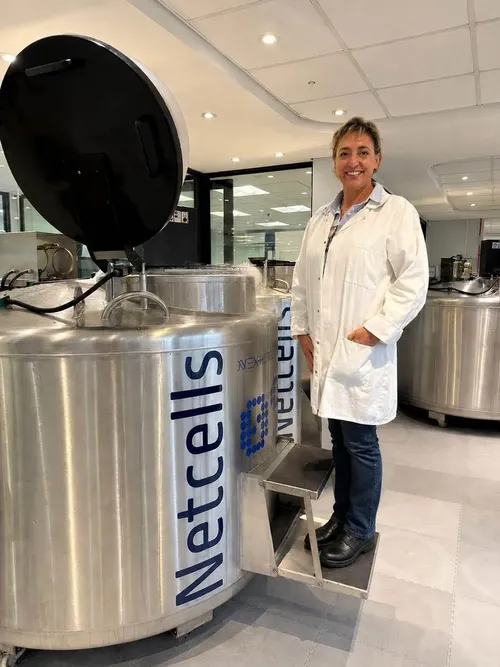
Dr Yvonne Holt, Chief Medical Officer at Next Biosciences, next to a cryogenic tank used to safely store cord blood and cord tissue for future therapeutic and regenerative medicine applications
</p>
<p>Image: Supplied.</p>
<p>SOUTH African patients are increasingly turning to regenerative medicine and cell-based therapies derived from umbilical cord tissue in the hope of addressing chronic, degenerative and immune-related conditions that can be difficult to treat with conventional medicine.</p>
<p>Once considered experimental, these therapies are now the subject of expanding clinical research globally. The field of regenerative medicine focuses not only on managing symptoms, but on exploring whether the body’s own biological processes can be supported to repair and regenerate damaged tissue.</p>
<p>At the centre of this work are mesenchymal stem cells (MSCs), which are found in umbilical cord tissue collected at birth. Researchers say early clinical studies and medical experience suggest these cells may play a role in reducing inflammation and supporting tissue repair, although most applications remain in the research or clinical trial phase rather than standard medical care.</p>
<p>According to Dr Yvonne Holt, Chief Medical Officer at Next Biosciences, a key development in the field is the understanding that not all stem cells serve the same biological function.</p>
<p>“Cord blood and cord tissue are both rich in precursor-type cells, yet they serve very different roles,” she said. “Cord blood contains hematopoietic stem cells, which are already widely used in established treatments for blood and immune system disorders. Cord tissue, however, contains mesenchymal stem cells, which are being explored in regenerative medicine for their potential to support tissue repair, reduce inflammation and help regulate immune responses.”</p>
<p>She adds that MSCs are often described as “shape-shifting” cells because of their ability to develop into different types of connective tissue in laboratory and research settings. These include cartilage, bone, tendon, ligament, muscle, skin and, in some research contexts, nerve-related tissue pathways.</p>
<p>For chronic pain sufferers, particularly those with arthritis and degenerative joint conditions, regenerative medicine is being studied for its potential to support cartilage health and reduce inflammation in affected joints. However, outcomes vary and remain under investigation, and these therapies are not yet standard practice across most hospitals.</p>
<p>Holt says some early clinical experience suggests that MSC-based approaches may help reduce inflammation and support tissue repair in certain patients with chronic musculoskeletal conditions, including back, hip and knee pain. However, she stresses that these are emerging therapies and results cannot be guaranteed.</p>
<p>Some South African families who have banked cord tissue with Next Biosciences are now engaging with emerging developments in regenerative medicine. In certain cases, treatment may also involve donor-derived mesenchymal stem cells sourced from placental tissue, depending on clinical eligibility and regulatory approval.</p>
<h2>Potential benefits for autism</h2>
<p>Holt says research is also exploring potential applications in neurological and developmental conditions, including autism. However, she stresses that stem cell therapies are not approved treatments for autism and remain experimental in this context.</p>
<p>“Children and young adults with neurodivergent conditions such as autism are being studied in early research settings,” she says. “Some reports suggest improvements in communication and daily functioning when stem cell-based interventions are combined with structured behavioural and lifestyle support, but this remains an evolving area that requires further rigorous clinical study.”</p>
<p>She adds that in some observational cases, individuals who were previously non-verbal or struggled with daily routines have shown improved communication and social engagement when such therapies are combined with broader therapeutic support. However, she emphasises that outcomes vary significantly between patients.</p>
<h2>Use in sports medicine</h2>
<p>Adults are also being included in regenerative medicine research, particularly those with long-term degenerative conditions. Holt cites one example of a patient with severe neck pain linked to degenerative disc disease who reportedly experienced significant relief within weeks following targeted injection therapy using mesenchymal stem cells derived from stored familial cord tissue.</p>
<p>She notes that while such cases are encouraging, they are individual outcomes and cannot be generalised across patients.</p>
<p>Some regenerative therapies are also being explored in sports medicine and orthopaedics. Holt says elite athletes are often associated with regenerative or biologic treatments used to support recovery from injury, naming Tiger Woods, Rafael Nadal and Cristiano Ronaldo as examples frequently discussed in this context. However, she notes that specific medical details are not always publicly confirmed.</p>
<p>Dr Wian Stander, a South African practitioner working in regenerative medicine, says these therapies typically involve minimally invasive procedures delivered through intravenous infusion or image-guided injections into affected areas.</p>
<p>“When performed in appropriate clinical settings, these procedures are generally well tolerated,” he says. “Regenerative medicine is an evolving field, but we are seeing increasing interest in its clinical application.”</p>
<h2>A growing field in clinical research</h2>
<p>Globally, more than 1 900 cord tissue units have reportedly been released for use in clinical trials, with more than half being applied in regenerative medicine research involving conditions such as cerebral palsy, brain injuries, autism and autoimmune disorders. Early findings in some studies suggest potential benefits in certain cases, although results remain preliminary and under investigation.</p>
<p>In South Africa, access to regenerative therapies is expanding, with early-stage clinical trials now underway. However, MSC-based treatments are still not part of standard medical care in most healthcare settings.</p>
<p>While stem cells can also be obtained later in life from bone marrow or adipose (fat) tissue, researchers say cord tissue collected at birth may offer advantages in laboratory and clinical research contexts, including higher biological activity.</p>
<p>“Cells collected at birth are considered more youthful and adaptable in research settings,” says Dr Holt. “They also avoid the need for more invasive collection procedures later in life.”</p>
<p>Cord tissue-derived MSCs are also described in research literature as having low immunogenicity, meaning they are less likely to trigger immune rejection. This has led to interest in their potential use in both autologous (self-derived) and donor-matched therapies, subject to strict regulatory controls.</p>
<p>Next Biosciences has introduced flexible cord blood and cord tissue banking options, allowing parents to store these biological materials separately. Cord blood banking is already associated with established treatments for more than 80 blood-related diseases, while cord tissue banking is being explored for broader applications in regenerative medicine. Costs for cord tissue banking start from approximately R10 000, depending on the service package.</p>
<h2>Looking ahead</h2>
<p>“South Africa has the potential to play a meaningful role in regenerative medicine research,” says Holt. “But it is important that people understand what is scientifically established, what is still being studied, and what remains experimental.”</p>
<p>She adds that while these therapies are not yet part of routine medical practice, they are increasingly being viewed as part of a long-term shift in how medicine may approach healing and disease in the future.</p>
<p>“Ultimately, it’s about expanding future options for patients and families,” she says. “We may not need these therapies today, but they could become important in how we treat disease and support recovery in years to come.”</p>
AI is set to end medical and cosmetic testing since accurate models can now predict drug toxicity, organ damage and chemical hazards that experiments could never do before. And it is an opportunity that Africa should embrace.
He said the federation now has sufficient qualified instructors to conduct CAF B coaching courses in states, zones and local government areas The post NFF to decentralise coaching education – Gusau appeared first on Premium Times Nigeria.