Sultan Muhammadu Sa’ad Abubakar III: Twenty years of a reign shaped by destiny, By Samuel Aruwan

Today, 2 November 2026, Sultan Sa’ad marks exactly twenty years on the throne. He is the Sultan with the longest reign in this century and, by commonly accepted reign dates, ranks third in length of reign in the history of the Sultanate. During 2027, he is expected to surpass Sultan Muhammadu Bello and move into second place, behind only his father.
Today, 2 November 2026, Sultan Sa’ad marks exactly twenty years on the throne. He is the Sultan with the longest reign in this century and, by commonly accepted reign dates, ranks third in length of reign in the history of the Sultanate. During 2027, he is expected to surpass Sultan Muhammadu Bello and move into second place, behind only his father.
When little Sa’ad, the prince who would become Sultan Muhammadu Sa’ad Abubakar III, was born on Friday, 24 August 1956, to Sultan Siddiq Abubakar III and Hajiya Fadimatu Binta Abubakar, neither his father, who was 53, nor his mother nor anyone in the Sultanate could have known what Allah had written for him. No one could have foreseen that he would become a military officer, serve across Nigeria and beyond, and return decades later as the twentieth Sultan of Sokoto. As he marks twenty years on the throne, the course of that journey can be seen more clearly. The throne was not the visible destination of his childhood. That knowledge belonged to Allah alone.
Join the Premium Times WhatsApp Community For Quick Access To News and Happenings Around You.
If any of Sultan Abubakar III’s sons appeared close to the throne, it was Sultan Sa’ad’s much older brother, Sultan Muhammadu Maccido, who was 30 when Sultan Sa’ad Abubakar III was born. Sultan Maccido became their father’s trusted aide and one of the principal contenders when Sultan Abubakar III died in 1988. Destiny first turned elsewhere with the emergence of Sultan Ibrahim Dasuki. Eight years later, Sultan Maccido was appointed Sultan. He reigned for a decade before dying with his son, Senator Badamasi Maccido, and grandson in the ADC Airlines Flight 53 crash of 29 October 2006.
Sultan Sa’ad’s mother lived to witness his accession, a blessing denied his father and brother. Hadijatu Kubbura died months before Sultan Abubakar III became Sultan in 1938, while Sultan Maccido’s mother, Hauwa, died before his accession in 1996. Sultan Abubakar III was 35 when his paternal uncle and guardian, Sultan Hassan Dan Mu’azu, died on 31 May 1938. Still grieving both his mother and the uncle who had raised him and prayed that he would succeed, he became the seventeenth Sultan on 17 June 1938.
Sultan Sa’ad did not rise through the conventional hierarchy of palace and district titles, but he was never a stranger to the Sultanate. He witnessed at close quarters how his father administered its affairs and accompanied him on journeys to Maiduguri, Kaduna and elsewhere, observing his engagement with governments, traditional rulers, religious authorities and diverse communities. His apprenticeship began at his father’s side and continued through national service.
His entry into the Army was unexpected. After performing well in his West African School Certificate examination, he appeared destined for further study. Soldiering was not his youthful ambition, and he had not joined Barewa College’s Student Cadet Force. His direction changed after General TY Danjuma visited Sokoto and urged Sultan Abubakar III to encourage educated northern youths to join the Army after the Civil War. Deciding that the response should begin at home, Sultan Abubakar III ensured that seven eligible young men from his household applied to the Nigerian Defence Academy (NDA). All sat the entrance examination, three reached the interview stage, but only Sultan Sa’ad succeeded.
He entered the NDA on 30 June 1975 as a member of the 18th Regular Combatant Course and was commissioned a second lieutenant on 17 December 1977. Posted to the Armoured Corps, he held command, operational, staff and diplomatic appointments, including service in Chad and Sierra Leone. He rose to brigadier general and served as Nigeria’s Defence Adviser to Pakistan. The prince who left Sokoto returned as a commander, peacekeeper and diplomat.
Following Sultan Maccido’s death, Sultan Sa’ad hurried from Jos to Sokoto to join the royal family in receiving condolences. Nothing publicly suggested that he was returning to seek the throne. The contenders included older traditional titleholders and public servants from distinguished branches of the ruling family. His military career had kept him outside the traditional hierarchy, making his selection surprising to many. On Thursday, 2 November 2006, the grieving younger brother was announced as Sultan.
Stay Ahead with Premium Times
Follow us on Google News and never miss breaking stories, investigations, and in-depth reporting.
He was formally installed and presented with the staff of office on Saturday, 3 March 2007. The ceremony drew President Olusegun Obasanjo and traditional rulers from across Nigeria. Sultan Sa’ad renewed his pledge to uphold equity, fairness and justice, moving from military command to moral leadership sustained by credibility, restraint and persuasion.
When Sultan Sa’ad ascended the throne, several revered monarchs who had interacted with Sultan Abubakar III were still reigning. They included Emir Ado Bayero of Kano, Emir Shehu Idris of Zazzau, Shehu Mustapha Umar El Kanemi of Borno, Lamido Aliyu Mustapha of Adamawa, Oegwam Oegworok Gwamna Awan, Attah Aliyu Obaje of Igala and Aku Uka Shekarau Angyu Masa Ibi Kuvyon II of Wukari. Sultan Sa’ad engaged them in his own right, while their memories of his father provided a living connection between the two reigns. Emir Ado Bayero and Shehu Mustapha were among the rulers who attended his formal installation in 2007.
Two decades later, Sultan Sa’ad occupies the senior position once held by those older monarchs. Rulers who came to their thrones after him include Emir Umar Faruq Umar of Daura, Emir Abdulmumini Kabir Usman of Katsina, Oegwam Oegworok Ufuwai Bonet, Shehu Abubakar Garbai El Kanemi of Borno, Lamido Muhammadu Barkindo Aliyu Mustapha of Adamawa, Emir Rilwanu Suleiman Adamu of Bauchi, Emir Muhammadu Sanusi II of Kano, Emir Abubakar Shehu Abubakar III of Gombe, Emir Ahmed Nuhu Bamalli of Zazzau, Attah Matthew Alaji Opaluwa of Igala and Aku Uka Manu Ishaku Ada Ali of Wukari. Sultan Sa’ad has become a dean and senior reference point among them, offering experience, institutional memory and counsel. The prince who sat among rulers who knew his father now guides a younger generation of monarchs.
What appeared unplanned was preparation by another route. Sultan Sa’ad carried an established philosophy of leadership into a new age. During the upheavals of 1966, Sultan Abubakar III shuttled between Kaduna and Lagos, consulting leaders and helping to calm the country while mourning his kinsman and counsellor, Sir Ahmadu Bello. He condemned violence, discouraged reprisals and opposed taking the law into private hands. In his broadcast of 17 June 1966, he reassured frightened communities, asked people from other provinces not to leave the North and invited those who had fled to return. He deployed his moral authority in defence of peace and national unity.
Sultan Abubakar III’s accommodation of religious difference was also evident in his dealings with Christian missions. In “Sir Siddiq Abubakar III, 17th Sultan of Sokoto,” Alhaji Shehu Malami devotes a section to those relations. Mukhtar Umar Bunza and Jamilu Shehu provide an example in their 2018 study, “Sudan Interior Mission: An Evangelical Operation for a Unique Task in Northern Nigeria to 1960.” Drawing on a colonial record preserved at the National Archives, Kaduna, they state that when Christian boys began attending the Sokoto Native Authority School, Sultan Abubakar III paid for their Bibles. The gesture, entirely consistent with his Islamic convictions, reflected his willingness to accommodate the religious needs of Christians under his authority.
His openness was equally evident across ethnic lines. In “Indigeneity, Ethnicity and Federalism,” published in “Transition Without End,” Daniel C. Bach recounts the story of Alhaji Mamman Dike, known as Deke, an Igbo man born in Asaba. Other accounts identify him as Dike Okwuosa. After bringing the first motorcar to the Native Authority workshop during the reign of Sultan Muhammadu Maiturare, from 1915 to 1924, Deke entered palace service and served successive Sultans. Sultan Abubakar III valued him because “he could keep secrets,” made him his most trusted servant and entrusted him with the keys to his private apartments. Deke married two Hausa women, had eleven children, remained in Sokoto throughout the Civil War and died there on 22 May 1990. His life showed how trust, loyalty and belonging could transcend ethnic origin.
The tradition continued with Sultan Muhammadu Maccido, who maintained a close friendship with Chief Joe Ifedobi, the Okosisi of Akpo. Published recollections state that Chief Ifedobi drove him to the airport shortly before his appointment as Sultan was announced in 1996. Their friendship endured until Sultan Maccido’s death in 2006.
Sultan Sa’ad has carried that inheritance into a different age. His father taught that faith, education, productive work, justice, security and social welfare belonged together, and that material progress without discipline, tolerance and humility was incomplete. Sultan Sa’ad has applied those principles in democratic Nigeria, working with Muslim and Christian leaders, governments, security authorities and communities across ethnic and regional boundaries, despite exercising no executive power.
His twenty years have spanned the administrations of Presidents Olusegun Obasanjo, Umaru Musa Yar’Adua, Goodluck Jonathan, Muhammadu Buhari and Bola Ahmed Tinubu. If Sultan Abubakar III preserved the Sultanate through colonial rule, independence, coups and eight federal administrations, Sultan Sa’ad has sustained its moral authority through terrorism, banditry, kidnapping, violence between farmers and herders, communal conflict and political division. Like his father in the 1960s, he has not been absent from Nigeria’s most difficult national conversations.
He has repeatedly condemned Boko Haram, banditry and violence committed in the name of religion. Following the killing of Deborah Samuel in Sokoto in May 2022, the Sultanate Council condemned the act as unjustifiable and demanded that the perpetrators face justice. The principle was unmistakable. No allegation permits a mob to become accuser, judge and executioner. Every grievance must be subjected to the law, irrespective of the religion of the accused or the victim.
My encounters with Sultan Sa’ad span nearly two decades. I began covering him as a journalist in 2007 at meetings of the Northern Governors’ Forum, the Northern Traditional Rulers Council and Jama’atu Nasril Islam. I also recorded and reported his BBC and VOA Hausa interviews, particularly on security. Our paths crossed again in 2015 and continued throughout my decade of service in different capacities in the Kaduna State Government. That contact revealed the consistency of his concern for peace, security, religious harmony and national unity.
His campaign for peace has also travelled abroad. I was with Sultan Sa’ad at the 2022 International Ministerial Conference on Freedom of Religion or Belief in London, where he joined religious leaders, rights advocates and government representatives in advancing religious tolerance. As President General of the Nigerian Supreme Council for Islamic Affairs and joint chairman of the Nigeria Inter Religious Council, he has worked with successive leaders of the Christian Association of Nigeria. The armoured officer now influences through consultation, restraint and persuasion.
The anniversary carries a rare historical distinction. Sultan Abubakar III’s reign of more than fifty years remains the longest in Sokoto’s history, while Sultan Muhammadu Bello ruled for approximately twenty and a half years in the nineteenth century. Today, 2 November 2026, Sultan Sa’ad marks exactly twenty years on the throne. He is the Sultan with the longest reign in this century and, by commonly accepted reign dates, ranks third in length of reign in the history of the Sultanate. During 2027, he is expected to surpass Sultan Muhammadu Bello and move into second place, behind only his father.
After twenty years on the throne, Sultan Sa’ad stands at the intersection of palace and barracks, mosque and interfaith table, inherited authority and democratic citizenship. Events he did not arrange redirected his life. His father’s response to General Danjuma’s appeal took him into the Army. Military service prepared him for unforeseen responsibilities. His brother’s death brought him home to mourn, only for the kingmakers to entrust him with the Sultanate.
The child whose future only Allah knew served at home and abroad before returning to continue an old legacy in a democratic era. What seemed unplanned was destiny unfolding in its appointed time.
Allah Ya ja zamanin Amirul Muminin!
Samuel Aruwan is a postgraduate student at Ahmadu Bello University, Zaria.
Share this:
Discover more from Premium Times Nigeria
Subscribe to get the latest posts sent to your email.
Type your email…
Subscribe
TRIBUTE: Chief C.O. Adebayo: Remembering a true hero one year after
Dakar 2026 YOG: Kuti bounces back with victory over Tunisian opponent
Samuel Aruwan
More News
₦70k transport allowance: Relief for some, questions for all, By Posi Olatubosun
The draft Nigeria Economic Policy Framework and the necessity of fiscal discipline, By Uddin Ifeanyi
EDITORIAL: 2027: Voting candidates of popular choice, not by threats
Toluwanisings’ death and social media prosecutors, By Festus Adedayo
Decoupling Sovereignty Index (5): How decoupling reinforces itself, By Max Amuchie
Article of Faith: Ways of the Kingdom of God (1), By Femi Aribisala
Related Topics
Keywords
Related Stories
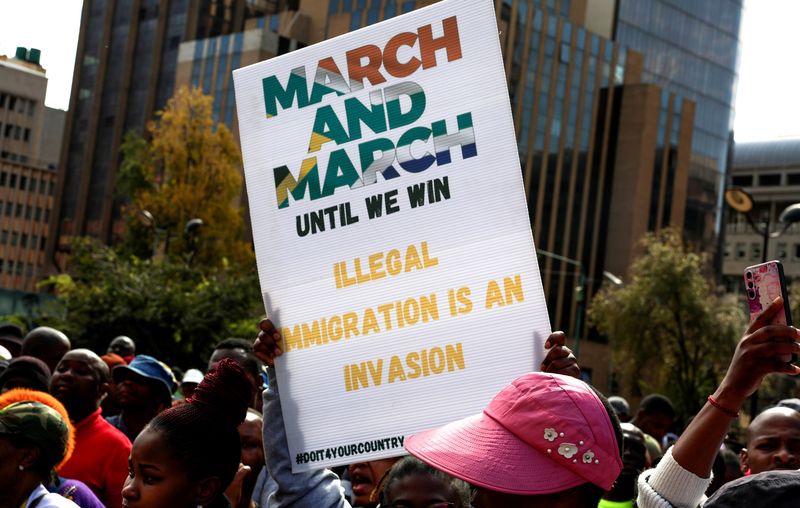
DIGITAL POLITICS OP-ED: The anti-foreigner movement squares up to the state in run-up to elections
From xenophobic campaigning to farm attacks and coordinated influencer messaging, political factions sharpen their attacks on the government and rivals before the 4 November local elections.
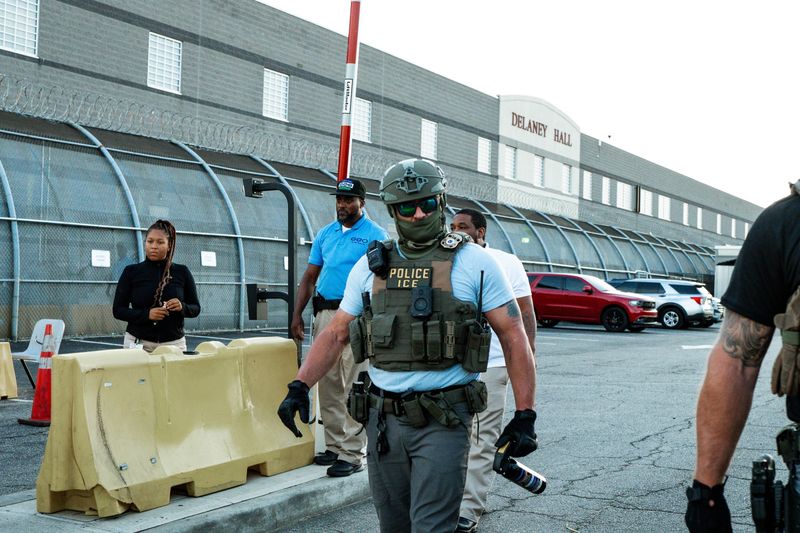
Afghanistan asks US to act responsibly on deporting Afghan immigrants back home
The Afghan Taliban government asked the United States to act responsibly when deporting Afghan immigrants back home, the Afghan foreign ministry said on Monday, adding that Kabul was prepared to engage constructively with Washington on the issue.
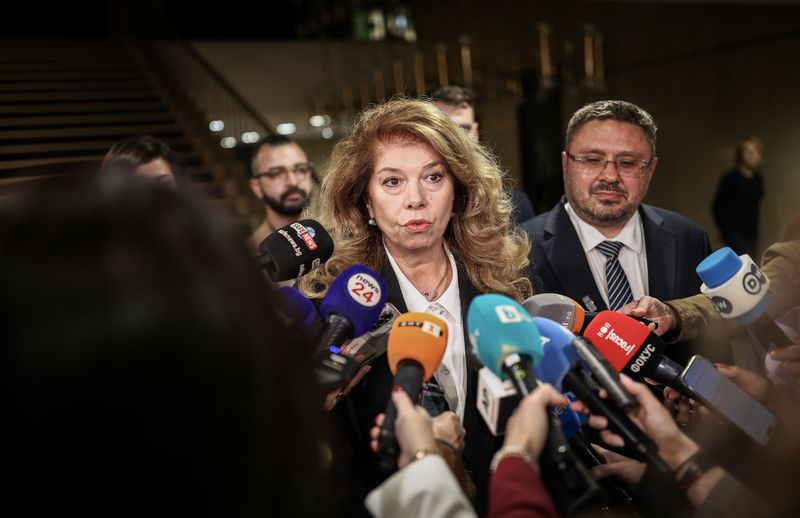
Bulgaria’s Iotova wins presidential runoff, near-final results show
Bulgaria's acting President Iliana Iotova won the presidential runoff election, near-final results from the Central Election Commission showed on Monday, becoming the country's first elected female head of state amid low voter turnout.
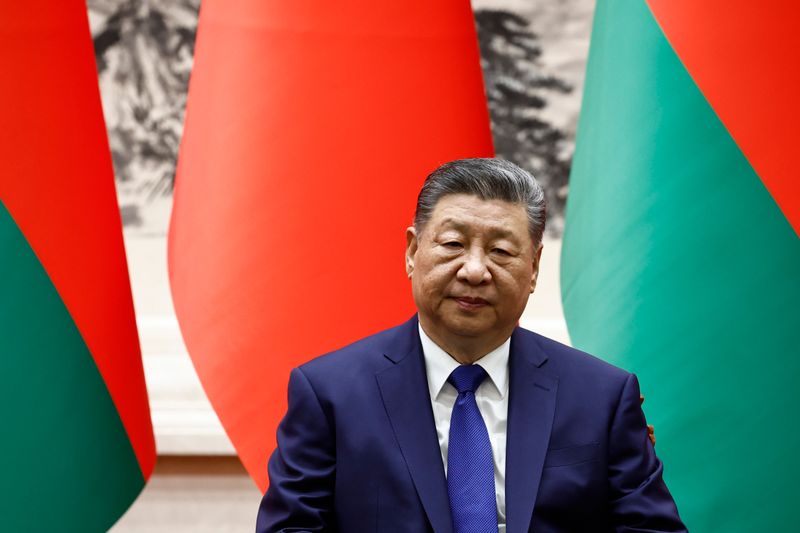
China’s Xi says Middle East should not become battleground for great power rivalry
The Middle East and Gulf region should not become a battleground for great-power rivalry and China is willing to work with Arab nations to achieve lasting peace, Chinese President Xi Jinping told Oman's sultan on Monday
Top Stories
DIGITAL POLITICS OP-ED: The anti-foreigner movement squares up to the state in run-up to elections
Afghanistan asks US to act responsibly on deporting Afghan immigrants back home
Bulgaria’s Iotova wins presidential runoff, near-final results show
China’s Xi says Middle East should not become battleground for great power rivalry

PZ Cussons shareholders approve N9.926bn dividend payout
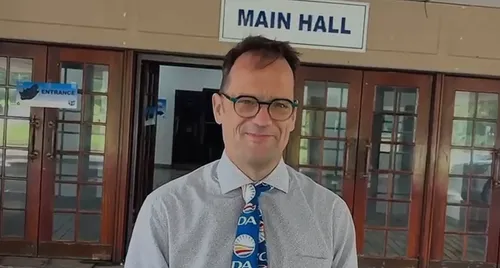
Martin Meyer urges KZN special voters to turn out for local elections
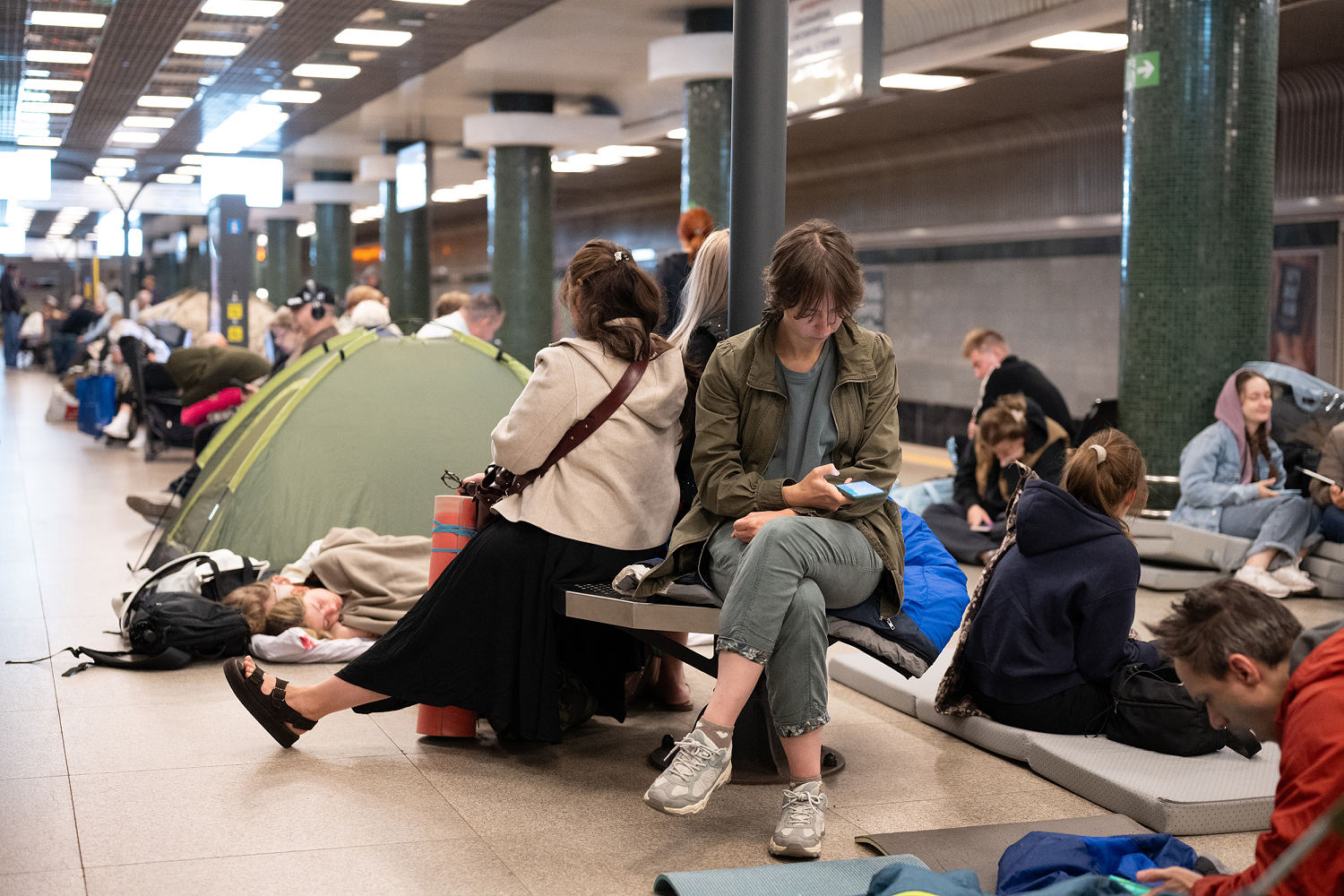
Fake alerts warn of nuclear danger as Ukraine and Russia report emergency app hacks
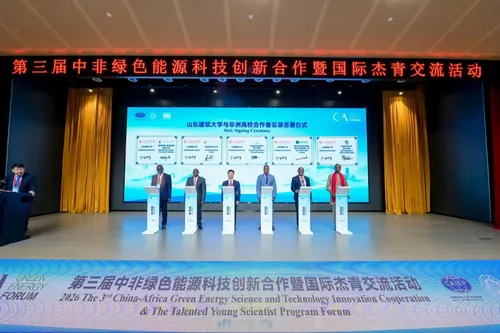
China-Africa green energy forum strengthens research ties in Jinan
Latest
DIGITAL POLITICS OP-ED: The anti-foreigner movement squares up to the state in run-up to elections
Afghanistan asks US to act responsibly on deporting Afghan immigrants back home
Bulgaria’s Iotova wins presidential runoff, near-final results show
China’s Xi says Middle East should not become battleground for great power rivalry
PZ Cussons shareholders approve N9.926bn dividend payout
Martin Meyer urges KZN special voters to turn out for local elections
Fake alerts warn of nuclear danger as Ukraine and Russia report emergency app hacks
China-Africa green energy forum strengthens research ties in Jinan