The Backstory: Dancing in Zimbabwe
Taking a break from photographing a family for the World Food Programme (WFP), I stood outside their home in Zimbabwe’s second-largest town of Bulawayo, lost in thought. In these moments, I reflect on the stories unfolding before me, taking mental notes while savoring a quiet moment and a banana.
Suddenly, laughter erupted, snapping me back to reality. I turned to see twenty-one-year-old Preacher dancing with abandon, eyes alight with joy.
Preacher is the eldest son of Edith Ndebele, a single mother of four who makes a living selling peanut butter she makes at her small business. The family shares a modest two-bedroom flat in a low-income neighborhood where opportunities are scarce.
Despite their challenges, the family is close-knit, their bond evident in the playful banter between Ndebele and her children. The youngest, four-year-old Teboho, whom Ndebele's business, TebuTebu, is named after, especially enjoys his mother's peanut butter.
Visiting their home during a content gathering mission of a WFP-supported urban resilience program, I was heartened to learn how Ndebele received training and assistance to launch her micro-enterprise. She has since hired workers and expanded her business, and now chairs her town's entrepreneurs' association.
“My business means a lot to me,” Ndebele told me. “It means building a better future for my children, better than the life I have lived.”
After rebounding from the economic fallout of COVID-19, Ndebele’s business is now struggling with the financial impact of Zimbabwe’s 2024 drought that decimated crops and deepened hunger. Inflation remains a hurdle, but she can still afford her children's education - including a special school for Preacher, who has cerebral palsy.
Witnessing Preacher's carefree dance, I raised my camera. He was lost in his own world, clicking his fingers, radiating joy. I was captivated.
As a humanitarian photographer, I've spent years documenting the lives of those facing hardship. Some of the kindest people I've encountered are those I photograph - often people living on far less than I. Yet, they offer me food, shelter, and genuine well wishes.
My work is a constant exchange. I capture their realities, fulfilling my role as a photographer. But they, in turn, offer me a profound gift: a shifted perspective, a deeper understanding of the human spirit.
Preacher, dancing with such unburdened joy, reminded me of the simple power of being present in one's own body, a lesson I, someone who can't dance, deeply appreciate.
He embodies what I cherish most about my work: witnessing moments of joy, resilience, and the unwavering spirit of those who face adversity with grace.
Now is the
time to act
Originally published and reported by UN World Food Programme.
Read original coverage on UN World Food ProgrammeRelated Topics
Keywords
Related Stories
NEW: Zimbabwe advances AIIB membership bid following Prof Ncube’s high-level meeting in Beijing
Harmony Agere A delegation from the Ministry of Finance, Economic Development and Investment Promotion, led by Professor Mthuli Ncube, today held a meeting with the Asian Infrastructure Investment Bank (AIIB)…

Rufaro Marketing shifts focus from beerhalls to real estate development
Obey Musiwa Herald Reporter Rufaro Marketing, the Harare City Council-owned company historically known for operating beerhalls, has unveiled an ambitious turnaround strategy aimed at transforming the entity into a modern…

Bosso players owed one month salary, four winning bonuses
Sikhumbuzo Moyo, smoyo@chronicle.co.zw IT has been established that Highlanders Football Club players are owed one month’s salary for May and four winning bonuses. The Bulawayo giants’ dressing room is in turmoil,…

Ebola cases surge across DRC and Uganda as death toll passes 200
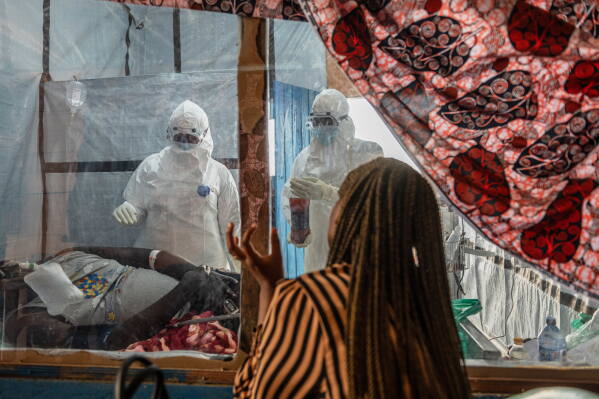
Story by Abigirl Tembo, Health Editor THE Ebola outbreak in the Democratic Republic of Congo (DRC) and Uganda has claimed more than 200 lives within its first month, with health authorities warning that the situation remains far from under control. According to the Africa…
Top Stories

Woman says Al Fayed's brother drugged and sexually abused her at Highland estate

NFL Week 9 overreactions: Joe Burrow or Jordan Love for MVP? Shedeur Sanders deserves to remain starter?

Nvidia launches investigation into CEO's affair with suspected Chinese spy

Buccaneers vs. Bears odds: NFL Week 9 Sunday Night Football first touchdown scorer picks, predictions

Buccaneers vs. Bears prediction, odds, betting preview, start time: Sunday Night Football picks, best bets

Decoupling Sovereignty Index (6): Recovery sequencing and the logic of sovereign re-coupling, By Max Amuchie

Jonathan Taylor says goodbye to Indianapolis as trade deadline nears: 'Just know it was a pleasure'

Jon Rahm beats Rory McIlroy to win Abu Dhabi Championship in first start since LIV Golf exit
Latest
Woman says Al Fayed's brother drugged and sexually abused her at Highland estate
NFL Week 9 overreactions: Joe Burrow or Jordan Love for MVP? Shedeur Sanders deserves to remain starter?
Nvidia launches investigation into CEO's affair with suspected Chinese spy
Buccaneers vs. Bears odds: NFL Week 9 Sunday Night Football first touchdown scorer picks, predictions
Buccaneers vs. Bears prediction, odds, betting preview, start time: Sunday Night Football picks, best bets
Decoupling Sovereignty Index (6): Recovery sequencing and the logic of sovereign re-coupling, By Max Amuchie
Jonathan Taylor says goodbye to Indianapolis as trade deadline nears: 'Just know it was a pleasure'
Jon Rahm beats Rory McIlroy to win Abu Dhabi Championship in first start since LIV Golf exit