The ballot box is only the beginning
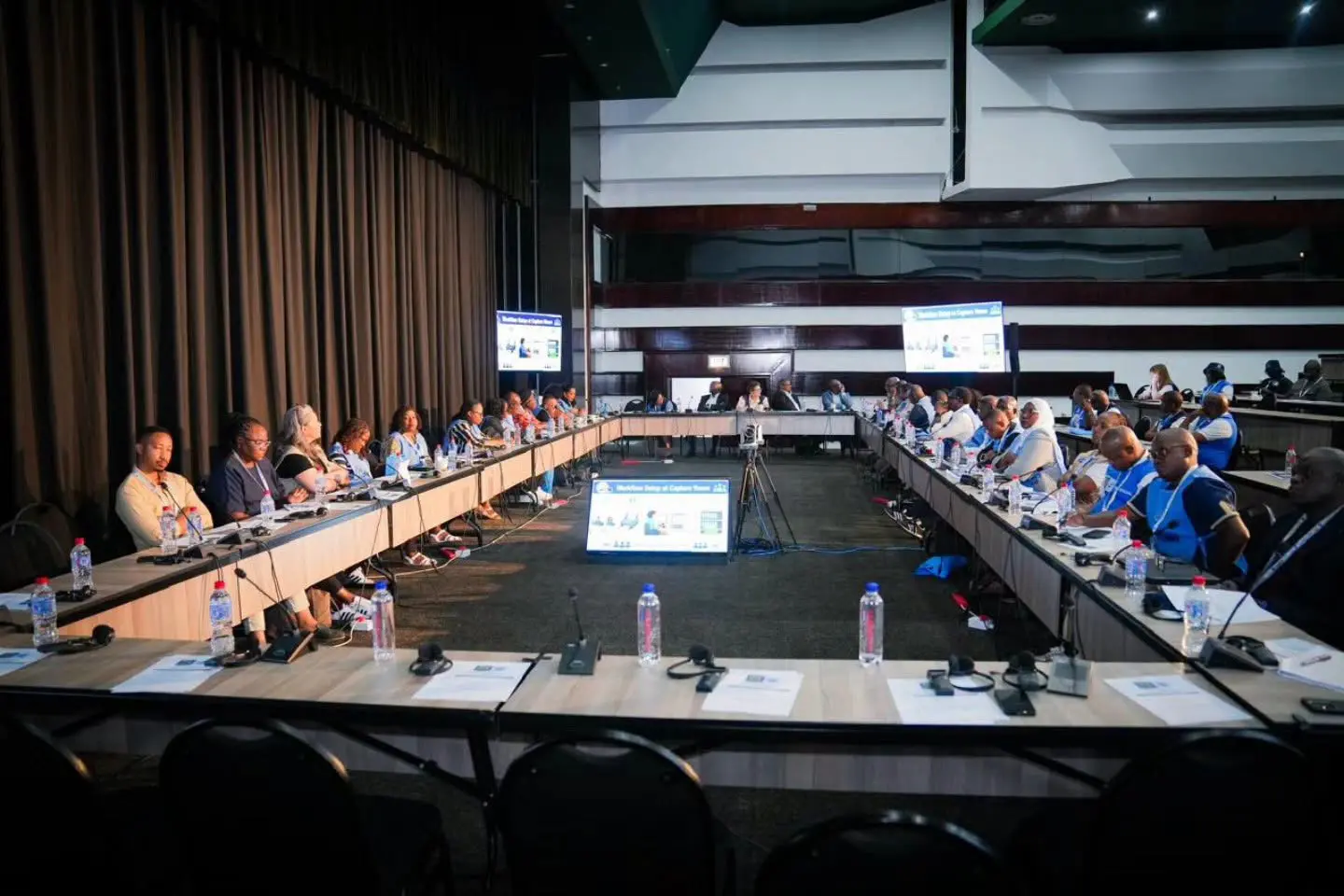
Electoral integrity is key to South Africa’s future and a credible vote could help restore its international reputation. As South Africans headed to the polls on Wednesday, 4 November, the country faces a democratic test that extends far beyond municipal boundaries.
The local government elections will determine who manages municipalities responsible for water, electricity, sanitation, housing and other essential services.
But the vote also offers an opportunity to demonstrate why South Africa’s democratic institutions matter at a time when democratic norms are under pressure across the world. The central question is whether a democracy can lose public confidence in its ruling parties without losing confidence in democracy.
South Africa’s experience offers an important international perspective, combining the legacy of a liberation movement, the resilience of democratic institutions, concerns about electoral oversight and the challenges posed by growing populism.
A liberation movement confronted by accountability
South Africa’s democratic story is inseparable from the ANC and its historic struggle against apartheid.
The country embarked on a democratic transition that inspired millions across the world. The 1994 elections represented a defining moment in the struggle for political equality and universal suffrage.
However, historical achievements cannot provide permanent immunity from accountability. Years of corruption allegations, unemployment, crime and deteriorating municipal services have eroded public confidence in the ANC.
In the 2021 local government elections, the party received less than 50% of the national vote for the first time in a local government election.
Its support declined further in the 2024 general election, when it received approximately 40% of the national vote and lost its parliamentary majority for the first time since the end of apartheid.
The formation of a government of national unity following the 2024 election demonstrated the changing nature of South African politics. Wednesday’s local elections was another test of whether voters are prepared to hold the ANC accountable at municipal level and whether opposition parties can translate public dissatisfaction into effective governance.
Despite serious governance challenges, South Africa retains important democratic safeguards, including a constitutionally pro-tected judiciary, a free press and courts capable of scrutinising executive power.
In countries where political leaders weaken judicial independence, intimidate journalists or manipulate electoral institutions, elections risk becoming exercises in legitimising power rather than determining who should govern. South Africa offers a contrasting possibility: a country can experience political instability and administrative failures while retaining mechanisms through which citizens, journalists and courts challenge those in power.
Democracy requires more than voting. It depends on institutions that protect citizens’ rights, ensure accountability and allow political opponents to compete on a fair basis.
The international observers question
The absence of international election observers from the 2026 local government elections raises questions about electoral oversight.
Reports before the vote indicated that the Electoral Commission of South Africa (IEC) had accredited domestic observer organisations, while no international observer organisations had applied to monitor the elections.
This distinction is important. The absence of international observers does not automatically mean an election lacks credibility, nor does it establish that international observers were denied access.
International observation has played an important role in South Africa’s democratic history. During the 1994 elections, international scrutiny helped build confidence in a political transition marked by deep mistrust and violence.
More recently, the African Union deployed an observation mission led by former Kenyan president Uhuru Kenyatta for South Africa’s 2024 general election. Regional organisations, including the Southern African Development Community, also monitored the polls. Their assessments provided an important external perspective on the electoral process.
However, national elections generally attract greater international attention and resources than local elections. Domestic observers, political party agents, civil society organisations and journalists can also play essential roles in monitoring voting stations, identifying irregularities and scrutinising the counting process.
A democratic test amid rising populism
South Africa’s elections are taking place against an international backdrop of growing populism, political polarisation and distrust of established institutions.
Across Europe and the United States, right-wing and populist movements have gained support by mobilising concerns about immigration, national identity, economic insecurity and the perceived failures of political elites. The implications vary between countries and not every right-wing movement is inherently opposed to democracy.
Nevertheless, these developments raise questions about how societies balance national sovereignty, immigration policy, minority rights and constitutional protections.
South Africa faces its own version of this challenge. Anti-immigrant sentiment and hostility directed at African foreign nationals have raised concerns about the country’s commitment to African solidarity.
Political parties, such as ActionSA and the Patriotic Alliance, have faced criticism over positions perceived as anti-immigrant. The uMkhonto weSizwe Party has been accused of promoting ethnic nationalism. The DA has faced questions about whether its policies and ideological positioning make it a rightwing party.
This tension cannot be separated from unemployment, poverty, housing shortages and overstretched public services. However, blaming foreign nationals for structural problems risks turning legitimate frustration into exclusion and hostility.
Citizens must be able to demand better services, effective border management and accountable government without encouraging collective blame or undermining the dignity of vulnerable communities.
South Africa’s history gives this challenge particular significance. A country that emerged from a system of racial exclusion must remain alert to the dangers of normalising exclusion in response to contemporary grievances.
A credible election will not resolve xenophobia or repair the country’s international reputation overnight. But peaceful political competition, transparent voting and acceptance of legitimate results would reinforce the importance of constitutional principles and democratic accountability.
Electoral integrity is an international asset
Local government is where democratic promises become tangible. Residents experience governance through reliable water supplies, electricity, sanitation, roads and public safety. When these services fail, historical narratives and political promises offer little comfort.
The IEC must administer the electoral process impartially and transparently. Political parties must respect the rules, observers must report independently and journalists must scrutinise both the process and claims made about it. Citizens must be able to express their political preferences without intimidation.
Electoral integrity should be understood not merely as an administrative requirement but as an inter-national asset. South Africa’s standing in Africa and beyond depends partly on whether its democratic institutions continue to command confidence amid political competition and changing public loyalties.
The election results alone will not determine the future of South African democracy. The conduct of political leaders after the vote will be equally important. Winning parties must govern responsibly, while those that lose must respect legitimate outcomes and retain their right to challenge the government through democratic means.
The ANC’s historic contribution deserves recognition but it cannot substitute for effective governance. Opposition parties must demonstrate that electoral victories can produce better services, greater accountability and responsible administration. For a world in which democratic institutions face growing pressure, South Africa has an opportunity to demonstrate that a dominant party can lose support without the democratic system collapsing. South Africa’s democratic reputation will ultimately depend not on who wins these elections but on the integrity of the process and what elected leaders do with the mandate they receive. Türkmen Terzi is a foreign journalist based in South Africa, representing TR724, a Turkish online newspaper.
Related Topics
Keywords
Related Stories
LOCAL ELECTIONS 2026: DA draws coalition red lines as Nelson Mandela Bay results take shape
With the DA leading the vote count in Nelson Mandela Bay, provincial leader Andrew Whitfield says the party is open to coalition negotiations but will not work with the EFF or MK party. He says good governance and service delivery, rather than positions and power, must guide any…
Gov Abiodun declares Ogun ready for state police
The governor described the establishment of state police as a critical step towards strengthening security, protecting investments and sustaining the state’s growing economic activities The post Gov Abiodun declares Ogun ready for state police appeared first on Premium Times…

Former Cross River PDP chair doubts party’s 2027 chances
Former Cross River PDP chairman Venatius Ikem questions the party’s ability to challenge the APC in 2027, describing its structures as fragmented and its Wike-backed presidential candidate, Sandy Onor, as politically invisible. The post Former Cross River PDP chair doubts…

Türkiye and SA look to a bigger future together
The Embassy of the Republic of Türkiye in Pretoria celebrated the 103rd anniversary of the proclamation of the Republic, spotlighting growing diplomatic and economic ties with South Africa.

Top Stories
LOCAL ELECTIONS 2026: DA draws coalition red lines as Nelson Mandela Bay results take shape

USMNT's Gold Cup path to look different as Concacaf unveils revamped group-stage format

Best horse racing betting sites: Where to bet on horse racing
Gov Abiodun declares Ogun ready for state police
Former Cross River PDP chair doubts party’s 2027 chances

Cowboys stars reject George Pickens trade talk ahead of NFL deadline
Türkiye and SA look to a bigger future together

Firms told to publish salaries in job adverts ahead of new law
Latest
LOCAL ELECTIONS 2026: DA draws coalition red lines as Nelson Mandela Bay results take shape
USMNT's Gold Cup path to look different as Concacaf unveils revamped group-stage format
Best horse racing betting sites: Where to bet on horse racing
Gov Abiodun declares Ogun ready for state police
Former Cross River PDP chair doubts party’s 2027 chances
Cowboys stars reject George Pickens trade talk ahead of NFL deadline
Türkiye and SA look to a bigger future together
Firms told to publish salaries in job adverts ahead of new law